
How to Choose an Excavator Rake for Land Clearing and Site Preparation
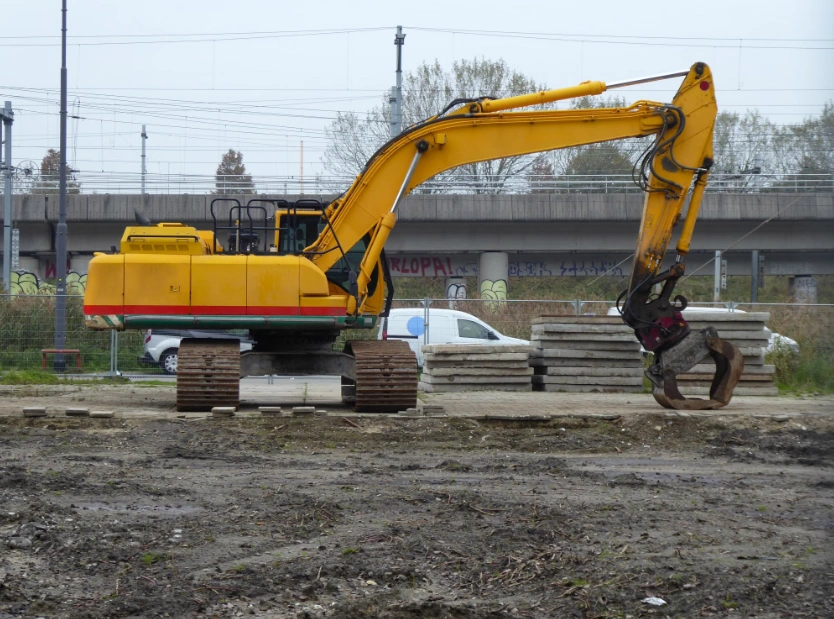
When clearing land, preparing a jobsite, or removing roots and debris, a standard excavator bucket is not always the most efficient tool. An excavator rake is designed to loosen, pull, separate, and collect materials while allowing soil to pass through its teeth.
What Is an Excavator Rake?
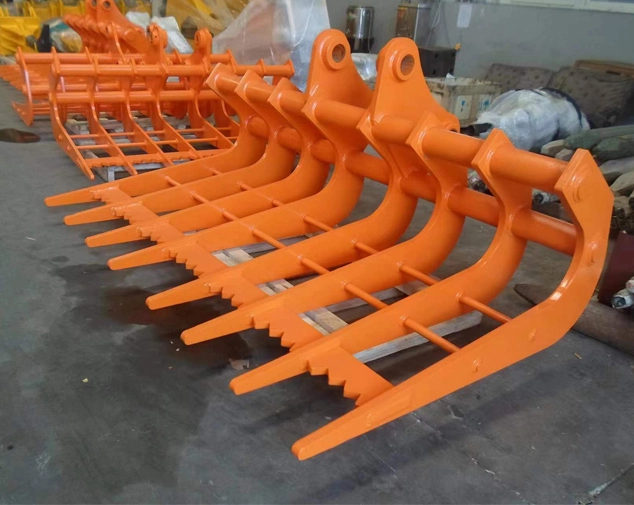
The excavator rake is a specialized tool that looks like a giant comb for the earth. It is not an ordinary bucket, but a front end attachment designed for loosening soil, screening, removing roots, and separating stones and debris. Unlike a standard digging bucket that is enclosed to hold material, the rake features long, curved tines that allow smaller soil particles to fall through while trapping larger objects. It is an essential excavator attachment for anyone managing thick vegetation or messy construction sites.
The design is open, allowing for high visibility during operation. You can see exactly what you are pulling out of the ground, which is a major advantage when trying to preserve topsoil while removing invasive roots or buried trash.
Common Jobs Where an Excavator Rake Works Best
When it comes to efficiency, the rake is a beast in specific environments. It is the go-to for land clearing and root removal because it can comb through the earth without taking half the field with it. It’s suitable for loosening loose materials in hard geological layers, permafrost, soft rock, weathered rocks, and other geological conditions. This makes it perfect for rock separation and site preparation where you need a clean surface.
In demolition cleanup, it sifts through the rubble, picking out rebar and large concrete chunks. It’s effective in northern climates for loosening permafrost and weathered rocks where ordinary buckets can barely pass. It is about precision and sorting rather than just moving bulk volume.
Excavator Rake vs Bucket vs Ripper: Which One Should You Use?
Choosing between these three often confuses operators, but the logic is simple. A bucket is better suited for digging and loading; it’s for moving material from point A to point B. A ripper is better for heavy duty soil breaking or root cutting, focusing all the machine’s power into a single point to penetrate the toughest ground.
The rake, however, is better for loosening, screening, gathering, and leveling. If you need to clear a forest floor but keep the dirt, use the rake. If you need to break a rock vein, use the ripper. If you need to load a truck, use the bucket. Reliable quality, long service life. Each tool has a specific role in the workflow.
How to Choose an Excavator Rake by Machine Size
Choosing the right excavator rake starts with the size of your machine. A rake that is too light may not withstand tough ground conditions, while an oversized rake can reduce machine stability, digging force, and operating efficiency.
| Excavator Size | Recommended Models | Best For | Notes |
| 3–5 tons | JSER02A / JSER02B | Light clearing, small roots, garden work | Mini excavators |
| 6–9 tons | JSER04A / JSER04B | Brush removal, loose soil, roadside cleanup | Small jobsites |
| 9–16 tons | JSER06A / JSER06B | Root removal, rock sorting, site preparation | General contractors |
| 18–26 tons | JSER08A / JSER08B | Frozen soil, hard ground, weathered rock | Heavy-duty work |
| 26–35 tons | JSER10A / JSER10B | Large-scale clearing, demolition cleanup | High-strength use |
When comparing excavator rake sizes, do not choose only by bucket width or machine weight. You should also consider the material being handled, ground hardness, rake tooth design, pin strength, and whether the attachment will be used mainly for loosening, screening, pulling roots, or sorting debris.
For tough applications such as frozen soil, soft stone, and weathered rock, a stronger rake structure and durable pin system are especially important.
Key Features to Check Before Buying
Quality starts with the steel. You should check whether the material, tooth plate thickness, tooth pitch, welded structure, pin material, and weight are compatible, and whether the width is suitable for the operating conditions. For high stress parts, using Q345 manganese plate steel, high strength and corrosion resistance is the industry standard.
The connection points are where most failures happen. Ensure the pin is made of 42CrMo alloy steel, with built in oil passage, high strength and good toughness. Also, look for a single cylinder connecting rod design, light texture and convenient gripping if you are looking at specialized hybrid rakes. The teeth are made of manganese molybdenum alloy material, which is durable.
Mistakes to Avoid When Using an Excavator Rake
The biggest mistake is using an overly wide rake with a small excavator. It might seem like you will get more work done, but you’ll just tip the machine or strain the hydraulics. Never use the rake as a heavy duty breaking tool; that is what a ripper or breaker is for. Forcibly prying in hard rock with a rake will bend the tines, and they are a nightmare to straighten.
Operators often neglect to inspect pins and connecting components, leading to dangerous play in the attachment. Finally, failing to consider soil screening requirements—like choosing a tooth pitch that is too wide—will leave behind the very debris you were trying to remove.
Final Checklist Before Selecting an Excavator Rake
-
Verify machine tonnage matches the rake weight.
-
Confirm the material is Q345 or better.
-
Ensure pins are 42CrMo alloy steel.
-
Check that tooth spacing matches the debris size on site.
-
Confirm the width won’t overstress the excavator’s arm.
Looking for manufacturers like Kingho Technology that have obtained ISO9001, ISO14001, and High Technology Enterprise certifications. Before choosing a rake, compare your excavator tonnage, working material, rake weight, and attachment dimensions.
FAQ
Q: Can I use a rake to dig deep trenches?
No. A rake is for surface and sub surface combing. It doesn’t have the “cup” shape to lift dirt out of a deep hole.
Q: What is the best material for rake teeth?
High strength manganese steel or alloy steel like 42CrMo for the pins and specialized alloys for the tips.
Q: How do I maintain my excavator rake?
Regularly grease the pins, check for cracks in the welds, and ensure the teeth haven’t worn down to the point of structural weakness.