
Best Excavator Attachments for Grabbing Rocks, Logs, and Demolition Debris
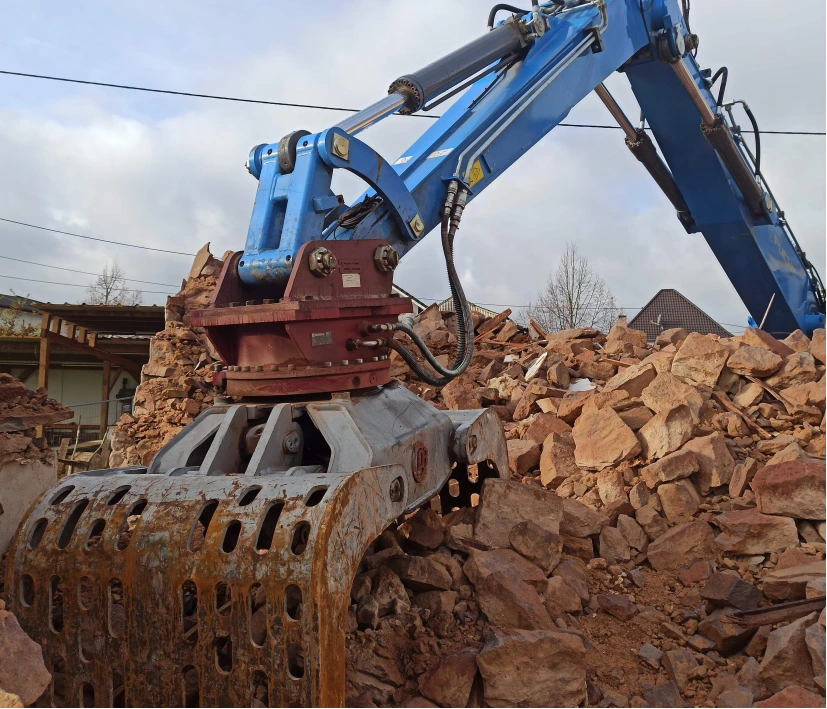
The best excavator attachment for grabbing isn’t always the largest grab bucket in the catalog. The most practical configuration remains the bucket with a hydraulic thumb. It ensures the machine’s digging capacity while providing the necessary control, easily grabbing rocks, logs, concrete blocks, scrap, and mixed debris.
Standard buckets excel at scooping, but struggle with irregularly shaped objects. Round boulders will roll away, wet logs will twist, and broken concrete slabs will shift to the right when the operator steers the bucket towards the truck. In these situations, the right attachment can save time and sometimes prevent damage.
What Makes an Excavator Attachment Good for Grabbing Irregular Materials?
A good grabbing attachment controls material that does not naturally sit still.
Rocks, logs, and demolition debris all behave differently. Rocks are heavy and rounded. Logs are long, slippery, and unbalanced. Demolition debris is sharp, mixed, and unpredictable. The attachment must grip the load, but it also has to match the way the excavator works during the day.
Useful things to check include:
- Material shape and weight
- How often the machine grabs instead of digs
- Excavator size and hydraulic capacity
- Opening range and clamping position
- Pin, bracket, and cylinder strength
- Wear resistance around contact points
The best attachment is not only strong. It also makes the operator’s normal movement easier. That detail matters on long days.
Is an Excavator Thumb the Best All-Around Attachment for Grabbing?
For mixed work, a hydraulic thumb is often the most practical choice.
A thumb works with the bucket to clamp material. The bucket lifts and supports the load. The thumb closes over it. Simple, but very effective. This is why thumbs are common on machines that handle many tasks in one shift. A dedicated grapple might handle some of that faster, but it would not dig. A thumb keeps the excavator flexible.
Where a Hydraulic Thumb Works Well
A hydraulic thumb is useful for:
- Picking rocks and boulders
- Moving logs, branches, and brush
- Holding broken concrete against the bucket
- Loading mixed demolition debris
- Sorting scrap or waste
- General site cleanup after excavation
A hydraulic thumb also gives the operator cab control. That is a big difference from a fixed mechanical thumb. The operator can adjust the thumb angle while working, instead of stopping, repositioning, or accepting a poor grip.

When Should You Choose an Excavator Grapple Instead?
A grapple makes more sense when grabbing is the main job.
If the excavator spends most of the day moving logs, scrap, waste, or demolition debris, a dedicated grapple can be faster. It grabs from both sides and does not depend on the bucket to hold the material. In forestry yards, recycling sites, and demolition cleanup, that speed matters.
A grapple is a better fit for:
- Repeated log handling
- Scrap loading
- Waste sorting
- High-volume demolition cleanup
- Recycling yard material handling
The trade-off is obvious on site. A grapple is not a digging bucket. If the machine still needs to trench, dig, or clean up soil, the operator either swaps attachments or works around the limitation. That is why general contractors often prefer a thumb, while material-handling operations may prefer a grapple.
What Is the Best Attachment for Logs, Brush, and Land Clearing?
Wood is awkward material. Logs roll. Branches spring back. Brush tangles around teeth and pins.
For occasional wood handling, a hydraulic thumb is usually enough. It can grab logs, move limbs, pull brush aside, and load loose vegetation. It is not a forestry grapple, but on a mixed construction site it often does the job well.
The right choice depends on how much of the day is spent handling wood.
What Attachment Works Best for Demolition Debris?
Demolition debris is hard on equipment. It is heavy, sharp, and rarely shaped in a convenient way.
A hydraulic thumb is useful for controlled cleanup. It helps clamp concrete chunks, blocks, beams, pipe, and mixed debris against the bucket. This is especially helpful on tight sites where dropping material is not acceptable.
A demolition grapple or sorting grab is better when the machine handles debris all day. It gives more control during sorting and repeated loading. If the work includes cutting steel, crushing concrete, or processing material, then shears, pulverizers, or crushers may be needed instead.
Before using any grabbing attachment in demolition, check:
- Excavator operating weight
- Hydraulic pressure and flow
- Load weight and lifting radius
- Pin and bracket fit
- Cylinder protection
- Steel thickness and wear points
The attachment should improve control. It should not encourage unsafe lifting.
How Do You Choose Between a Thumb, Grapple, Bucket, or Rake?
The jobsite usually gives the answer.
|
Jobsite Need |
Best Attachment Option |
Practical Reason |
|
Digging plus occasional grabbing |
Hydraulic thumb with bucket |
Keeps the bucket useful and adds grip |
|
High-volume log handling |
Log grapple |
Faster for repeated wood handling |
|
Heavy rocky excavation |
Rock bucket |
Better durability in abrasive material |
|
Demolition debris handling |
Thumb or demolition grapple |
Controls irregular broken material |
If the excavator still needs to dig, the bucket should stay involved. If the machine mainly grabs, a dedicated grapple usually makes more sense.
What Should Buyers Check Before Ordering a Grabbing Attachment?
Fitment is where many problems start.
Before ordering, check the excavator model, operating weight, pin diameter, pin centers, stick width, bucket shape, hydraulic pressure, hydraulic flow, and attachment weight. For thumbs, the closing angle is especially important. The thumb must meet the bucket in the correct working range. If it closes too early or too late, grip strength suffers.
Also check:
- Steel grade and plate thickness
- Weld quality
- Cylinder size and protection
- Replaceable wear parts
- Mounting bracket design
- Spare parts support
A good attachment should fit the machine, the bucket, and the actual work. All three matter.
Which Excavator Attachment Is Best for Most Contractors?
For most contractors doing mixed work, a hydraulic thumb is the best first upgrade.
It is not the fastest tool for every task. A grapple will beat it in a recycling yard. A log grapple will beat it in timber handling. A skeleton bucket will beat it when screening soil and rock. But a hydraulic thumb covers more common jobsite surprises.
It lets the operator dig, grab, sort, lift, and load without changing attachments every hour. That flexibility has real value on construction sites, small demolition jobs, land clearing work, and general cleanup.
For specialized work, buy the specialized tool. For mixed work, a thumb is hard to argue against.
Conclusion: Match the Attachment to the Material, Not Just the Machine
Attachment choice should start with the material. Rocks need support and control. Logs need grip around round surfaces. Demolition debris needs strength and careful handling. Brush needs gathering more than clamping.
The excavator size matters, but it is only part of the decision. The better question is what the machine does most days. A hydraulic thumb is often the most useful choice for contractors who handle rocks, logs, and debris on the same machine. It gives the bucket another hand, and on many jobs, that is exactly what is missing.
Contact Kingho Technology today to discuss your excavator model, working conditions, and attachment requirements. We will help you find a durable, efficient solution for digging, grabbing, sorting, and loading with confidence.
FAQ
Q: What is the best excavator attachment for grabbing rocks?
For large individual rocks, a bucket with a hydraulic thumb is often the most practical choice. For loose rock mixed with soil, a rock bucket or skeleton bucket may work better.
Q: Is a hydraulic thumb better than a grapple?
A hydraulic thumb is better for mixed digging and grabbing. A grapple is better when the excavator mainly handles logs, scrap, waste, or debris all day.
Q: Can an excavator thumb handle logs?
Yes. A hydraulic thumb can handle logs, branches, and brush on general construction and land clearing jobs. For high-volume log handling, a log grapple is usually faster.
Q: What attachment is best for demolition debris?
A hydraulic thumb works well for general demolition cleanup. A demolition grapple is better for continuous sorting and loading.
Q: What should be checked before buying a hydraulic thumb?
Check excavator size, pin dimensions, bucket geometry, hydraulic pressure, hydraulic flow, thumb length, mounting design, and cylinder protection.