
Demolition Shear Maintenance: Blade and Jaw Checklist
Good demolition shear maintenance starts with five actions: isolate the attachment, clean it, inspect the cutting system, measure blade clearance against the model manual, and record changes. Do not compensate for a rounded edge, loose blade seat, worn pivot, or misaligned jaw by increasing hydraulic pressure.
This guide covers excavator-mounted shears for steel demolition and scrap processing. The manufacturer must supply model-specific clearances, torques, lubrication intervals, weld procedures, and discard limits.
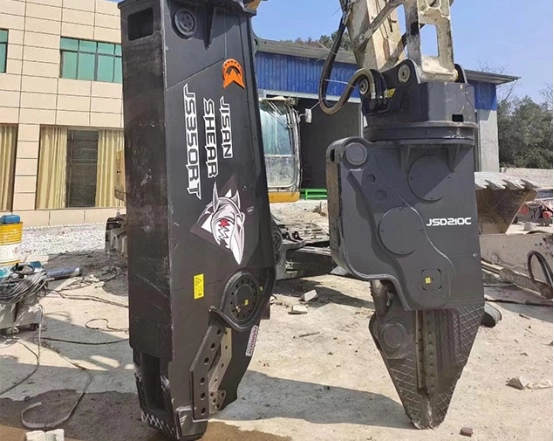
Why Maintenance Starts with Clearance and Alignment
A shear cuts efficiently only when its blades, jaw, pivot, and hydraulics remain aligned. Excessive clearance can let plate fold between the blades; insufficient clearance increases friction, heat, side load, and chipping. Pivot wear can make the gap correct at one point and wrong at another.
Identify the model and serial number first. Kingho Technology’s hydraulic shear specifications show different carrier ranges, pressure, flow, cutting force, and blade length. A setting copied from another shear is not a reliable service value.
Before inspection, support the attachment, stop the carrier, release stored hydraulic energy, and follow the site’s lockout procedure. Never enter unsupported jaws. Clean away scale and scrap before measuring.
Use a Daily and Scheduled Maintenance Checklist
Operators can perform visible pre-shift checks; trained technicians should handle measurements, fasteners, hydraulic tests, and repairs. Use the model manual to set the interval.
-
Clean the cutting area. Remove wire, scale, dirt, and fragments from blades, the piercing tip, jaw pockets, and inspection ports.
-
Find fresh damage. Check edges for rounding, chips, cracks, rolled metal, or uneven polish; inspect the jaw and weld transitions for deformation.
-
Check fasteners and seats. Look for missing fasteners, shifted witness marks, fretting dust, or gaps behind blades. Use the specified torque and sequence.
-
Inspect hydraulics. Check hoses, fittings, the cylinder, and rod protection for leaks, abrasion, impact, or contact through the working range.
-
Check the pivot and rotation head. Look for abnormal pin or bushing movement, line damage, bearing-area leaks, and loose fasteners.
-
Lubricate specified points. Use the approved grease and method; grease cannot correct a worn bushing or blocked passage.
-
Function-test safely. Cycle the empty shear slowly and check for impact, hesitation, or uneven opening, closing, and rotation.
-
Record trends. Log hours, clearance, blade position, repairs, processed material, cycle-time changes, and oil temperature.
For a replacement unit, this steel-demolition shear selection guide helps buyers compare blade access, bushings, hose protection, and spare-parts needs.
Read Blade Wear and Clearance Problems
Blade clearance is a controlled gap measured at defined jaw positions, not a universal percentage. With the attachment safely supported, follow the manufacturer’s method and compare several points.
| Observed Symptom | Likely Causes to Investigate | Next Check |
| Steel folds or remains connected | Excessive clearance, rounded edge, poor material position, or undersized shear | Measure the gap; inspect edges; compare material with rated capability |
| One face is polished or the gap varies | Pivot wear, jaw deflection, dirty seats, or side loading | Check pivot play, alignment, seat contact, and several gap positions |
| Edge chips or cracks | Impact, insufficient clearance, loose support, or unsuitable material | Stop work; inspect the seat and opposing blade; follow the damage procedure |
| Fretting or shifted witness marks | Blade movement, dirty mating faces, damaged threads, or wrong tightening | Clean and inspect seats; verify fasteners, torque, and sequence |
| Slow cycles or hot oil | Flow mismatch, return restriction, leakage, valve fault, or high cutting resistance | Test pressure, flow, back pressure, and temperature against specifications |
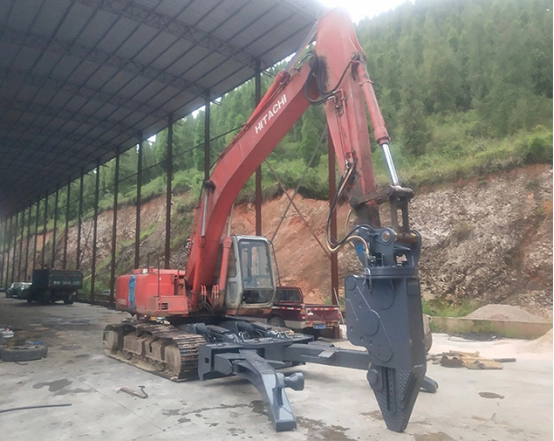
Do not hide a mechanical problem by raising relief pressure or bypassing protection. That increases component loads without correcting the geometry.
Inspect the Pivot, Jaw, Hydraulics, and Rotation
A blade problem may begin elsewhere. Worn bushings let the movable jaw shift under load, while a damaged seat leaves a new blade unsupported. Dragging material or twisting an incomplete cut accelerates wear and may distort alignment.
Inspect pivot play, grease flow, pin movement, and metal debris. Check the jaw, cylinder lugs, wear-plate transitions, and blade pockets for cracks or deformation. Secure pins and protect rods and hoses throughout rotation.
On rotating shears, inspect the motor, lines, bearing area, and fasteners. Slow motion may come from carrier flow, excessive return pressure, contaminated oil, internal leakage, or the speed valve. Test with suitable instruments rather than sound alone.
Kingho Technology’s scrap-metal shear buying factors also show why accessible blades, bushings, and grease points matter to uptime.
Decide Whether to Rotate, Replace, or Rebuild
Rotate a blade only when its design provides another approved edge and its holes, seats, and support surfaces remain within limits. Regrinding changes geometry and can affect edge hardness, so it requires an approved process.
Replace cracked, severely chipped, distorted, or out-of-limit blades and piercing components. Correct the cause and inspect the opposing blade and seat before installing a new part.
Rebuild only manufacturer-approved zones. Welding requires the specified base metal, consumable, preheat, interpass control, sequence, and cooling. Uncontrolled blade hardfacing can cause brittleness or distortion. Verify geometry before loading the shear, and use attachment parts and service support to identify the correct blade, bushing, seal, or wear component.
FAQ
These common decisions still depend on the shear design and service manual.
Can Every Demolition Shear Blade Be Rotated?
No. Usable edges, bolt pattern, dimensions, and seat condition vary. Confirm the permitted orientation and tightening procedure before moving a blade.
How Often Should Blade Clearance Be Checked?
Follow the manufacturer’s interval, and recheck after blade work, unusual impact, declining cut quality, side loading, or an alignment change. Trend values instead of waiting for failure.
Why Does a Shear Fold Steel Instead of Cutting It?
Likely causes include excessive clearance, rounded edges, poor material placement, pivot wear, misalignment, or unsuitable material. Cutting is generally more effective deeper in the jaw than at the tip.
Should Operators Hardface or Weld the Cutting Blades?
Only under an approved blade-repair procedure. Uncontrolled welding can alter hardness, create cracks, and distort the blade. Hardfacing an approved jaw wear zone is not the same as welding a cutting edge.
Prepare a Useful Service Request
Contact Kingho Technology and send the shear model and serial number, excavator model, hours, material, pressure and flow settings, measured clearances, symptom history, and labeled photos. The team can review compatibility and parts requirements; suspected structural damage still needs an on-machine inspection.