
How to Choose an Excavator Hydraulic Shear for Steel Demolition
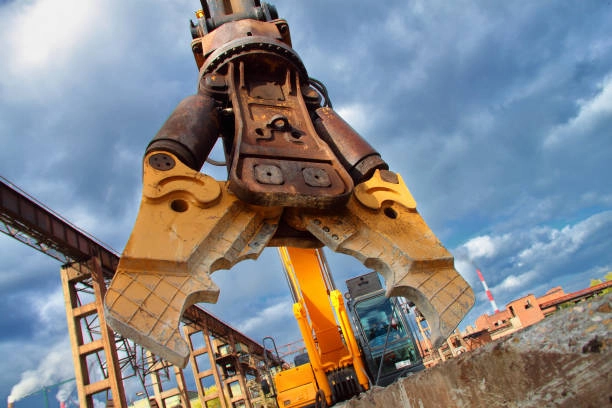
Choosing an excavator hydraulic shear is not simply a matter of buying the largest model the carrier can lift. The attachment must match the excavator’s hydraulic output, structural capacity, working radius, and the steel being processed. Oversizing reduces stability; undersizing slows production and increases wear.
What Is an Excavator Hydraulic Shear?
An excavator hydraulic shear is a front end attachment that grips, pierces, and cuts steel through hydraulic cylinder force. It is used in structural demolition, scrap yards, vehicle dismantling and metal recycling.
Unlike a concrete pulverizer, an excavator metal shear uses hardened blades and a jaw designed for steel. A demolition grapple can sort material but cannot cut beams, pipes, frames, and plate.
1. Identify the Steel Demolition Application
Selection should begin with the material and production target.
Consider the type of steel
A shear for vehicle bodies and light sheet metal does not need the same jaw geometry as one cutting structural beams or thick walled pipe. Typical materials include columns, tubes, tanks, rebar, machinery frames, and mixed scrap.
Shape matters as much as thickness. Beams usually cut best when positioned deep near the pivot, where cutting force is highest.
Consider material thickness and production volume
Use normal production work as the design basis, not an occasional maximum cut. A shear that only just handles the largest section will work slowly and place more load on the blades and hydraulic system.
Also define expected cuts per hour. Scrap yard work favors fast cycles and easy blade maintenance, while primary demolition demands precise control at reach.
2. Match the Hydraulic Shear to the Excavator
The attachment must be compatible with both the carrier structure and hydraulic circuit.
Excavator operating weight
Manufacturers normally specify a carrier weight range, but mounting position also matters. A boom mounted shear can usually be heavier than one fitted to the stick because the load is closer to the excavator.
An oversized shear can reduce stability and increase fatigue on the boom, arm, pins, and slew system. Check attachment weight, working radius, and counterweight before final selection.
Hydraulic pressure and oil flow
Pressure determines cutting force, while flow controls opening and closing speed. Too little flow causes slow cycles. Excessive flow can create heat, hydraulic shock, and seal damage.
Confirm operating pressure, recommended flow, return line size, and allowable back pressure. Rotating models may need a separate circuit.
Mounting position
Boom mounted hydraulic shears are often used for heavy primary demolition. Stick mounted models offer more reach and are common for general demolition and ground level scrap processing.
Choose the mounting position according to building height, material size, and required reach.
3. Compare Cutting Force, Jaw Opening and Blade Design
Published cylinder force alone does not show real cutting performance.
Cutting force
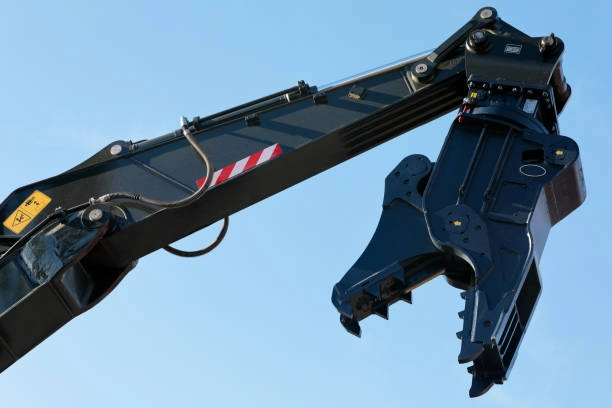
Cutting force changes along the blade. It is usually highest near the rear of the jaw and lower at the tip. Compare force at the blade throat and tip, not only the maximum cylinder figure.
A well designed jaw pulls material toward the main cutting zone instead of pushing it outward. This reduces repositioning and improves productivity.
Jaw opening and jaw depth
Jaw opening determines whether the target section can enter the shear. Jaw depth determines how far the material can be positioned into the high force cutting area.
A large opening adds weight and bulk. Select a jaw that captures the expected beam, pipe, plate, or scrap bundle without oversizing.
Blade construction
Blades should be replaceable and preferably reversible. Check blade material, hardness, adjustment method, and shim availability.
The piercing tip should also be replaceable because it receives high impact and abrasion. Correct blade clearance is essential. Poor alignment increases cutting resistance and can damage the jaw body.
4. Evaluate Rotation and Cycle Speed
A 360 degree hydraulic rotation system allows the operator to align the shear without repeatedly moving the excavator. It is useful around structural connections, inside industrial buildings, and when processing long beams or pipe.
Rotation improves cut accuracy and reduces side loading, but it adds weight and hydraulic requirements.
Cycle speed also affects output. Some demolition shears use a speed valve or regeneration circuit for rapid closing, then shift to high force cutting when the blades contact steel. The changeover should be smooth and free from pressure shock.
5. Check Durability and Maintenance Requirements
Steel demolition creates impact, dust, heat, and side loads. The shear body should use high strength structural steel, with wear resistant material around the jaw and pivot.
Inspect cylinder protection and hose routing. Cylinder rods should be shielded from falling scrap, and hoses should not be exposed near the cutting area. Main pins and bushings should be robust and easy to lubricate.
Replaceable blades, piercing tips, wear plates, and bushings reduce repair cost. Ask for maintenance instructions and a standard spare parts list.
6. Assess the Manufacturer’s Customization and Support
The supplier should confirm the excavator model, operating weight, hydraulic pressure, oil flow, mounting dimensions, pin diameter, stick width, and rotation line availability.
Vehicle dismantling, structural steel cutting, pipe processing, and mixed scrap handling may require different jaw geometry.
Kingho Technology manufactures excavator front end attachments for hydraulic breaking, grabbing, shearing, dismantling, compacting, piling, and recycling applications. A good match lines up the hydraulic shear with the carrier. It fits the mounting arrangement. It suits the target steel. Buyers should also confirm spare blades. They need seal kits. Technical drawings help. Installation guidance is useful. After sales support matters.
Hydraulic Shear Selection Checklist
Before requesting a quotation, prepare:
-
Excavator brand, model, and operating weight
-
Boom mounted or stick mounted installation
-
Hydraulic pressure and oil flow
-
Available rotation circuit
-
Steel type, shape, and maximum thickness
-
Largest beam, pipe, or plate section
-
Required jaw opening and production rate
-
Coupler or direct pin dimensions
-
Spare blade requirements
Accurate machine and material data allows the manufacturer to recommend a safer and more productive attachment.
Frequently Asked Questions
Q: What size hydraulic shear do I need for my excavator?
Start with the recommended carrier weight range. Next check attachment weight. Look at hydraulic pressure and flow. Mounting position needs review. Cutting capacity counts too. Excavator tonnage by itself falls short. Machines of similar weight can show different hydraulic output. Their lifting capacity may vary as well.
Q: Can an excavator hydraulic shear cut rebar and steel beams?
Yes. The jaw opening must fit. Blade design needs to work for the job. Cutting force has to suit the material. Beam dimensions play a role. Wall thickness affects results. Alloy type makes a difference. Cutting position changes performance. Bundled rebar may need careful placement.
Q: Is a rotating hydraulic shear better for demolition?
Rotation often improves positioning. It cuts down on excavator movement. The feature helps in tight spaces. It proves useful when cuts occur at different angles. Still it adds weight. Cost goes up. Hydraulic requirements increase. A non-rotating shear can work better for simple ground level processing.
Conclusion: Choose the Shear as a Complete System
A hydraulic shear should be selected as part of a complete excavator system. The correct model must match the carrier weight. It needs to fit hydraulic output. Mounting position is key. Steel type matters. Section size counts. Cycle requirement plays a part. The maintenance plan should align.
Kingho Technology manufactures hydraulic shears and other excavator attachments for steel demolition, dismantling and recycling applications. Contact the Kingho Technology team with your excavator model, hydraulic specifications and target material to receive a suitable attachment recommendation.