
OEM Excavator Attachments: What Buyers Need to Know
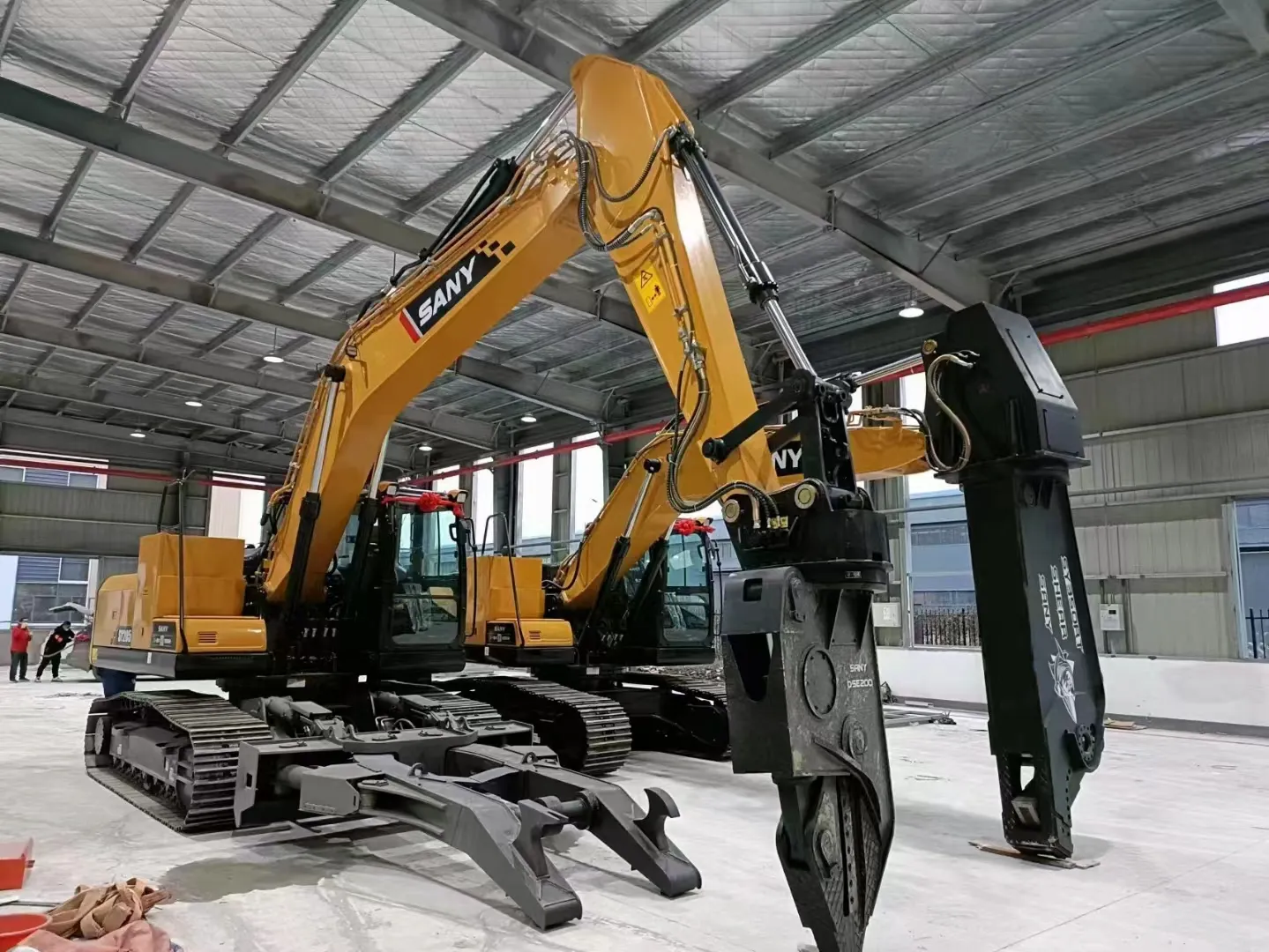
Buying an excavator attachment from a catalog is easy when the machine, hydraulic system, coupler, and job are standard. OEM projects are different. A small change in pin spacing, oil flow, jaw geometry, or wear material can decide whether an attachment works cleanly or becomes a service problem.
For dealers, fleet owners, demolition contractors, and equipment brands, OEM excavator attachments are mainly about fit, repeatability, and application.
What Are OEM Excavator Attachments?
OEM excavator attachments are built or configured to a buyer’s technical and commercial requirements instead of being supplied only as a fixed standard model. Changes may include mounting dimensions, hydraulic components, jaw profile, blade material, reinforcement, hose layout, paint, and branding.
A good OEM program is not simply “put a logo on it.” Real OEM work starts with the carrier and the job.
What Can Be Customized on an Excavator Attachment?
Most practical customization falls into four areas. Some changes affect fit; others affect service life or make a dealer’s product range easier to standardize.
Mounting and Excavator Compatibility
Pin diameter, pin center distance, stick width, coupler type, and excavator operating weight need to match. Two machines both sold as “20 ton excavators” can still have different front end geometry.
A familiar problem: the attachment arrives and the width is close, but not close enough. Spacers are added in the field. It works, but the order already feels wrong.
Hydraulic Configuration
Hydraulic flow and operating pressure should be checked against the attachment circuit, not guessed from excavator tonnage. Rotating grapples, shears, compactors, and breakers can react badly to excessive flow, low flow, or poor return line conditions.
Rotation lines, drain lines, hose sizes, fittings, and auxiliary circuits should be confirmed before production.
Structure, Materials and Working Components
Jaw geometry, cutting blades, tooth layout, reinforced sections, wear plates, pins, bushings, and material grades can be adapted to the job.
Scrap handling is not the same as sorting concrete. Primary demolition is not the same as secondary pulverizing. The shape of the work changes where the attachment wears.
Branding and Appearance
Dealers and private label buyers may need their own paint system, logo, serial plate, product label, packaging, and documentation.
These details are easy when agreed early and expensive when raised after fabrication. Paint codes, label positions, warning decals, and manual language belong in the order specification.
What Information Should Buyers Provide Before Requesting an OEM Quote?
An accurate quotation depends on the information behind it. “Need a hydraulic grapple for a 20 ton excavator” is a starting point, not a specification.
Excavator Specifications
Useful machine information includes:
-
Excavator brand and model
-
Operating weight
-
Hydraulic flow and operating pressure
-
Pin diameter and pin-to-pin distance
-
Stick width
-
Quick coupler details
Photos of the dipper end and coupler can help. For unusual machines, a dimensioned sketch is usually better than a long written description.
Application Information
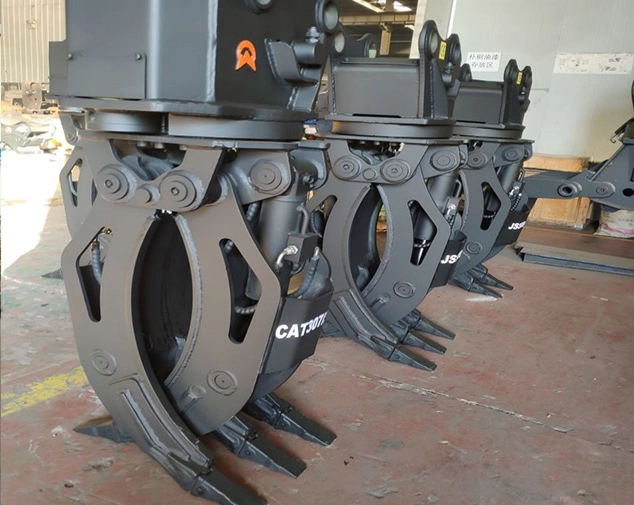
The manufacturer should know the material, working environment, expected production rate, rotation requirement, daily working hours, and whether the work is continuous or intermittent.
A shear used occasionally for rebar cutting has a different duty cycle from one working all day in a scrap yard. Same excavator. Different requirement.
Which Excavator Attachments Are Suitable for OEM Customization?
Nearly every excavator front end attachment can be customized when the application or order volume justifies it.
Hydraulic breaker hammers may need different brackets, tools, hoses, or accumulator arrangements. Grapples and grabs can be configured for scrap, rock, logs, sorting, or demolition. Hydraulic shears, crushers, and pulverizers may require different jaws, blades, teeth, or rotation systems. Plate compactors vary by plate size and hydraulic requirement. Pile hammers depend heavily on pile type, clamp design, and carrier hydraulics.
Quick hitches and vehicle dismantling attachments also suit OEM programs, especially when a dealer wants consistent interfaces across a product range.
How Should Buyers Evaluate an OEM Excavator Attachment Manufacturer?
Price matters, but it is a poor starting point. The costly attachment is often the one that needs field welding, replacement pins, or repeated technical calls after delivery.
1. Engineering and Customization Capability
Ask what the manufacturer can actually change. A factory that adjusts only color and labels is not offering the same service as one that can revise mounting dimensions, structures, hydraulic components, and working geometry.
Non-standard designs should be discussed with drawings before production.
2. Quality Control
Raw material inspection, machining accuracy, welding consistency, assembly checks, hydraulic testing, and final inspection all matter.
Pay attention to pins, bores, high stress welds, hose routing, and cylinder protection. Many attachment problems start there.
3. Certifications
ISO, CE, SGS inspection, and other documentation may matter depending on the destination market and customer requirement.
Certificates are useful, but they do not replace technical review. A certified attachment with the wrong hydraulic setup is still the wrong attachment.
4. Spare Parts and After Sales Support
Wear parts should be considered before the first unit ships. Buyers should know how blades, pins, bushings, seal kits, teeth, hoses, and other service parts will be supplied.
Installation guidance matters too. A clear hose connection note can prevent expensive mistakes.
5. Export and Logistics Capability
Export packaging, documentation, product identification, and shipment coordination become important when orders contain several attachment types.
Mixed orders expose weak processes quickly. Clear labels and packing lists save time at the destination warehouse.
What Does the OEM Ordering Process Usually Look Like?
The process is straightforward when the technical input is complete.
The buyer sends machine data, hydraulic information, mounting dimensions, application details, quantity, and branding requirements. The manufacturer confirms the configuration and, where necessary, provides drawings or technical parameters for review. Commercial terms, colors, labels, and packing are agreed before production.
Fabrication, assembly, inspection, testing, packing, and shipment follow. Problems usually begin earlier, with missing dimensions or assumed hydraulic values.
OEM vs. Standard Excavator Attachments: Which Should You Choose?
Standard attachments make sense for common machines, familiar applications, small quantities, and orders where fast delivery matters more than customization.
OEM attachments are more useful when a dealer is building a product line, a fleet uses a specific coupler standard, the application is unusual, or the buyer needs repeat supply under one specification.
There is no benefit in customizing everything. If a standard attachment already matches the carrier and the work, use it. OEM becomes valuable when it removes compromises across repeat orders.
Why Work With an Experienced Excavator Attachment Manufacturer?
Experienced manufacturers tend to ask better questions before quoting. That matters.
Kingho Technology focuses on excavator front end attachments for breaking, grabbing, shearing, dismantling, compacting, piling, and recycling applications. For OEM projects, the useful part is connecting machine data, working conditions, structural design, manufacturing, inspection, and shipment into one repeatable process.
FAQs About OEM Excavator Attachments
Q: Can OEM attachments be made for different excavator brands?
Yes. Mounting dimensions, coupler interfaces, hydraulic flow, pressure, and hose connections can be configured for different carriers. The excavator model alone should not be treated as enough data for production.
Q: What information is needed to customize an excavator attachment?
At minimum: machine model, operating weight, hydraulic flow and pressure, mounting dimensions, attachment type, and working application. Photos, coupler details, duty cycle, and material information make the recommendation more reliable.
Q: Can dealers add their own brand to excavator attachments?
Yes, depending on the OEM program. Common options include custom paint, logos, serial plates, labels, packaging, and private label documentation. These details should be fixed before production rather than added during final packing.
Talk to Kingho About Your OEM Excavator Attachment Project
If you are sourcing OEM excavator attachments for distribution, fleet use, demolition, recycling, compaction, piling, or material handling, send Kingho Technology the machine model, hydraulic specifications, mounting dimensions, working conditions, and required quantity.
That is enough to start a serious technical discussion. And that is usually where a good attachment order begins.