
Hydraulic Magnet Lift Vs. Electromagnetic Magnet for Excavator Scrap Handling
When an excavator moves loose steel, the magnet’s power architecture affects installation, controls, and load release. A hydraulic magnet lift uses the carrier’s hydraulic circuit to drive a generator that energizes an electromagnetic coil. The comparison here is with a magnet supplied by a separate electrical system. Both use electromagnetism; the practical difference is how power reaches the magnet.
The useful comparison is not “which magnet is stronger?” Start with the power already available, the release points in the material flow, and the magnet size the carrier can control. Those facts lead to a practical scrap-handling decision.

Hydraulic Magnet Lift Vs. Electromagnetic Magnet at a Glance
The short answer is that a hydraulic model suits a carrier where auxiliary hydraulics are the simplest power path, while an electromagnetic model suits a machine and site with a practical electrical supply. Compare the two arrangements before comparing nominal magnet diameter.
|
Decision Point |
Hydraulic Magnet Lift |
Electromagnetic Magnet |
|---|---|---|
|
Primary power path |
Excavator hydraulic circuit drives a generator |
Separate electrical supply energizes the magnet |
|
Installation dependency |
Hydraulic hoses, flow, pressure, and controls |
Generator or electrical system, cabling, controls, and power rating |
|
Load release |
De-energize through the hydraulic generator and control circuit |
Switch off electrical power through the magnet control system |
|
Best decision signal |
The carrier has suitable auxiliary hydraulics and moves between work areas |
The machine or fixed site already has reliable electrical infrastructure |
Compare hydraulic magnet lift models against the actual carrier and handling pattern. Establish the power path before narrowing magnet diameter and attachment weight.
How Hydraulic and Electromagnetic Magnet Systems Create Lift
Compare the two power paths first, then examine how their controls manage load release.
How a Hydraulic Magnet Generates Power
A hydraulic magnet lift routes oil from the excavator’s auxiliary circuit to a hydraulic generator. That generator supplies the electrical energy needed by the magnet. The carrier provides the prime mover, while the attachment’s control arrangement manages energizing and release. Flow and working pressure must be checked at the attachment interface.
How an Electromagnetic Magnet Receives Power
An electromagnetic model receives power from an electrical source sized for the magnet. This can suit a dedicated material handler or fixed recycling line, but it adds an electrical installation question to the mechanical fit question. Cable routing, protection, switching, and power rating belong in the specification discussion.
How Controls Manage Load Release
The operator needs a predictable drop over a truck, bunker, conveyor, or sorted pile. Release depends on the control system’s de-energizing and demagnetizing sequence, not simply the power-source label. Compare cab controls and release response under the intended operating conditions. Awkward control access or material remaining on the magnet can add positioning movements to each cycle.
What Changes in a Scrap-Handling Workflow
Evaluate the handling cycle, then the receiving area: each can restrict output independently.
How Collection, Movement, and Release Work Together
During collection, the magnet needs a clear path into loose or exposed steel. During movement, attachment weight and reach affect carrier stability. During release, the operator needs a defined drop zone that does not require repeated repositioning.
For example, a 20–30-tonne excavator may collect cut steel from a preparation bay and release it into a ferrous bin. A hydraulic arrangement can suit a carrier that already has the auxiliary circuit and travels between bays. An electromagnetic arrangement can suit a dedicated machine with electrical power at the operating position.
How the Receiving Area Affects Output
A narrow bin opening or a truck waiting outside the working radius can slow unloading even when magnetic pickup is effective. Define the iron-product handling route around the receiving area, including swing clearance, discharge height, and space for the released material. A larger magnet will not resolve a restricted drop zone.
How Magnet Diameter, Weight, and Hydraulics Affect Fit
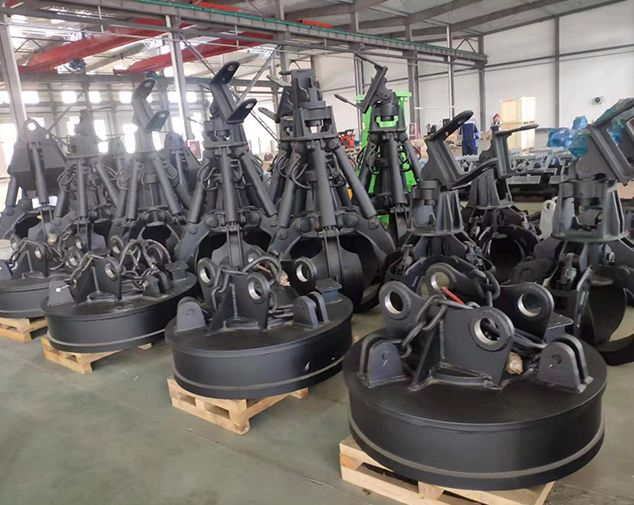
Magnet diameter sets the contact area, but it also changes attachment weight and the moment carried at reach. A larger face is not automatically better if the excavator becomes unstable at the required working radius or if the pile geometry prevents full contact.
Start with the carrier’s operating weight, counterweight arrangement, reach, and attachment limit. Then check the magnet’s own weight, suspension or coupler geometry, and any rotation equipment. For a hydraulic model, record auxiliary flow and working pressure at the attachment. For an electromagnetic model, record the required electrical power and how it will be generated and controlled.
Kingho’s published ranges include hydraulic models for excavators in bands such as 12–16, 20–26, and 30–40 tonnes, while electromagnetic models include bands such as 12–16 and 32–40 tonnes. These are starting points, not a substitute for matching the carrier. A 25-tonne excavator with limited auxiliary flow may be a poor hydraulic candidate, while a machine without practical electrical supply may make an electromagnetic option difficult to deploy.
Which Magnet Arrangement Fits Common Scrap Applications
The application decision becomes clearer when mobility, fixed power, and material boundaries are considered separately.
When Hydraulic Mobility Matters
Use a hydraulic magnet when mobility is central: demolition cleanup, multiple scrap-yard bays, or temporary work areas where the excavator’s hydraulic system is the available power source. It can also suit attachments moving between compatible carriers with a standardized hydraulic interface.
When Electrical Infrastructure Matters
Use an electromagnetic magnet when the machine is dedicated to repetitive iron handling and electrical infrastructure is stable. Fixed sorting stations, prepared loading points, and some port operations can make that power path easier to organize. The electrical installation still needs protection, control access, and a defined release sequence.
Where Mixed Scrap Changes the Boundary
Mixed operations should map the magnet to the ferrous stream and leave non-magnetic or oversized material to a grapple or shear. This keeps the magnet’s job specific: collect exposed ferrous pieces, release them into the correct grade, and avoid asking magnetic force to solve a shape or contamination problem.
FAQ
Can Both Magnet Types Handle Mixed Ferrous Scrap?
Both can lift ferrous pieces, but neither sorts every mixed load automatically. Contamination, bundled wire, non-ferrous material, and shielding can reduce pickup. Define the expected ferrous percentage and the required grade separation before comparing power systems.
Does a Hydraulic Magnet Need a Separate Generator?
Kingho’s hydraulic models use a hydraulic generator driven by the excavator circuit. Electromagnetic models list electrical power requirements instead. The practical question is which source is already available and controllable on the carrier and at the work area.
What Hydraulic Data Should Buyers Share?
Share excavator operating weight, auxiliary flow, working pressure, attachment weight limit, coupler or pin dimensions, expected reach, and whether rotation is required. Also describe the material condition and the drop point so the magnet is evaluated as part of the handling cycle.
Is a Larger Magnet Always Better?
No. Diameter and weight must suit the excavator’s stability, reach, available power, material exposure, and working space. A smaller magnet that reaches the pile cleanly and releases over the correct bay can produce a better process than a larger magnet that limits carrier control.
Next Step for a Matched Magnet Configuration
Prepare the carrier model and tonnage, auxiliary flow and pressure, available electrical power, material type, magnet diameter, reach, attachment weight limit, and release location. With those details, a project-matched magnet configuration can be discussed around the actual scrap route rather than an isolated catalogue dimension. That information also makes it easier to compare hydraulic and electromagnetic options on the same operating basis.