
Best Excavator Attachments for Car Dismantling and Vehicle Recycling

Vehicle recycling yards rarely process one uniform material. A single car can contain thin sheet metal, reinforced frames, wiring, glass, rubber and contaminated components. The excavator needs to do more than lift. It must position the vehicle, cut structural sections and sort material without creating unnecessary downtime.
That is why attachment selection matters. The best excavator attachments for car dismantling and vehicle recycling are not always the largest or most powerful tools. They are the tools that match the excavator’s hydraulic system and the actual work sequence in the yard.
What Makes an Excavator Attachment Suitable for Car Dismantling?
A recycling attachment must withstand repeated impact and uneven loads. Car bodies do not present a clean cutting line every time. Hidden reinforcement can shock the attachment. Thin panels may fold instead of breaking cleanly.
Carrier compatibility is the starting point. Check operating weight, hydraulic flow, working pressure and pin dimensions. The attachment should also match the excavator’s auxiliary circuit. A tool with excessive hydraulic demand may work slowly or overheat the system.
Jaw geometry affects productivity. A narrow jaw can reach tight areas around a vehicle frame. A wider opening can handle larger structural sections. Rotation is useful when the operator needs to position the tool without repeatedly moving the excavator.
Best Excavator Attachments for Car Dismantling and Vehicle Recycling
Each attachment has a different role in the recycling yard.
Hydraulic Scrap Shear for Fast Vehicle Cutting
A hydraulic scrap shear is usually the main production tool for dismantling steel vehicle bodies. It can cut roofs, doors, frames and other structural sections with controlled hydraulic force.
The advantage is control. An operator can cut through a selected section instead of crushing the entire body at once. That makes later sorting easier. It also reduces the amount of mixed material sent to downstream processing.
Blade quality is critical. Scrap steel produces high loads around the cutting edge. Replaceable blades help keep cutting performance consistent. The housing should be reinforced around the pivot and cylinder connection because these areas absorb repeated stress.
Heavy-Duty Hydraulic Grapple for Handling and Sorting
The grapple does the work that happens around the cut. It lifts end-of-life vehicles, turns sections into a better working position and moves processed scrap to different stockpiles.
A strong grip is important, but grip shape matters too. Tines that are too narrow may puncture thin panels without securing the load. Tines that are too wide may struggle to separate a loose frame from other scrap.
Rotation helps during loading. Consider a typical salvage yard. A vehicle arrives on a trailer and must be placed near the shear. A rotating grapple can pick the body, adjust its angle and set it down with fewer repositioning movements.
Hydraulic Pulverizer or Multi-Processor for Residual Materials
A hydraulic pulverizer or multi-processor is a supporting attachment for material that remains after the main dismantling work. It can reduce oversized sections and help separate material that is difficult to handle with a shear alone.
This tool is especially useful when a recycling operation also processes mixed demolition material or bulky residual structures. Some yards handle vehicles alongside concrete, machinery frames or industrial scrap. A multi-processor can provide more flexibility than a single-purpose attachment.
It is not a replacement for a scrap shear in every vehicle application. The shear usually handles primary steel cutting more efficiently. The pulverizer supports the later stages.
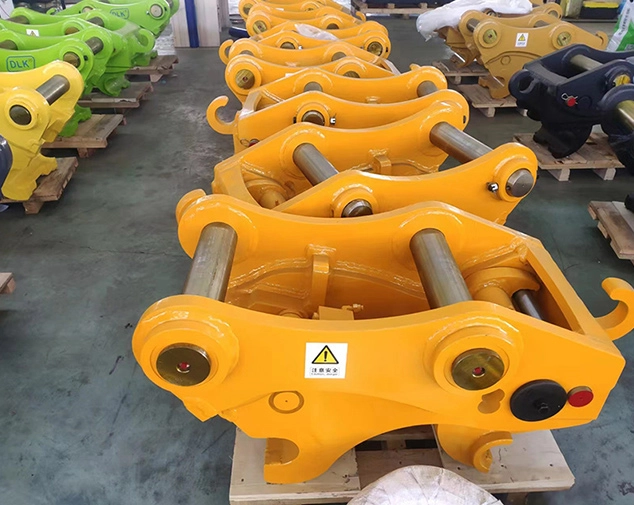
Quick Coupler for a More Flexible Recycling Workflow
A quick coupler allows one excavator to use several attachments during the same shift. The operator may start with a grapple, change to a shear and return to a bucket for cleanup.
That flexibility can reduce idle time. It is valuable in smaller yards where buying a dedicated excavator for every task is not practical. A coupler is most useful when the attachment set has been planned as one system. A shear, grapple and pulverizer should not be selected as unrelated products.
How to Match Attachments to Excavator Size and Recycling Tasks
For light vehicle handling, a grapple paired with a compact shear may be enough. A mixed scrap yard may need a rotating shear and a stronger sorting grapple. Trucks and buses require a reinforced shear with suitable cutting capacity. Operations that handle residual concrete or bulky structures may add a pulverizer or breaker.
Attachment weight must be considered alongside hydraulic output. A large tool can reduce reach and stability if the carrier is too small. A small tool may leave cutting capacity unused on a larger excavator.
Before ordering, confirm the excavator model, operating weight, hydraulic flow, pressure, pin dimensions and auxiliary line configuration. Application photos can help the manufacturer make a more realistic recommendation.
A Practical Vehicle Recycling Workflow
The work sequence affects which attachment delivers the most value.
-
Stabilize and inspect the vehicle.
-
Complete required fluid and hazardous-material removal.
-
Use the grapple for positioning and handling.
-
Cut major metal structures with the hydraulic shear.
-
Sort ferrous, non-ferrous and non-metal materials.
-
Use a pulverizer or secondary tool for residual oversized material.
-
Load processed scrap for transport or downstream recycling.
The work sequence affects which attachment delivers the most value.
This arrangement keeps each attachment focused on the job it performs best. It also gives the operator a predictable workflow during busy production periods.
Features That Reduce Total Cost of Ownership
Purchase price is only one part of attachment value. In a recycling yard, downtime is expensive. A damaged blade or failed hydraulic component can interrupt the entire line.
Wear-resistant steel helps in areas exposed to abrasion. Replaceable blades can extend the useful life of a shear. Strong bushings and protected hydraulic hoses reduce routine damage.
Maintenance access is easy to overlook. Grease points should be reachable without lengthy disassembly. Service parts should be available through a dependable supply channel.
Rotation systems also deserve inspection. Smooth rotation improves positioning and may reduce unnecessary movement from the carrier. Over time, that can support better fuel efficiency and less operator fatigue.
Why Choose Kingho Technology for Recycling Attachments?
Kingho Technology focuses on excavator front-end attachments for demanding work conditions. Its product scope covers applications such as grabbing, shearing, dismantling and recycling.
For a vehicle recycling operation, the value lies in matching the attachment to the carrier and the work sequence. A manufacturer familiar with hydraulic shears, grapples and related tools can help avoid a common purchasing mistake: selecting a powerful attachment that does not fit the excavator’s hydraulic system or daily workload.
Product pages should be checked for verified specifications, available configurations and service support before a quotation is requested.
Buying Checklist Before Requesting a Quote
Checklist:
-
Excavator make, model and operating weight
-
Hydraulic flow and pressure
-
Vehicle types and average material thickness
-
Required rotation angle
-
Daily working hours
-
Preferred attachment-change method
-
Local service and spare-parts requirements
-
Photos or videos of the intended working conditions
Conclusion
A productive vehicle recycling setup often combines a hydraulic scrap shear with a heavy-duty grapple. A pulverizer and quick coupler can add flexibility when the material stream changes. The right attachment package should fit the excavator and the yard’s real workflow.
Looking for the right attachment for car dismantling or vehicle recycling?
Contact Kingho Technology with the excavator specifications and target application. Its team can help identify a practical configuration for cutting, handling and material recovery.
FAQ
Q: What is the best excavator attachment for cutting car bodies?
A hydraulic scrap shear is generally the most suitable attachment for cutting vehicle frames, roofs and other steel structures. The correct model depends on excavator size, hydraulic output and material thickness.
Q: Can one excavator use both a hydraulic shear and a grapple?
Yes. With a suitable quick coupler or planned attachment-change process, one excavator can use a grapple for handling and a shear for dismantling.
Q: How do I choose the correct attachment for my excavator?
Confirm operating weight, hydraulic flow, pressure, pin dimensions and the type of vehicles being processed. Application details help the manufacturer recommend a compatible attachment.