
The Complete Guide to Excavator Attachments: Types, Uses, and Selection
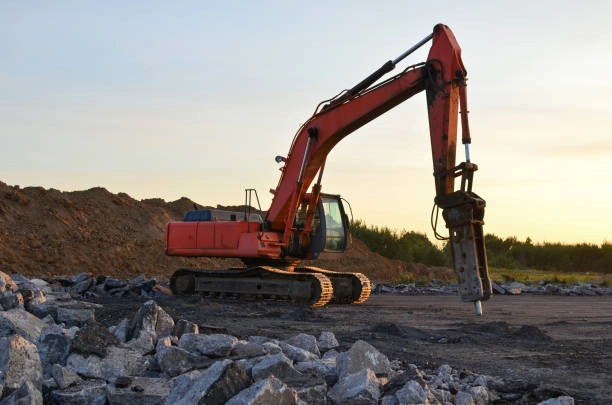
An excavator does more than dig. Add the right front end attachment. Then the same carrier breaks concrete. It cuts steel. It handles scrap. It compacts trenches. It drives piles. It sorts demolition waste. And it dismantles vehicles.
Pick an attachment with more in mind than excavator tonnage. Tool weight counts. Hydraulic flow counts. Working pressure counts. Mounting dimensions count. The material being processed counts. All these things change how well it works.
What Are Excavator Attachments?
Excavator attachments are tools that you can swap. You fit them to the excavator arm with a pin-on bracket or quick coupler. Buckets and rakes work through the standard linkage. Hydraulic excavator attachments need extra support. Breakers, grapples, shears, compactors, and pile drivers belong in this group. They require one or more auxiliary circuits.
Each attachment changes hydraulic power into one clear action. A breaker creates impact energy. A grapple holds material. A shear delivers cutting force. The tool, bracket, hydraulic circuit, and excavator work together as one system.
Common Types of Excavator Attachments and Their Uses
Excavator Buckets
Buckets are the most common excavator attachments. General purpose buckets move soil and loose material. Reinforced rock buckets work well in rough or packed ground. Skeleton buckets divide fine material from larger rocks. Ditch cleaning buckets and trapezoidal buckets shape slopes. They also form drainage channels. Match bucket capacity to material density. Do not simply choose the largest size.
Hydraulic Breakers
A hydraulic breaker for excavator use turns oil flow into repeated blows. It breaks rock, concrete, asphalt, and frozen ground. These tools appear often in quarrying. They appear in roadwork. They appear in trenching. They appear in demolition. The excavator must supply the needed oil flow and pressure. It must avoid high back pressure. Chisel type must fit the task. Moil points break into hard material. Blunt tools work well for secondary breaking.
Excavator Grapples and Grabs
Excavator grapple attachments pick up material. They sort it. They load it. They move it to a new spot. Orange peel grapples manage irregular scrap and waste. Sorting grapples give more control over demolition debris. Log grapples, rock grapples, and clamshell grabs fit timber, stone, bulk materials, and dredging work. Buyers should check tine setup, opening width, capacity, rotation, and material density.
Hydraulic Shears and Demolition Attachments
Excavator demolition attachments cover hydraulic steel shears, concrete pulverizers, demolition crushers, and multi-processors. A hydraulic shear for excavator use cuts structural steel. It cuts pipes. It cuts tanks. It cuts scrap. Pulverizers crush reinforced concrete. They separate rebar. Fixed tools work well for ground-level secondary processing. Rotating attachments help with placement during primary demolition.
Compaction Attachments
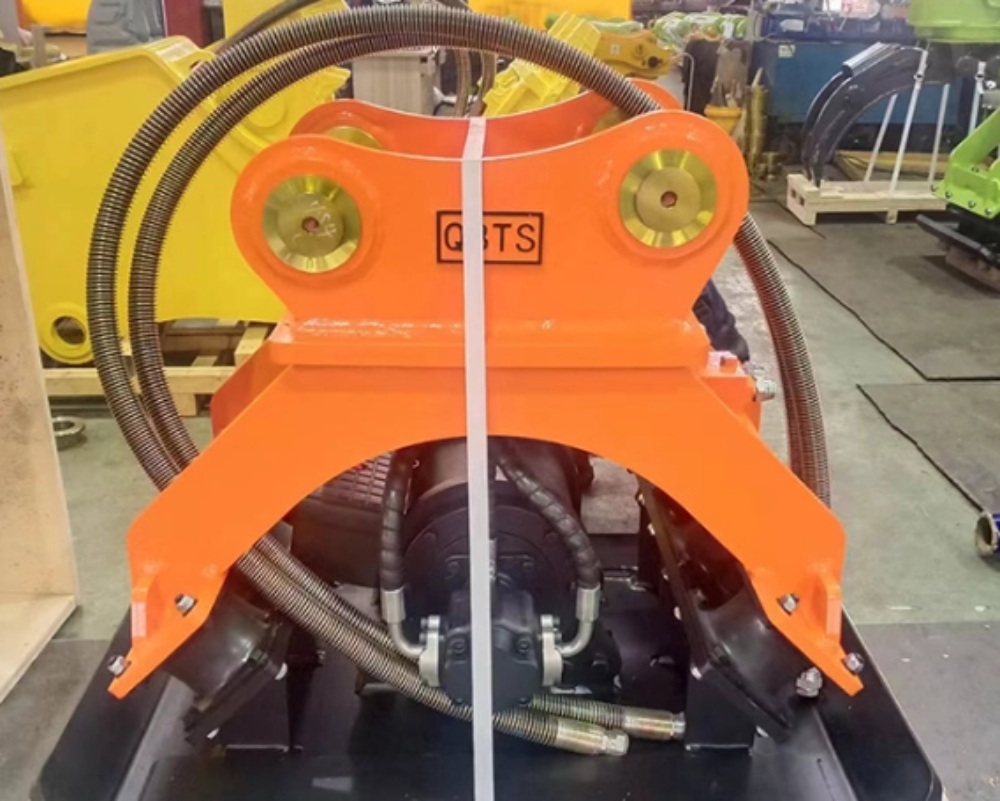
Hydraulic plate compactors and compaction wheels let an excavator pack soil from above. Plate compactors fit trench backfill. They fit pipe bedding. They fit slopes, foundations, and tight spots where rollers cannot reach. Compaction wheels press cohesive soil. They can combine backfilling with compaction. The tool must create suitable vibration. It must stay within the carrier’s hydraulic limits.
Quick Couplers and Hydraulic Thumbs
Quick couplers make attachment changes faster. They let one excavator handle several tasks in a shift. Coupler selection must fit pin diameter. It must fit pin spacing. It must fit dipper width and attachment geometry. A secure locking system matters. Operator checks matter. Hydraulic thumbs push against a bucket. They grip rocks, logs, pipes, and debris.
Recycling and Vehicle Dismantling Attachments
Car dismantling shears, clamp arms, scrap grapples, and metal cutting attachments let operators remove parts. They separate valuable metals. They reduce material size. Vehicle dismantling tools often use narrower jaw profiles for precise placement. Kingho Technology supplies equipment for scrap handling and end of life vehicle processing. It also supplies attachments for breaking, grabbing, shearing, and demolition.
How to Choose the Right Excavator Attachment
1. Check Excavator Size and Operating Weight
Begin with the carrier’s operating weight. Check its lifting chart. Check boom setup and working radius. Tool weight includes the attachment, bracket, coupler, hoses, and any material held in the jaws or grapple. Too much weight lowers stability. It speeds up wear in pins, bushings, and boom structures.
2. Confirm Hydraulic Flow and Pressure
Compare the attachment’s required flow and pressure with the excavator’s auxiliary circuit. Too little flow causes slow cycles or weak impact performance. Excessive flow can create heat, seal damage, and premature wear. Check whether the tool requires one-way flow, two-way flow, a low-pressure return, a case-drain line, or a separate rotation circuit.
3. Consider the Material and Application
Select the tool around the actual material and production target. Use a breaker for rock or concrete, a steel shear for structural sections, and a pulverizer for reinforced concrete and rebar separation. Orange peel grapples suit mixed scrap, while sorting grapples provide more precise handling. Plate compactors suit trench backfill, and vibratory pile drivers are designed for sheet-pile installation.
4. Check Mounting Dimensions
Provide accurate mounting information before production. Important measurements include pin diameter, center-to-center pin distance, arm width, and linkage dimensions. When a quick coupler is installed, identify its make, model, and pickup dimensions. Excavator brand and model alone may not be sufficient because arm and coupler configurations vary.
5. Evaluate Durability and Maintenance
Search for steel that resists wear in rough spots. Look for stronger areas at stress points. Check that hydraulic parts are shielded. Make sure teeth or blades can be replaced. Grease points should be easy to reach. Wear parts should be available. Ask how blades are adjusted. Ask how bushings are replaced. Ask what inspections are needed each shift. A design that is easy to service often gives better value than maximum force on paper.
Why Attachment Quality Matters
Attachment quality does more than affect service life. Bad machining can cause pin misalignment. It can cause uneven jaw movement. It can focus stress in the bracket. Welding or material choices that are not good enough can lead to cracks under repeated shock loads. Hydraulic parts of the wrong size can cause leaks. They can cause overheating. They can cause cycle times that vary.
A strong attachment works as expected. It keeps the right clearances. It is easier to inspect and repair. During the time you own it, less downtime matters. Fewer parts used matters. Steady output matters. These gains usually matter more than a small difference in the first cost.
Why Work with an Experienced Excavator Attachment Manufacturer?
An experienced manufacturer should review the excavator model. It should review operating weight, hydraulic parameters, mounting dimensions, material, working environment, and expected production rate before suggesting a model.
Kingho Technology manufactures excavator front end attachments for hydraulic breaking, grabbing, shearing, demolition, compaction, piling, scrap processing, and vehicle dismantling applications. Support may include custom brackets, jaw setups, hydraulic matching, OEM branding, and designs for specific jobs. Clear technical talk before production prevents installation issues. It makes sure the delivered attachment fits the carrier.
Conclusion
The right excavator attachment matches both the machine and the job. Carrier weight matters. Hydraulic flow matters. Working pressure matters. Mounting dimensions matter. Material traits matter. Operating conditions matter. Check all of them before purchase. Choosing only by price or excavator tonnage can lead to poor output. It can lead to unstable work. It can lead to extra wear.
Need help selecting an attachment for your excavator?
Send Kingho Technology your excavator model, operating weight, hydraulic flow and jobsite requirements for an attachment recommendation.
FAQs
Q: What is the most commonly used excavator attachment?
The digging bucket is the most common attachment. It is needed for general excavation, trenching, and loading. Hydraulic breakers, quick couplers, grapples, and compactors are also popular for specialized work.
Q: Can one attachment fit different excavator brands?
Yes, but only when carrier weight, hydraulic capacity, and mounting dimensions are compatible. A different bracket may be required for another brand or model. Hydraulic attachments must also operate within the excavator’s flow, pressure, and return-line limits.
Q: What information is needed to order an excavator attachment?
Provide the excavator brand and model. Provide operating weight, pin diameter, pin center distance, arm width, hydraulic flow, working pressure, and the intended application. Photos of the arm end, coupler, and mounting plate can confirm fit. For grapples, shears, and buckets, also describe the material type, typical size, and density.