
Compaction Wheel vs. Plate Compactor: Which Is Better for Your Excavator?
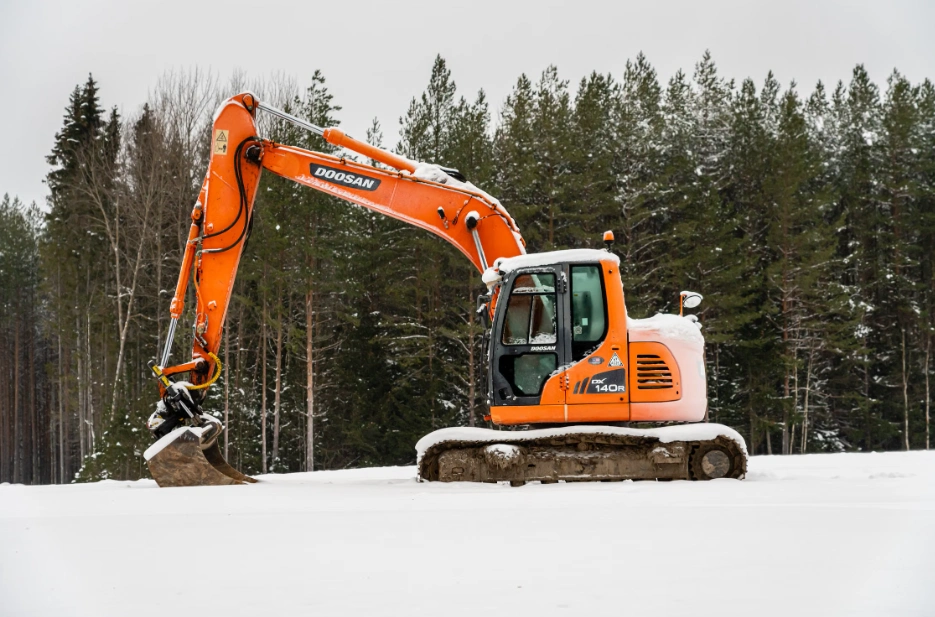
Choosing between a compaction wheel and a plate compactor looks simple until the machine is beside an open trench and the backfill does not behave as expected. Both attachments use excavator downforce, but they transfer energy into the soil differently.
The better option depends on soil type, moisture, trench geometry, required density, and hydraulic capacity. Clay usually needs kneading. Gravel usually responds better to vibration. Mixed fill is where judgment matters.
What Is an Excavator Compaction Wheel?
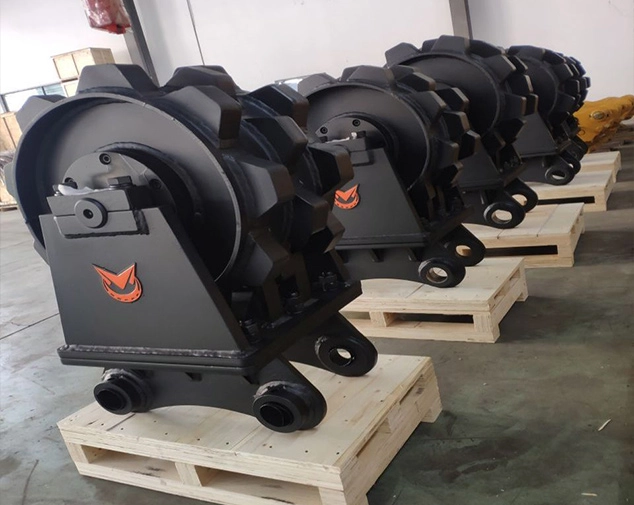
An excavator compaction wheel uses machine weight, boom force, and rolling movement to compact soil. Pads or lugs push into the material instead of only pressing the surface.
That action suits cohesive soils. Clay and silt hold together in lumps, and a smooth plate can sometimes seal the top while softer material remains underneath. A wheel breaks and kneads those lumps as it rolls.
Most compaction wheels do not need auxiliary hydraulic lines. Setup is simple, and maintenance is usually limited to the coupler, frame, bearings, and wear surfaces.
What Is an Excavator Plate Compactor?
An excavator plate compactor combines a flat base plate with hydraulic vibration. Downward pressure loads the surface while vibration rearranges particles and reduces voids.
This works well with sand, crushed stone, and gravel. These materials need particle movement more than kneading. A plate also leaves a flatter surface, useful on foundation layers and road sub-base.
The trade off is hydraulic complexity. Flow and pressure must match the attachment, while hoses, fittings, and the vibration unit need inspection.
What Are the Main Differences Between a Compaction Wheel and a Plate Compactor?
The main difference is how each tool works the soil.
|
Comparison Factor |
Compaction Wheel |
Plate Compactor |
|
Compaction method |
Rolling and kneading |
Hydraulic vibration and pressure |
|
Best soil types |
Clay, silt, and cohesive soil |
Sand, gravel, and granular fill |
|
Hydraulic connection |
Usually not required |
Required |
|
Trench performance |
Strong in narrow trenches |
Best with even plate contact |
|
Surface finish |
Leaves pad marks |
Produces a flatter surface |
|
Maintenance |
Generally lower |
More hydraulic components |
|
Typical applications |
Backfill and pipelines |
Foundations, slopes, and granular fill |
A wheel can appear slower because the operator rolls the same strip several times. In the right soil, those passes work below the surface. A plate may look faster on gravel, but poor contact or incorrect hydraulic flow quickly reduces its effect.
Neither attachment is better everywhere. That claim belongs in a brochure, not on a jobsite.
Which Attachment Is Better for Different Soil Types?
Soil behavior should drive the decision. Machine size and attachment width come after the material itself.
Clay, Silt and Cohesive Soil
A compaction wheel is usually the stronger choice for clay, silt, and damp cohesive fill. Its feet penetrate the surface and create a kneading action through the lift.
Wet clay around a utility line is a common example. A vibrating plate may bounce or polish the top. The layer looks firm, yet a probe still finds soft material below. A wheel can bite into the lift and work it more evenly.
Saturated clay will not compact properly just because a heavier attachment is used. The material may need drying, replacement, or thinner lifts.
Sand, Gravel and Granular Fill
Granular fill usually favors a plate compactor. Vibration helps particles move into a denser arrangement, especially when moisture is suitable.
On a crushed stone foundation layer, a plate covers the surface evenly and leaves it ready for the next operation. A wheel may apply pressure, but its lugs can disturb grading.
Mixed fill needs a closer look. Mostly clay with some stone may still suit a wheel. Mostly gravel with limited fines often responds better to vibration.
Which Is Better for Trench Backfilling?
For many trench jobs, the compaction wheel is the practical choice. It reaches into narrow cuts, works from the excavator’s normal position, and compacts each lift without putting a worker or walk behind machine inside the trench.
Wheel width matters. Too narrow and production falls. Too wide and the attachment rides on the trench walls instead of loading the backfill.
A hydraulic plate compactor can be better when the trench is wide, the fill is mainly sand or gravel, and the base plate can maintain full contact. It also helps when a flatter layer is required.
Lift thickness still controls the result. A large excavator cannot correct a trench filled in one deep layer.
How Do Operating Costs and Maintenance Compare?
Compaction wheels are mechanically simple. Routine checks usually involve the coupler, welds, bearings, and wear surfaces. There are fewer failure points and no vibration motor.
Plate compactors need more attention. Hoses can rub against the stick, fittings can loosen, and incorrect flow can overheat the unit.
That does not make the plate a poor investment. On large areas of granular fill, higher productivity can justify the maintenance. Cost is better measured per completed cubic meter than by purchase price alone.
How Should You Choose Between a Compaction Wheel and a Plate Compactor?
A useful selection process starts with the soil, then checks access, finish requirements, and machine compatibility.
Check the Soil and Moisture Conditions
Identify whether the backfill is cohesive, granular, or mixed. Check moisture too. Very dry clay resists kneading; saturated clay pumps and smears.
Material that forms a firm ribbon when squeezed behaves like cohesive soil. Material that falls apart and drains freely is more likely to respond to vibration.
Evaluate the Working Area
Look at trench width, depth, slope angle, and available boom movement. A plate needs reasonably even contact. A wheel handles irregular fill better but needs room to roll.
Surface finish matters. Pad marks are rarely a problem inside a trench. They are less welcome on finished sub-base.
Match the Attachment to the Excavator
Check carrier weight, coupler dimensions, pin size, working width, and lifting capacity. For a plate compactor, verify hydraulic flow and pressure before connection.
An oversized attachment reduces control and adds boom load. An undersized unit may work, but production suffers.
Which Excavator Compaction Attachment Is the Better Choice?
A compaction wheel is usually better for clay, silt, cohesive backfill, and narrow trench work. A plate compactor is usually better for sand, gravel, crushed aggregate, and areas needing a flatter finish.
Conditions can change within one project. A contractor may use a wheel for lower trench lifts, then switch to a plate for the granular surface course. That is not wasted setup time. It is matching the tool to the soil.
Before ordering, compare excavator weight, working width, coupler dimensions, and the material being compacted. Reviewing available excavator compaction wheel sizes and specifications is more useful than choosing by bucket class alone.
FAQ
Q: Can a compaction wheel be used on gravel?
Yes, but it is rarely the best option for clean gravel. A plate compactor usually works granular material more effectively.
Q: Does a compaction wheel need hydraulic lines?
Most standard models do not. They rely on excavator downforce and rolling movement.
Q: Can a plate compactor be used in clay?
It can, especially in thin lifts, but it may seal the surface without fully working deeper cohesive material.
Q: How many passes are needed?
There is no fixed number. Soil type, lift thickness, moisture, attachment size, and density requirements affect the answer. Field density testing is the reliable check.