
Excavator Ripper vs Hydraulic Breaker: Which Attachment Is Better for Hard Ground?
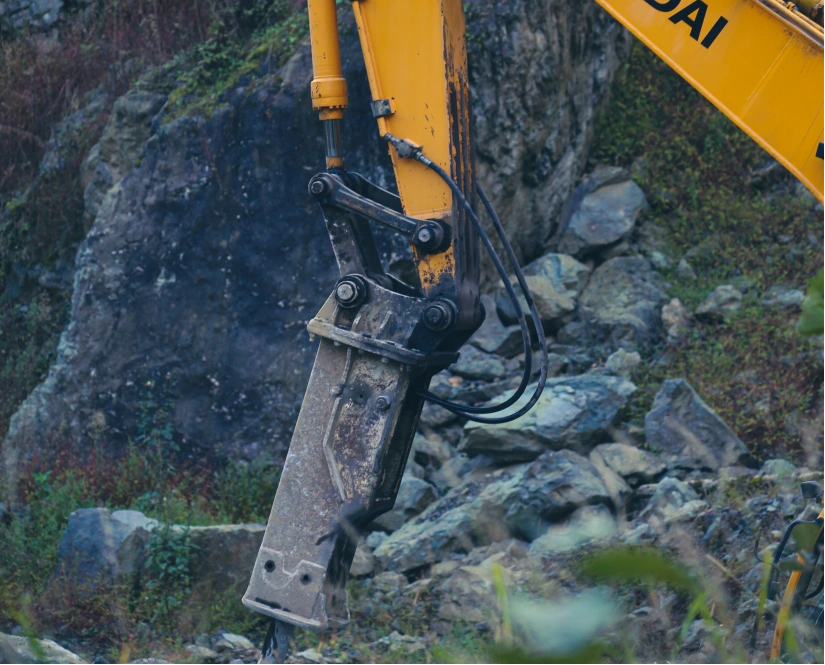
For many hard ground jobs, an excavator ripper should be tried before a hydraulic breaker. Not every time. Dense rock and reinforced concrete still belong to the breaker. But when the ground can be penetrated, cracked, or peeled out in layers, a ripper is often the faster, cheaper, and quieter tool.
A breaker breaks. A ripper opens the ground.
That difference changes wear, noise, cycle time, and how much stress goes back into the excavator. On frozen clay or weathered rock, the wrong attachment can make a capable machine look weak.
What Is an Excavator Ripper Used For?
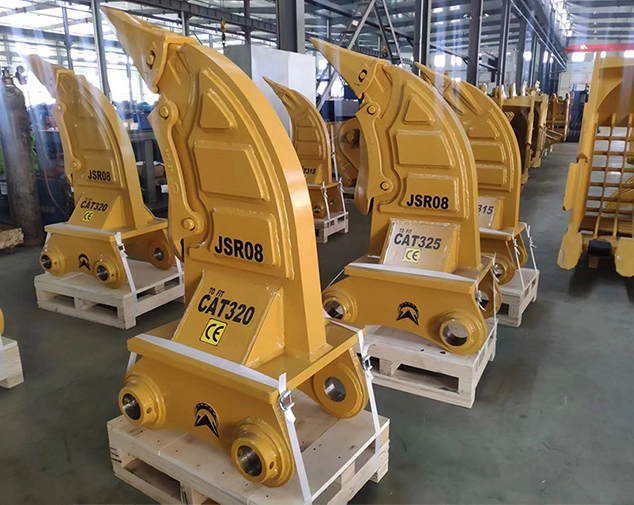
An excavator ripper is a heavy single-tooth attachment built to bite into hard material and pull it apart. It does not smash the ground. It uses the excavator’s stick and bucket cylinder force to penetrate, tear, and loosen.
That matters in layered ground. A bucket edge may slide across hardpan or frost without cutting. A ripper tooth can find a weak line, open it, and let the bucket return later for cleaner loading.
Common ripper applications include:
- Frozen soil before trench excavation
- Compacted clay and hardpan
- Weathered rock or soft stone
- Root removal
- Foundation excavation preparation
A good ripper is mechanically simple. No hoses. No piston. No nitrogen charge. The tooth, shank, pins, and weldments do the work.
What Is a Hydraulic Breaker Used For?
A hydraulic breaker is the tool for material that must be fractured by impact. Solid rock, reinforced concrete, and old pavement are typical breaker jobs.
The breaker takes hydraulic power from the excavator and converts it into repeated blows through the tool bit. It is direct and effective, but loud and less forgiving. Poor oil flow, dry firing, or bad tool angle can shorten tool and bushing life quickly.
Hydraulic breakers are commonly used for concrete demolition, pavement removal, trench rock breaking, quarry secondary breaking, and reinforced slabs.
The question is whether impact force is needed.
How Do Rippers and Breakers Work Differently?
The difference is obvious at the controls. With a ripper, the operator searches for entry points and pulls through the material. With a breaker, the operator holds position, keeps the bit square, and lets impact energy create fractures.
|
Comparison Factor |
Excavator Ripper |
Hydraulic Breaker |
|
Working method |
Penetrates and tears |
Impacts and fractures |
|
Best material |
Frost, hardpan, weathered rock |
Solid rock, concrete |
|
Noise and vibration |
Lower |
Higher |
|
Maintenance |
Lower |
Higher |
|
Best job goal |
Loosen before digging |
Break before removal |
A frozen utility trench is a good example. A ripper may loosen the top layer so the bucket can finish the cut. A breaker could do the same work, but with more noise, more vibration, and often more cleanup. On a reinforced concrete footing, the ripper is the wrong tool. The breaker belongs there.
Which Attachment Is Better for Hard Ground?
“Hard ground” is too broad. That phrase causes many poor attachment choices.
A ripper is better when the ground is hard but still has structure the tooth can exploit. Frost usually qualifies. So does compacted clay, soft shale, decomposed granite, and weathered limestone. The material feels difficult with a bucket, but it is not one solid block.
Choose an excavator ripper when:
- The bucket cannot penetrate, but the ground can be torn loose
- The material breaks in layers, chunks, or plates
- Noise and vibration need to stay low
- Maintenance cost matters
- The goal is to loosen material before bucket loading
A hydraulic breaker is better when the material is solid, bonded, or reinforced. Concrete is the obvious case. Dense rock with no bedding plane is another.
Choose a hydraulic breaker hammer when:
- The material must be broken into smaller pieces
- Ripping only scratches the surface
- The job is demolition rather than excavation
- Reinforced concrete or pavement is involved
- The excavator has enough hydraulic flow and pressure
A simple judgment helps: if the ripper tooth can enter and lift a seam, keep ripping. If it only polishes the surface, use the breaker.
Can You Use Both Attachments on One Job?
Yes. Many difficult sites are mixed. A trench may start in compacted fill, hit frozen clay, then run into pockets of rock. A demolition site may have concrete, buried stone, and hard subgrade under the slab.
A practical sequence often looks like this:
- Use the breaker to fracture concrete or very hard rock.
- Switch to the ripper to pull apart cracked material.
- Use the bucket to remove loose material and clean the cut.
This is not about using more equipment. It is about not forcing one attachment to do the wrong work.
How Do You Choose the Right Attachment?
The attachment decision should be made before the excavator is struggling on site.
Check these points:
- Material type:hard soil, frost, soft rock, solid rock, or concrete
- Machine size:attachment strength must match excavator tonnage
- Hydraulic capacity:critical for breakers, less critical for rippers
- Noise limits:breakers can be a problem near homes or urban streets
- Wear budget:breaker tools and bushings need regular attention
- Coupler fit:pin size, quick coupler layout, and working angle matter
A ripper with poor geometry will not penetrate well. A breaker on an underpowered carrier will hit weakly and heat the hydraulic system. Matching matters more than many buyers expect.
For hard soil, frozen ground, and weathered rock, a well-matched excavator ripper attachment is often the practical tool before bucket excavation. It protects the bucket from taking all the abuse and gives the operator a better way to open the ground.
Need help choosing the right attachment for hard ground, frozen soil, rock, or demolition work?
Kingho Technology manufactures durable excavator front-end attachments built for demanding jobsite conditions. Whether you need an excavator ripper, hydraulic breaker, bucket, quick coupler, or customized attachment solution, our team can help match the right tool to your machine, material, and working environment.
Contact Kingho Technology today to discuss your project requirements and find the attachment that helps your excavator work faster, cleaner, and more efficiently.
FAQ
Q: Is an excavator ripper better than a hydraulic breaker?
For hard soil, frozen ground, compacted clay, and weathered rock, usually yes. For solid rock, concrete, and reinforced material, a hydraulic breaker is usually better.
Q: Can a ripper break rock?
A ripper can loosen soft or weathered rock, especially if cracks or layers are present. It is not the right tool for dense solid rock.
Q: What size excavator is suitable for a ripper attachment?
The ripper should match the excavator’s tonnage, pin size, coupler type, and digging force. An undersized ripper may bend or wear quickly, while an oversized ripper may reduce efficiency or stress the machine.
Q: Should I buy a ripper or a hydraulic breaker first?
If most jobs involve hard soil, frozen ground, compacted clay, or weathered rock, a ripper is often the better first choice. If the work mainly involves concrete, pavement, or solid rock, a hydraulic breaker is usually more suitable.