
How Does an Excavator-Mounted Railway Sleeper Changer Work?
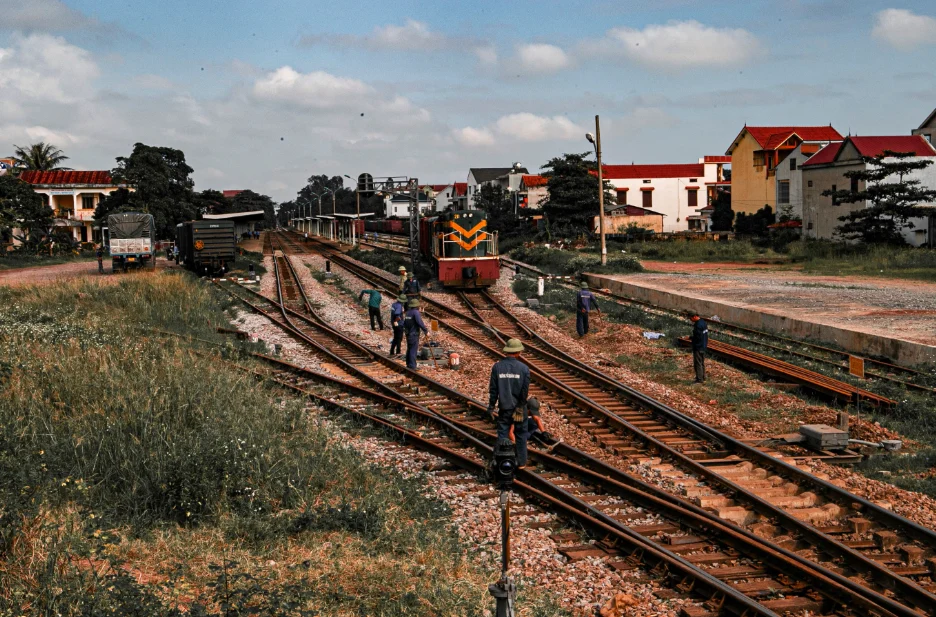
Replacing a damaged sleeper is rarely simple. Ballast may be packed hard, fasteners may be seized, and a concrete sleeper can be difficult to control once it starts moving sideways.
An excavator-mounted sleeper changer gives the carrier the gripping and pulling force needed for this work, without bringing in a full track renewal system.
What Is a Railway Sleeper Changer?
A railway sleeper changer is a hydraulic attachment mounted on an excavator arm. It grips an existing sleeper, pulls it from beneath the rails, then positions and inserts a replacement.
The name varies by market. “Sleeper” is common in the UK, Europe, Australia, and much of Asia. In North America, the same component is usually called a “railroad tie” or “cross tie.” It may also be called a tie changer, tie exchanger, or railroad tie replacement attachment.
It is not a track renewal train. Renewal trains are built for long sections and high-volume replacement. An excavator-mounted unit is better suited to local defects, routine maintenance, emergency repairs, sidings, yards, and restricted sites.
A few damaged sleepers after a derailment are a typical case. A compact excavator near the line can often handle the work with the correct attachment.
Why Railway Sleepers Need Replacement
Sleeper failure depends on material and track conditions.
Wooden sleepers rot, split, or lose their ability to hold spikes and fasteners. Concrete sleepers may crack around the rail seat, break after impact, or lose support when ballast deteriorates. Steel sleepers can corrode, bend, or distort around fastening points.
Derailments, washouts, floods, and heavy impacts may destroy an otherwise usable sleeper. Other problems are less visible. A sleeper may appear intact but no longer restrain gauge or distribute loads correctly.
Replacement should follow inspection standards and site conditions. Appearance alone is not enough.
Step-by-Step Sleeper Replacement Process
The sequence changes with the fastening system and local work rules, but the mechanical process is usually similar.
- Inspect the track and mark the damaged sleeper.
- Release or remove the rail fasteners.
- Clear ballast from the sleeper ends and sides.
- Position the hydraulic clamp and grip the old sleeper.
- Pull the sleeper sideways from beneath the rails.
- Align the replacement with the opening.
- Push it into position and correct its angle.
- Return ballast around and beneath the sleeper.
- Tamp, level, and reinstall the fasteners.
- Check gauge, spacing, rail position, and support.
Ballast clearance is often where the job slows down. Wet ballast can behave like compacted soil. More clamping force will not fix that. Forcing the sleeper may damage the attachment, sleeper, or rail seat. Some machines include a ballast blade or bucket for this reason.
Alignment matters too. A concrete sleeper pulled at the wrong angle can jam halfway out. Small corrections at the start usually save more time than extra pulling force later.
Which Sleeper Materials Can Be Handled?
Wooden, concrete, and steel sleepers can all be handled, but they place different demands on the attachment.
Old timber may be soft or split, so excessive clamping force can crush it. Concrete sleepers are heavier and need stable positioning, enough grip, and a suitable clamp opening. Steel sleepers are often lighter, though damaged surfaces may be harder to grip.
Special sleepers and turnout bearers need separate checking because they may be longer, heavier, or shaped differently.
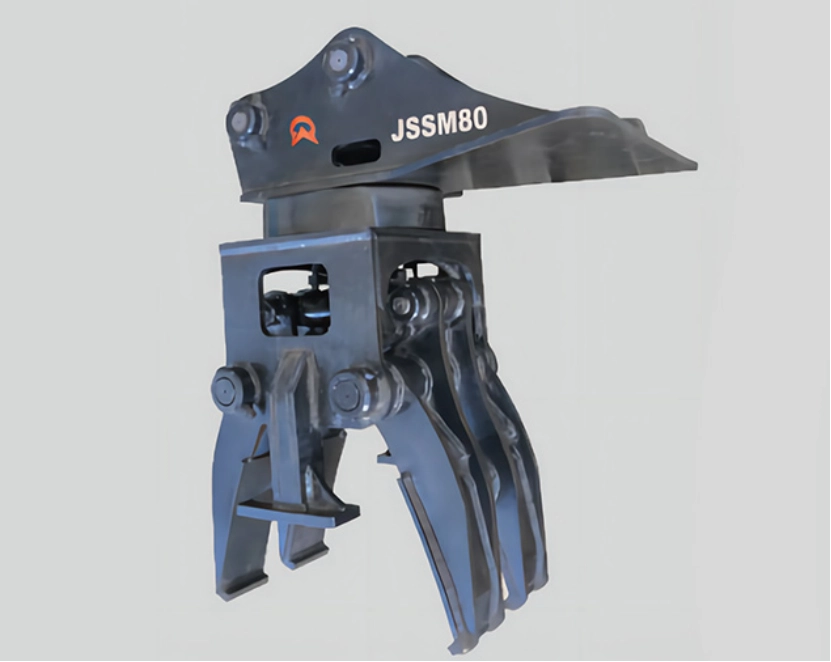
The Kingho Technology sleeper machine is specified for cement, wood, and steel sleepers. Sleeper width, weight, condition, and available side clearance still need to be confirmed.
Excavator and Hydraulic Requirements
A sleeper changer must be matched to the carrier, not attached to any excavator of roughly the right size.
Check operating weight, auxiliary pressure, oil flow, hose arrangement, coupler dimensions, and lift capacity. Attachment weight affects stability, especially when the load is held to the side.
Rotation helps when access is restricted or sleepers are stored at an angle. It also adds hydraulic demand. Continuous 360-degree rotation is useful on some jobs and unnecessary on others.
As a practical example, the Kingho Technology’s JSSM80 is listed for 6–9 tonne excavators. The attachment weighs 716 kg, uses a stated driving pressure of 200 bar, requires a listed flow of 150–200, and has a 600 mm opening. These figures affect control, heat generation, and clamping response.
Mounting details should be checked before delivery. Pin diameter, pin centres, stick width, coupler type, hose fittings, and auxiliary settings can differ between excavators in the same weight class.
Sleeper Changer vs. Manual Replacement
|
Comparison |
Manual Replacement |
Excavator-Mounted Sleeper Changer |
|
Labor requirement |
Usually requires a larger ground crew |
Can reduce the number of workers involved in lifting and pulling |
|
Heavy handling |
Relies more on bars, lifting tools, and manual positioning |
Most pulling and positioning is handled hydraulically |
|
Working speed |
Depends heavily on crew size, ballast condition, and sleeper weight |
Usually provides more consistent cycle times during repeated work |
|
Concrete sleeper handling |
Physically demanding and difficult to control |
Better suited to heavy sleepers when correctly matched to the carrier |
|
Initial equipment cost |
Lower for small, occasional repairs |
Requires a suitable excavator, attachment, and transport |
|
Best application |
Isolated repairs and light timber sleepers |
Repeated replacement, heavy sleepers, emergency repairs, and short work windows |
There is also a machine cost: transport, setup, hydraulic matching, and carrier availability. For repeated replacement, mechanized handling usually makes more sense
How to Choose the Right Sleeper Changer
Start with the sleeper and work back to the excavator.
Confirm maximum sleeper width and weight. Identify whether the work involves timber, concrete, steel, or turnout bearers. Check side clearance, clamp opening, gripping force, attachment weight, rotation range, and whether the same tool must clear ballast.
The carrier then needs a closer look:
- Is it within the recommended weight range?
- Can its hydraulic circuit provide the required pressure and flow?
- Is a drain or separate return line required?
- Will it use a direct mount or quick coupler?
- Is the carrier a standard excavator or a road-rail machine?
- Are jaws, pins, bushes, hoses, and wear parts replaceable?
“Suits an 8-ton excavator” is not enough. Two machines in that class may have different hydraulic output, coupler geometry, and lifting capacity. A proper matching sheet prevents expensive changes on site.
Frequently Asked Questions
Q: Can a sleeper changer handle concrete railroad ties?
Yes, if the attachment has sufficient gripping force, opening width, and load capacity. The excavator must also remain stable while positioning the heavier tie.
Q: What size excavator is required for a sleeper changer?
It depends on attachment weight, sleeper weight, working radius, and hydraulic demand. Compact models may suit 6–9 tonne excavators, while turnout work can require a heavier carrier.
Q: Can a standard excavator be used for railway sleeper replacement?
Yes, where access and operating rules allow it. The excavator needs the correct mounting interface and hydraulic circuit. A road-rail machine is often preferred when the carrier must travel along the track.
Q: What hydraulic flow does a sleeper changer require?
There is no universal figure. Flow must match the manufacturer’s specified range. Too little flow causes slow response; excessive flow can create heat and poor control.
Q: What is the difference between a sleeper changer and a sleeper grab?
A sleeper grab mainly lifts and handles sleepers. A sleeper changer is designed to pull sleepers from beneath the rails and insert replacements, often with side-pulling geometry and sometimes a ballast-clearing function.