
Are JCBs and Excavators the Same Machine? Let’s Find Out
If you have ever visited a building site or merely driven by a pavement maintenance operation, you have probably spotted those substantial yellow units that create excavations and shift earth. Yet the key point is this: numerous individuals label any earthmoving device a “JCB,” whereas many others simply term them all “excavators.” This practice is similar to designating every paper handkerchief a Kleenex or every carbonated beverage a Coke. Although such naming suits relaxed conversations, when you intend to acquire machinery or engage a team, comprehending the true distinctions can transform your approach entirely.
The fact remains that although both units excavate, they execute the task through notably distinct mechanisms. Furthermore, the crucial “front-end” devices affixed to them, referred to as attachments, are the elements that truly accomplish the required outcomes. This is where enterprises such as Guangdong Kingho Technology enter the scene, for they have invested more than ten years in guaranteeing that regardless of the unit you operate, you possess the suitable implement for the specific duty ahead.
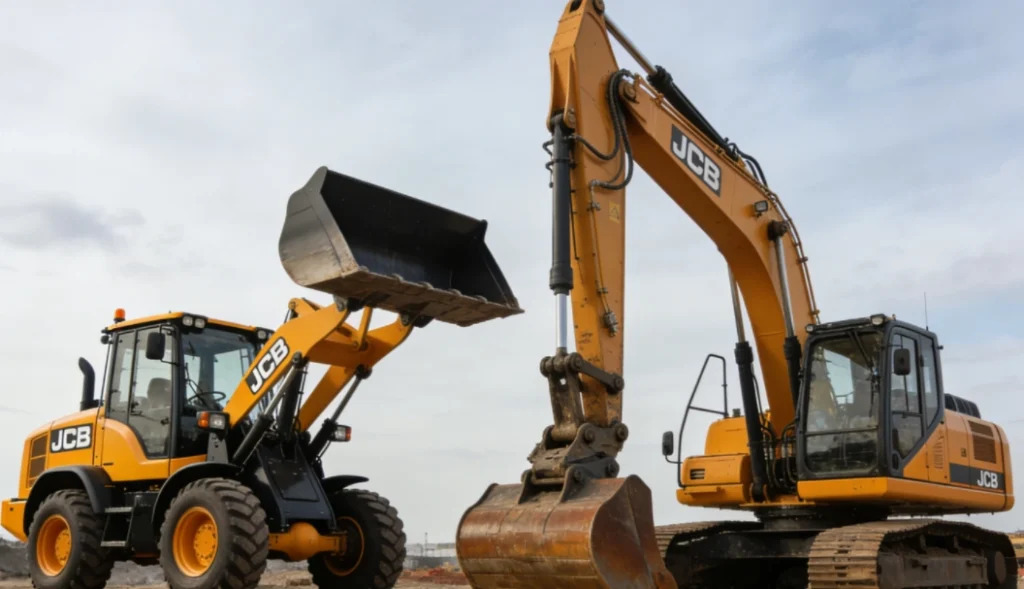
1. Introduction to the Great Construction Debate
In the domain of robust equipment, considerable terminology confusion prevails. “JCB” functions as a brand designation, notably recognized for the backhoe loader, that unit equipped with a front loader scoop and a rear excavation arm. An “excavator,” in comparison, constitutes a particular class of unit that concentrates solely on excavation and hoisting through a cab capable of 360-degree rotation.
Consider it in these terms: a backhoe resembles a versatile pocket tool, proficient in multiple functions to a reasonable degree. An excavator, by contrast, parallels a focused drilling apparatus; it performs a single role, yet it executes that role with considerable force and exactness. Kingho Technology appreciates this equilibrium, and consequently, they have diversified from solely producing hydraulic breakers to supplying more than 50 diverse attachment variants since 2012.
Irrespective of whether you demolish a residence or merely excavate a channel for conduits, the unit represents merely a portion of the narrative. The authentic effectiveness arises when you commence interchanging scoops for breakers or cutters, thereby adapting to evolving site demands.
2. Key Structural and Operational Differences
The primary indicator concerns their locomotion. A backhoe loader, in the “JCB” configuration, generally employs large rubber wheels, facilitating straightforward transit across a worksite or even along thoroughfares. Excavators typically employ tracks, known as crawlers. Consequently, they relocate more gradually, but they manage soft, irregular surfaces adeptly, where wheeled units might become immobilized.
Additionally, the rotation feature merits attention. A backhoe pivots its arm approximately 200 degrees at maximum. However, an excavator’s cab rotates perpetually in a complete 360-degree arc. This full rotation offers a substantial benefit in confined locations or during swift truck loading. Kingho Technology has embraced this progressive aspect of the field, concentrating on portable gear that renders these units more effective than they were a decade earlier.
Recognizing these inherent boundaries assists in determining which unit to deploy at the location. Nevertheless, after the unit arrives, ensuring no time loss in manual implement exchanges becomes essential. Hence, the appropriate coupler proves invaluable in this context.
3. Optimizing Efficiency With the Hydraulic Quick Hitch
During earlier periods, altering an attachment required hammers, pins, and extensive irritation, often demanding prolonged durations. In the present era, persisting with those conventional methods results in financial losses. The Hydraulic Quick Hitch essentially serves as a swift connector for your excavator, permitting the operator to transition from a scoop to a breaker without exiting the cab.
Kingho’s DLK brand introduced its initial quick hitch in 2011. Over subsequent years, they have meticulously enhanced the structure, incorporating robust Q345 manganese steel to prevent corrosion or fracture under strain. They moreover incorporated a “double lock” edition, acknowledging that safety permits no compromises. Should a scoop detach owing to an improperly positioned pin, catastrophe ensues. Kingho’s configuration employs a safety pin alongside a “tiger mouth” spring disc, thereby securing the implement firmly in place.
After installing your hitch correctly, you can shift from excavation to dismantling rapidly. Moreover, for demanding materials, a tool that delivers powerful strikes becomes indispensable.
4. Powering Through Obstacles With the Hydraulic Breaker Hammer
Occasionally, operations extend beyond relocating soil to confronting hardened concrete, chilled earth, or firm stone. A conventional scoop cannot address such challenges. At that juncture, the Hydraulic Breaker Hammer becomes the preferred choice. Kingho initiated their endeavors with these implements, achieving sales exceeding 600 units within their second operational year.
Rather than producing uniform hammers for every scenario, they offer Side Type, Top Type, and Box Type breakers suited to varied operational approaches. By 2015, they released durable lines including the 165F and 185F, constructed to endure severe usage. When you dismantle a structure or operate in a pit, these hammers function as dependable drivers that sustain project advancement.
Nevertheless, following the fragmentation of materials into segments, clearing the residue remains necessary. You cannot permit a heap of stones to remain; thus, a scoop capable of bearing substantial loads is required.
5. Heavy-Duty Material Handling With the Earth and Rock Bucket
Although one might view a scoop as interchangeable, applying a standard earthmoving scoop to irregular stone accumulations would erode the metal swiftly. Kingho’s Rock Buckets are constructed distinctly. They apply durable steel panels to sections experiencing the greatest wear.
The edges incorporate teeth engineered to seize sizable stones and hasten the filling procedure. Durability defines their essence. As Kingho utilizes superior materials coupled with protective segments, these scoops endure considerably longer than economical variants from other providers. Whether you contour a gradient or clear a sediment-filled stream base, a scoop tailored to the substance renders the task notably less arduous.
Opting for the correct scoop offers advantages, yet discerning the producer of the components enhances confidence. Dependability derives from the manufacturing site, beyond mere marketing materials.
6. The Kingho Advantage: Quality and Certification
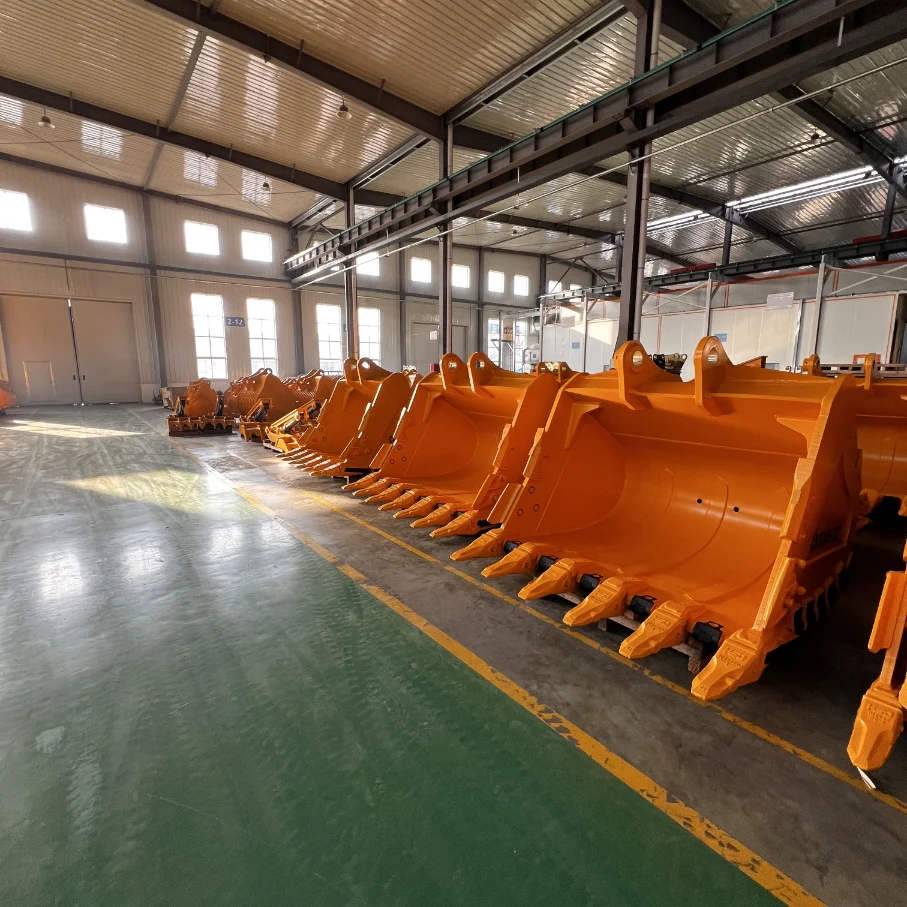
While procuring attachments, you seek a supplier with proven longevity. Guangdong Kingho Technology commenced operations in early 2009. Subsequently, they have augmented their facility to surpass 57,000 square meters and outfitted it with CNC machining devices to maintain steady quality levels.
Their commerce transcends local boundaries as well. They have regularly attended prominent global expositions such as BAUMA CHINA and BICES in Beijing over many years. They possess essential accreditations too, encompassing ISO9001, CE certification, and recognition as a high-tech enterprise. These elements extend past aesthetics; they signify that acquiring a cutter or gripper from them ensures adherence to rigorous worldwide criteria.
7. Conclusion: Choosing the Right Tool for the Job
Thus, do JCBs and excavators equate? Certainly not. One embodies a flexible multi-tasker, the backhoe, while the other specializes in intensive applications, the excavator. However, irrespective of the unit present at your site, its utility depends on the attachment secured to the arm’s terminus.
To derive maximum value from your acquisition, you require equipment that resists failure amid difficulties. Spanning quick couplers that conserve time to breakers that pulverize dense stone, Kingho Technology has dedicated the preceding 15 years to ascertaining the precise requirements of operators.
FAQ
Q1: Can I use Kingho attachments on any brand of excavator?
A: Yes, Kingho designs its attachments to be highly adaptable. For example, their tilt buckets are suitable for various models ranging from 4 to 50 tons. They can also personalize specifications and structural forms to meet different customer needs.
Q2: What makes a “Rock Bucket” different from a regular bucket?
A: A Rock Bucket is reinforced in high-stress areas with high-strength steel and casting guard plates. It also features a wide mouth and specially designed tooth plates to make loading large rocks or gravel much faster and easier.
Q3: Is it hard to install a Hydraulic Quick Hitch?
A: Not at all. Kingho’s quick hitches are designed for simple installation to help with fast operations. Their modular designs often allow for switching attachments in as little as 15 minutes, drastically reducing downtime on the job.