
How To Identify Exactly Which Eyebolt Is Never Used For Overhead Lifting And Ensure Your Excavator Bucket Lifting Eye Remains Fully Compliant
Heavy build work carries big risks. The gap between a good lift and a bad break often hinges on one small part. When checking an excavator bucket lifting eye, keep in mind that not every threaded part works the same. Picking the wrong one, like a smooth or “basic” eyebolt, for side pulls leads to many site mishaps. To keep your machines up to top safety levels, select gear from a maker that puts build strength first. Kingho Technology serves as a key player in the heavy add-on field. The company focuses on its own design, build, and make of smart digger tools. Their plant turns out items from tough scrap car breakers to exact-shaped buckets. All use real Swedish Hardox steel. With ten years of know-how and firm CE and ISO9001 approvals, they offer the steady base projects need. Their focus on fine stuff and better join methods makes sure each add-on, including key lift spots on their Earth bucket, holds up to the rough pulls of current base tasks. Picking a tested partner like this lets site work run smooth. You know the parts come from a place that cares about shape skill just as much.
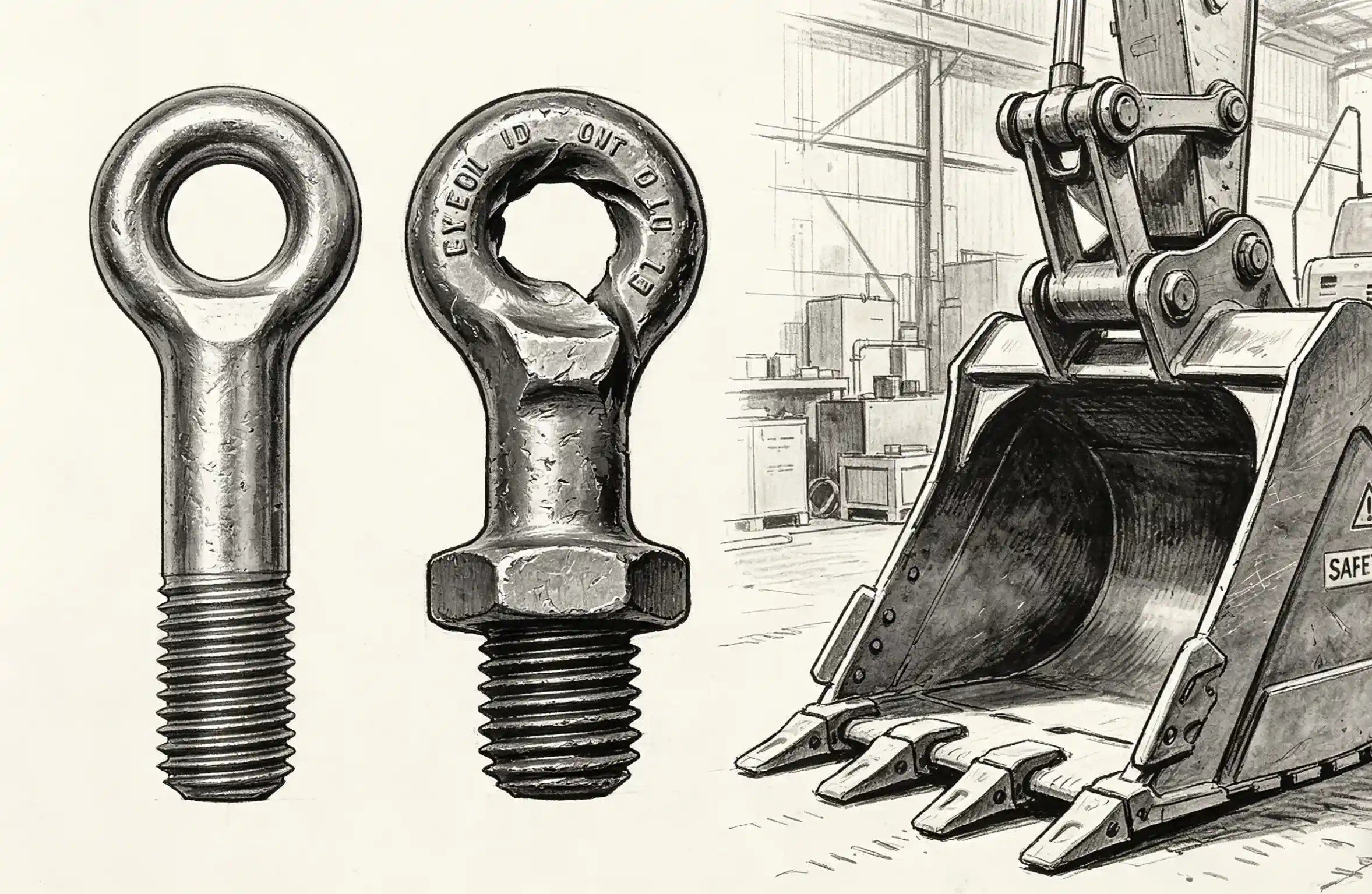
Why Must You Identify Which Eyebolt Is Strictly Forbidden for Overhead Lifting?
Safety rules aim to stop machine breaks under pull. Spotting the “banned” part marks the start of a safe work area.
Plain Pattern Eyebolts Are Never Used for Angular Loading
Basic type (no-shoulder) eyebolts have no place in lifts with side angles. Such bolts miss the strong shoulder that rests flat on the fix surface. Without that back-up, a small side tug makes a bar effect. This can break the bolt at the stem right away. The load then falls fast.
Bent Eye Bolts Fail Under Industrial Tension
Regular “bent” eye bolts, formed by curving a metal bar into a ring, show up in tool shops often. Yet they do not fit build sites. These lack ratings for top lifts since the ring can spread under big strain. Always check that the excavator bucket lifting eye forms a shaped, full ring built for work rope setups.
OSHA Compliant Excavator Bucket Lifting Eye Requirements
A legal and safe site calls for an OSHA compliant excavator bucket lifting eye. U.S. rules demand all lift aids show a clear hold limit and a safe edge of at least 5:1. Unrated parts risk machine breaks. They also bring heavy fines and job halts.
How Do You Maintain High Safety Standards for an Excavator Bucket Lifting Eye?
Steady checks and picks set the life of gear and crew well-being.
Excavator Bucket Lifting Eye Safety Standards for Daily Inspection
Set up a strict daily look at bends and rubs. Any stretch in the “eye” or clear splits in the root metal means take it out now. Following these excavator bucket lifting eye safety standards stops small wear from turning into a big issue in key lifts.
|
Inspection Point |
Passing Criteria |
Rejection Criteria |
|
Eye Shape |
Perfectly circular or oval as per design |
Any visible “necking” or elongation |
|
Shank/Base |
Flush with the bucket surface |
Gaps, bending, or thread exposure |
|
Surface Integrity |
Smooth, painted, or galvanized |
Deep gouges, rust pitting, or cracks |
Excavator Bucket Lifting Eye Load Capacity and Weight Distribution
The maker sets the excavator bucket lifting eye load capacity. Never go over it. This cap covers the bucket’s own weight plus the stuff inside. Pushing too hard starts tiny cracks in the metal. These weaken the fix spot over time.
|
Bucket Class |
Typical Rated Capacity (tons) |
Recommended Lifting Limit |
|
10-15 Ton Carrier |
3.0 – 5.0 |
80% of Rated Capacity |
|
20-30 Ton Carrier |
7.0 – 10.0 |
80% of Rated Capacity |
|
35-50 Ton Carrier |
12.0 – 15.0 |
80% of Rated Capacity |
Correct Orientation for Multi-Point Lifts
In a lift, the tug direction must line up with the eye’s flat side. A “sideways” pull cuts the part’s hold power a lot. Good rope work spreads the pull even over the shaped metal. This guards the excavator bucket lifting eye from early breaks.
Which Hardware Upgrades Enhance the Reliability of Your Excavator Attachments?
Switching to pro-level parts cuts upkeep needs and boosts machine use range.
Advantages of a Weld on Excavator Bucket Lifting Eye
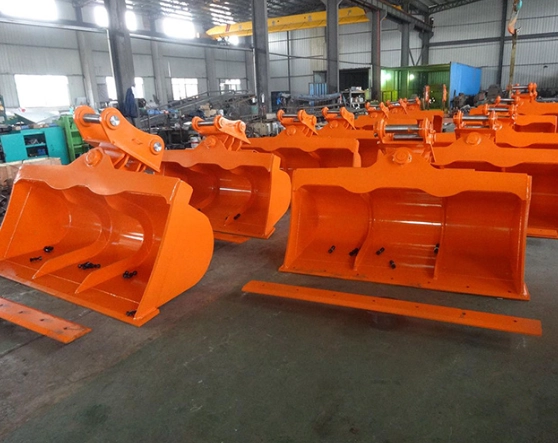
For lasting, tough jobs, a weld on excavator bucket lifting eye gives better hold than screw types. When fixed right on strong steel buckets, these shaped spots join the build fully. They avoid risks like a bolt loosening or thread wear in high-shake break work.
Timely Excavator Bucket Lifting Hook Replacement Procedures
Rubs happen in rough ground-move spots. Plan for excavator bucket lifting hook replacement before metal hits 10% wear. Swapping hooks and eyes ahead stops a chain fail. A weak fix spot can harm the bucket’s side plates or fluid pins.
Integrating Premium Earth Buckets for Specialized Material Handling
The fix spot’s build health ties to the bucket’s quality. A top Earth bucket makes the root metal around the excavator bucket lifting eye thick enough for focused weights. It avoids bends or rips under heavy sand or stone hauls.
How Can Professional Support Services Guarantee Long-Term Compliance?
Expert help beyond the parts keeps runs even and safe.
Utilizing Expert Engineering Services for Custom Rigging Solutions
Each build site has its own shape. Pro services let talks with shapers who fit lift spots to your machine’s weight. This makes add-ons not just usual, but tuned for the real pulls in the work area.
Comprehensive Maintenance and Technical Training
Providers that give more than items help a lot. Set tech aid teaches teams the fine points of gear care. This covers right join ways for swap eyes to proper use of weight sheets. Fleets stay in best shape this way.
Ensuring Global Quality Standards Through Certified Manufacturing
Quality speaks worldwide. Parts made under tight world watch bring calm. Every join and shaped bit passes hard break and no-break tests. They fit the needs of tough base projects.
Why Should You Contact Specialists for Your Heavy Lifting Requirements?
Straight talk with pros speeds up getting the right parts for your work setup.
Initiating Professional Contact for Technical Specifications
Before fleet updates, use main contact lines to go over your machine’s fluid and build limits. Skilled helpers give exact sizes and hold rates for an excavator bucket lifting eye. It fits your current gear just right.
Securing Reliable Supply Chains for Critical Safety Hardware
In 2026, steady supply lines matter most. Direct work with a maker brings true, approved parts. Avoid unchecked outside items that could risk crew safety and firm name.
Establishing Partnerships for Future Infrastructure Development
Ties with field leads offer first pick on new add-on tech. As job needs change, a partner who knows your past and gear wants quick replies and spot-on item picks.
Right part choice and steady check habits make the excavator bucket lifting eye a safe and useful tool. Skipping usual traps of unrated eyebolts and favoring approved, shaped bits guards funds and workers.
FAQ
Q: Which eyebolt is strictly prohibited for overhead lifting at an angle?
A: Basic type (no-shoulder) eyebolts stay out of side-angle lifts. They suit only straight-up “in-line” tugs. For angled jobs, pick a shouldered eyebolt or a shaped, rated excavator bucket lifting eye for the load type.
Q: How often should I inspect the weld on a lifting eye?
A: Do a sight check before each work turn. Watch for web-like splits in paint near the join, signs of metal tire. Run a full no-harm test yearly or after shock hits on the eye.
Q: What does the “safety factor” mean for a lifting eye’s load capacity?
A: The safe edge (often 5:1 for top lifts) means the part holds five times its set limit before a big break. Yet never push past the listed weight on purpose. This buffer covers rubs, shakes, and moving pulls in the lift.