
How to Evaluate an Excavator Attachment Supplier Before an International Order

Choosing an excavator attachment supplier is a project decision, not just a price comparison. A low quotation can become expensive when an attachment arrives with the wrong mounting dimensions, unsuitable hydraulics, incomplete documents, or no dependable source for wear parts.
International buyers need a repeatable way to compare suppliers before issuing a purchase order. This checklist focuses on evidence buyers should request.
1. Does the Supplier Cover Your Attachment and Carrier Range?
Start with the work, then verify the supplier’s range. A credible excavator attachment manufacturer should match the attachment to the carrier’s operating weight, hydraulic circuit, mounting interface, and application. Product breadth matters when a project needs a breaker, grapple, compactor, and pile hammer from one source.
Kingho Technology organizes the range under construction machinery attachments, including rippers, buckets, magnet lifts, sleeper machines, compacting wheels, quick hitches, thumbs, rakes, grapples, steel/log grabs, plate compactors, pile hammers, shears, pulverizers, and breaker hammers. This gives buyers a starting point for comparing a complete attachment package instead of sourcing every tool from a different vendor.
Ask each shortlisted supplier for:
-
the attachment models available for your excavator tonnage;
-
the recommended application and material limits;
-
standard and optional mounting arrangements;
-
hydraulic flow, pressure, hose, and control requirements;
-
the availability of matching spare and wear parts.
Do not treat a long catalogue as proof of suitability. The useful evidence is a clear match between your machine data and the proposed model.
2. Can the Supplier Verify Hydraulic and Mechanical Compatibility?
Compatibility is the most common technical failure point in an attachment order. The supplier should review the excavator model, operating weight, auxiliary valve configuration, pump flow, relief pressure, return-line arrangement, pin diameter, arm dimensions, and coupler type. For multi-function tools, confirm whether separate circuits or proportional control are needed.
The supplier’s data should be specific enough for an engineer to check. For example, Kingho Technology publishes hydraulic breaker models with defined pressure and flow ranges, hose sizes, chisel diameters, and suitable excavator tonnage. A buyer can use those fields to compare the attachment against the machine’s manual and hydraulic test results.
Request a written compatibility sheet before approving production. It should identify assumptions and dimensions still needing confirmation. A recommendation made without the carrier’s technical information is incomplete.
3. Which Quality Documents Belong in the RFQ and Order File?
Quality assurance is easier to manage when documents are agreed before manufacturing starts. Separate mandatory documents from useful supporting evidence in the RFQ.
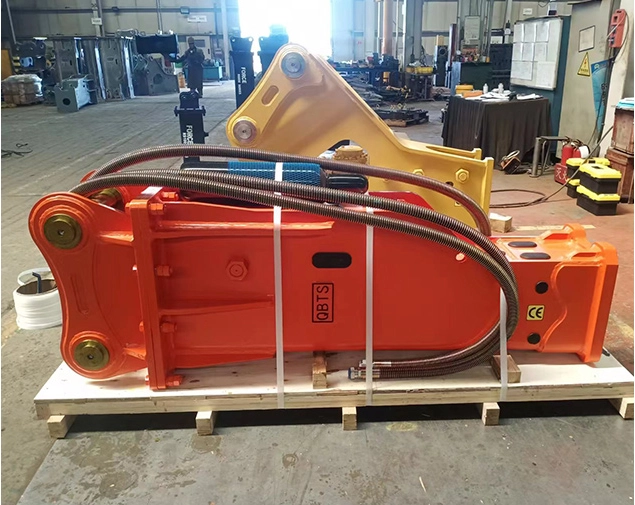
Request:
-
a final technical data sheet and approved drawing;
-
material or component specifications for load-bearing parts;
-
inspection points for welding, machining, and hydraulic assembly;
-
a factory acceptance or finished-product test record;
-
a packing list, nameplate details, and operating manual;
-
warranty terms and the process for reporting a defect.
Certification supports the assessment, but it does not replace product-level inspection. Kingho Technology lists ISO9001, ISO14001, CE, SGS, BV, and high-tech enterprise certifications. Ask how those systems are applied to the specific attachment through traceability, inspection records, and release checks.
Include document delivery dates in the purchase order. A manual or drawing that arrives after shipment is difficult to use for installation planning, customs review, or operator training.
4. How will Customization and Engineering Support be Controlled?
Custom dimensions are valuable when a standard attachment does not fit. They also create change-control risk. Define what is being customized: opening width, shell shape, jaw geometry, mounting bracket, hydraulic interface, wear protection, paint, or controls.
Before production, approve one revision-controlled drawing. Record the design inputs, such as carrier model, material density, working radius, temperature, and duty cycle. Ask who approves deviations and how a late change affects lead time and price.
Kingho Technology describes customized services covering product size, function, materials, and special operating environments. The same service information describes technical consultation for selection, installation, use, and maintenance. For a complex order, turn those promises into deliverables: a fitment review, drawing approval, installation guidance, and a named contact for technical questions.
An engineering review should also cover the attachment’s limits. A log grapple may need different claws and wear areas for abrasive scrap. A demolition breaker may need different tooling and maintenance intervals than one used for occasional trenching. Clear limits protect productivity and warranty expectations.
5. Can the Supplier Support Delivery, Spare parts, and After-Sales Work?
The purchase is not complete when the crate leaves the factory. Compare export process, packaging, documentation, spare-parts access, and the response path for technical issues.
For delivery, confirm the Incoterm, destination, package dimensions, gross weight, moisture protection, lifting points, and responsibility for export documents. Ask for packing photos before dispatch.
For after-sales support, clarify:
-
which wear parts are stocked and how they are identified;
-
whether installation guidance is included;
-
the response time for a fitment or hydraulic question;
-
what evidence is required for a warranty assessment;
-
how software, valves, seals, teeth, chisels, or hoses are replaced.
Kingho Technology lists global logistics, installation guidance, technical consultation, and bulk or long-term supply support. Buyers in the United States, Canada, Australia, Europe, Latin America, or other listed markets should still confirm the shipping route and local service arrangement.
A Simple Supplier Scorecard for Procurement Teams
Use the same scoring sheet for every quotation:
| Decision area | Suggested weight | Evidence to score |
| Fitment and hydraulic match | 30% | Compatibility sheet, approved drawing, machine data review |
| Product and application coverage | 20% | Models, tonnage range, documented use cases |
| Quality and documentation | 20% | Inspection plan, test records, certificates, manuals |
| Custom engineering | 15% | Revision control, design review, change process |
| Delivery and after-sales | 15% | Packing plan, lead time, spare parts, response path |
Record price, but do not let it hide missing evidence. A higher unit price can still mean a lower project cost when fitment, documentation, delivery, and parts support are dependable.
Contact Kingho Technology to submit your details and receive a practical, viable solution.
FAQ
Q: What information should I send to an excavator attachment supplier?
Send the excavator make and model, operating weight, auxiliary flow and pressure, coupler or pin dimensions, intended material, working conditions, quantity, destination, and target delivery date. Photos of the dipper end and hydraulic connections can help.
Q: Is a CE or ISO certificate enough to approve an attachment?
No. Certificates indicate a management system or conformity framework, but the order still needs a product drawing, technical data, inspection records, and installation documentation. Review the evidence for the exact model being purchased.
Q: Should I buy several attachment types from one supplier?
It can simplify compatibility reviews, spare-parts planning, and logistics when the supplier supports the required applications. Compare each attachment on its own technical evidence before treating a broad catalogue as an advantage.
Q: How early should customization be discussed?
Discuss it during the RFQ stage. Early confirmation of dimensions, hydraulic interfaces, materials, and duty cycle reduces drawing changes and improves lead-time accuracy.
The best excavator attachment supplier is the one that makes technical fit, quality evidence, and post-delivery support visible before payment. Use the checklist to turn a catalogue comparison into a controlled procurement decision.