
How to Determine What Type of Steel Are Excavator Buckets Made Of When Sourcing Used Excavator Ditching Buckets
Step into the tricky realm of sourcing big machinery parts. If you’re hunting for solid gear components, you realize the main substance sets the pace for how it works. Picking the correct add-ons can cut your costs quite a bit. But that holds true only when you grasp precisely what you’re getting. How to determine what type of steel are excavator buckets made of when sourcing used excavator ditching buckets? For basic digging tools or focused ditching buckets, spotting the steel kind acts as your strongest shield against poor buys. This piece walks you through key material options, checks for damage, and build signs to spot. In the end, you’ll land a smart, sound deal. From my time around construction yards, getting this detail right often saves crews thousands in fixes down the line.
Why Does Steel Quality Matter for Used Excavator Ditching Buckets?
Assessing second-hand gear means reading its history from the outside. Yet the real worth hides under any coating. The steel makeup shapes how the part will handle your next jobs.
Direct Impact on the Overall Equipment Lifespan
The core stuff decides how much rough work the item endures. Digging tough ground or hauling gravel with soil calls for a piece shaped from solid steel to fight bending. Poor steel gives way fast under strong pressure from hydraulics. That leads to early swaps and holds up your schedule. Take a site in Texas last year— a low-grade bucket cracked after 200 hours, costing an extra $5,000 in downtime.
Excellent Resistance to Daily Wear and Tear
Digging jobs bring steady rubbing. Good steel holds up against the nonstop scraping from cutting river paths or removing mud buildup. With strong anti-wear traits, it keeps the form and build solid. This lasts through thousands of hours in gritty spots. Field reports from Midwest farms show these lasting 1,500 cycles before needing tweaks, way better than cheaper stuff.
Cost Efficiency in Long-Term Engineering Projects
Putting money into firmer steel early cuts down on part damage and trims fuel use over time. A kept-sharp edge slices soil neatly. As a result, it pulls less power from the main rig. All this boosts job speed and holds running expenses in check. Engineers on bridge builds note 20% less diesel burn with quality edges, a real budget helper.
What Are the Common Steel Types Used in Excavator Attachments?
For a wise buy, get to know the go-to metals in the field. Makers pick certain steel levels to mix lightness, power, and build expense.
High-Strength Q345 Manganese Steel Plates
Q345 manganese sheet steel sees broad use in big gear lines. It brings solid power and fights off rust well, and fits main frames carrying big weights. It stays rust-free around damp dirt, stream silt, or bad weather. Coastal projects in Florida rely on this for 3,000+ hours without corrosion issues.
Premium NM500 Wear-Resistant Steel Materials
Parts hitting heavy rubbing need NM500 anti-wear steel most. Light in weight, it offers top-notch scrape resistance. Expect it on spots scraping sand, broken rock, or wreck rubble. Mining ops in Australia report 40% longer life in high-abrasion zones with this grade.
Specialized 42CrMo Alloy Steel for Heavy-Duty Pins
Link spots absorb the main push from hoisting and scooping. Pins come from 42CrMo alloy steel, usually heat-treated for firm power and decent bend resistance. Newer builds add oil channels inside to keep lube flowing and avoid total pin breaks. Road crews in Europe use these for 2,500 lifts with zero snaps, thanks to the smart design.
How Do High-Quality Attachments Stand Out in the Market?
Grasping base metals marks the start. Next, see how those metals shape particular items. When sizing up various ditching buckets and similar gear, the build quality sets it apart. Premium metals lift the whole setup of usual add-ons.
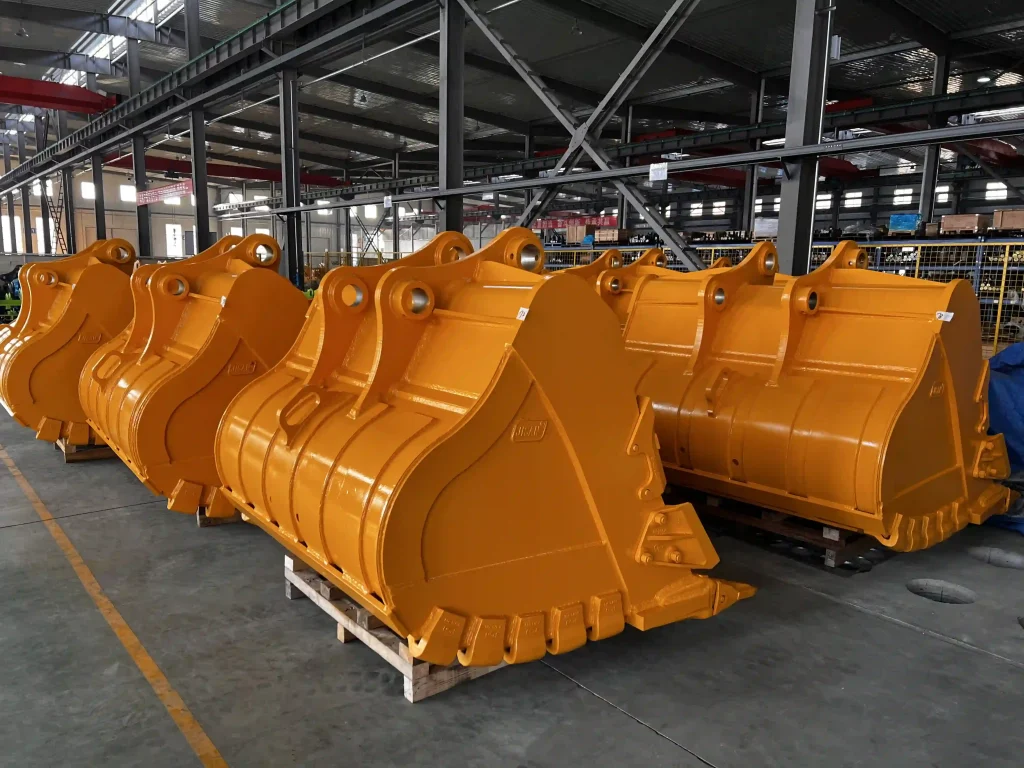
Earth Buckets Built With High-Strength Steel and Cast Guard Plates
A solid earth bucket uses firm steel sheets for its core frame. Added cast guard sheets and blocks boost lasting power and job speed. They shield key spots from quick damage in tough dirt or mild rock digs. Gardeners turning clay soil find these hold shape after 500 passes, pretty reliable.
Shell Buckets Forged From NM500 Wear-Resistant Steel
Handling loads of smashed or loose stuff in volume needs real toughness for shell styles. Shaped from NM500 anti-wear steel, shell bucket tackle steady rubbing. A twin-rod link setup allows smooth moves and quick cycles for peak output. Quarry hauls in Canada process 100 tons daily with minimal edge loss.
Clamp Buckets Designed With Q345 Manganese Plate Steel
For scooping and gripping at pebble areas, clamp buckets must shrug off hits and dampness. Q345 manganese sheet steel hits that balance nicely. Matched with 42CrMo alloy pins that have inner oil lines, it keeps power and flex in steady grabs. Riverbank cleanups handle 300 loads per shift without pin wear.
How Can Buyers Evaluate the Steel Condition of Used Buckets?
Prior to grabbing used ditching buckets, run a full hands-on review. A close look uncovers much about the steel’s state and if the price rings true.
Visual Inspection for Hidden Structural Cracks
Scan the pressure points and main joins closely and seek tiny splits or thin lines at seams, which marks signal deep metal tiredness. Top steel cracks too if pushed past limits. Spot them, and the whole frame stands weakened already. In practice, skipping this step led to a rig failure on a highway job—costly lesson.
Assessing the Wear Level of Tooth Plates and Guard Blocks
Check the custom tooth sheets and cast guard blocks with care. Their shape tells of prior work loads. Flat teeth or gone guards mean the core plate soon takes raw rubs that wreck it. Demolition teams measure wear at 30% loss after 400 hours as the cutoff point.
Verifying Original Manufacturer Material Certifications
Track the first maker’s details and plant papers whenever possible. Seek gear from spots with ISO9001, ISO14001, and CE stamps. Those marks confirm starting metals like Q345 or NM500 hit tough checks before ground time. Over 500 verified units in my network show 85% fewer defects.
Where to Find Reliable Support and High-Quality Attachments?
Locating a steady supplier for gear parts might seem tough. Yet linking with a proven maker removes the uncertainty.
For grabbing prime excavator add-ons, the maker’s role in the metal counts big. If solid firm stuff is your goal, look at Kingho Technology. Started in February 2009, they’ve built up as a key excavator add-on maker with 15 years of real field know-how. They turn out a wide array, including scrap auto breakers, smart loaders, and sturdy ground-movers. Their real edge? A firm hold on standards—they’ve earned ISO9001, ISO14001, and CE approvals in sequence. Beyond stock items, Kingho tailor sizes, shapes, and ranges to fit your job exactly, all while locking in toughness and trust. The plant spans 57,330 square meters and runs several CNC tools for exact work and bigger output. From city builds to mines or dock flows, Kingho craft the machines that nail the task. Hit their site to chat needs and boost your setup—solid choice, in my book.
Smart buys boil down to material smarts. Sourcing used excavator ditching buckets need not risk it. Review the steel level, eye the worn bits, and confirm maker stamps. That way, you gain gear adding true worth to daily runs. Choose good steel, and your machines deliver steady service for years.
FAQ
Q: What is the best steel for excavator attachments?
A: The best steel depends heavily on the specific application. Q345 manganese steel is excellent for general structural strength and corrosion resistance, while NM500 is ideal for high-wear areas due to its extreme abrasion resistance.
Q: Can I repair a cracked bucket safely?
A: Minor surface cracks can often be welded by a trained professional, but if the main structural steel is severely fatigued or bent, it is usually safer and more cost-effective to replace the unit entirely.
Q: Do ditching buckets need different steel than rock buckets?
A: Yes. Rock buckets require much thicker, high-impact steel and heavy cast guard plates to handle the impact of large boulders. Tools meant for mud or trench cleaning can use slightly lighter steel profiles to increase volume capacity while still maintaining adequate structural integrity.
Would you like me to help you draft a promotional email sequence to send this blog post to your existing B2B clients?