
How to Choose an Excavator Scrap Shear for H-Beams, I-Beams, Pipe, Plate, and Rebar Bundles

Choosing an excavator scrap shear by tonnage alone is a common mistake. A shear may fit a 20-ton excavator and still perform poorly on heavy H-beams or tightly packed rebar. The material profile matters. So does the way the scrap arrives at the yard.
An attachment used for occasional demolition faces a different workload from one running through a recycling yard all day. The right choice connects the excavator, hydraulic circuit, cutting geometry, and actual steel.
1. Define Your Scrap Processing Workflow First
The attachment should match the work sequence. A yard cutting long structural steel needs different handling behavior from a contractor reducing mixed debris beside a building.
Identify the Main Application
Think about where the shear will spend most of its working hours. Scrap metal recycling yards need repeated cuts and predictable cycles. Building and bridge demolition brings awkward angles and limited access. Vehicle dismantling calls for controlled cuts around frames and enclosed sections.
Port scrap handling adds another concern. The machine may work on uneven ground while sorting long sections. Easy positioning can save more time than a small increase in headline cutting force.
Measure the Material You Cut Most Often
Record maximum steel thickness, beam height, flange width, pipe diameter, and wall thickness. Measure rebar by individual bar diameter and bundle size. Daily tonnage is useful too. A shear selected for ten cuts per hour should not be judged like one expected to work continuously.
2. Choose the Right Shear Configuration
Configuration affects approach angles and how often the excavator must reposition. The best shape on a product page is not always the best shape in a crowded yard.
Eagle Shears
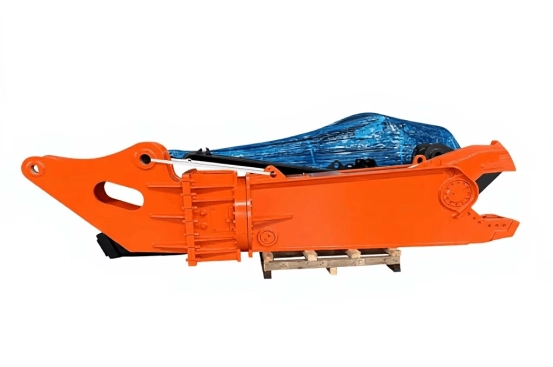
Eagle shears suit structural steel, pipes, rebar, and dismantling work. Their profile gives the operator a clear line toward long sections. That helps when an H-beam must be separated from a frame. Kingho Technology’s JS280 eagle shear for 20–26 ton excavators is aimed at this type of steel processing.
Universal or Demolition Shears
Universal shears make more sense when feedstock changes constantly. One hour may involve tanks or machinery. The next may bring mixed demolition steel. They suit buyers who value versatility over a narrow beam-cutting focus.
Fixed or Rotating Models
Fixed shears are often simple and robust. Rotating shears improve positioning around structures and reduce excavator movement. That flexibility can improve visibility and control. The decision depends on access, machine balance, and available hydraulic circuits.
3. Match the Scrap Shear to Your Excavator
Nominal excavator weight is only the entry point. The complete front-end combination must remain stable while the jaws hold an off-center load.
Check Excavator Operating Weight
Confirm the recommended tonnage range. Check front-end lifting capacity and reach as well. A heavy shear placed too far forward can make a machine unstable even when it technically fits.
Verify Hydraulic Requirements
Compare operating pressure and oil flow. Check the return line and auxiliary circuit. A shear may open and close on a weak circuit yet lose speed against dense steel. In a production yard, that changes the number of cuts completed in a shift.
Review Mounting and Coupler Compatibility
Pin-on installation suits dedicated machines. A hydraulic quick coupler helps when the excavator changes attachments during a project. Confirm pin dimensions, hose routing, rotation requirements, and any custom bracket before ordering.
4. Select Cutting Capacity for Each Material Type
“Maximum diameter” is a weak specification for irregular material. Capacity should be discussed with dimensions and operating conditions.
H-Beams and I-Beams
Beam height and flange thickness determine whether the shear can complete a clean cycle. The jaws should capture the section without forcing separate cuts through the web and flange. A rigid frame and supported blades help when beams twist as they are released.
Steel Pipes
Pipe selection depends on outside diameter and wall thickness. Thin pipe can deform before penetration. Thick-wall pipe demands strong jaw geometry and consistent hydraulic force. Round sections must be held securely or they can roll out and side-load the blades.
Steel Plate
Plate cutting varies with thickness, width, and whether the plate is loose or attached. A broad plate can behave like a spring when partly cut. Blade alignment and jaw opening matter. A shear designed for narrow sections may struggle with stacked plate.
Rebar Bundles
Rebar is rarely presented as a single clean bar. Bundles can be compressed or tied tightly. Check individual bar diameter, bundle size, and jaw opening. Anti-jam behavior is valuable. A stalled jaw during a loading cycle costs more than a few seconds per cut.
5. Evaluate Blade Materials, Jaw Design, and Hydraulic Power
Cutting force is only one part of the system. Hardened wear-resistant blades help maintain an edge. Replaceable or reversible blades can reduce downtime. Clearance adjustment helps when wear affects cut quality.
Jaw alignment matters just as much. A strong cylinder cannot compensate for poor material capture. Look for reinforced stress areas, protected hoses, and a structure that resists twisting. Kingho Technology’s excavator shear, crusher, and pulverizer range covers the attachment needs found in demolition and recycling.
6. Consider Durability and Maintenance Before Buying
Inspect weld quality around the body, pivot points, and cylinder mounts. Ask how blades, pins, seals, and wear parts are replaced in the field. Maintenance should cover lubrication, bolt checks, hydraulic inspection, and blade clearance.
Read warranty terms carefully. Wear parts may be excluded. Technical support can matter more than a long warranty headline when a damaged seal stops the shear.
7. Prioritize Safety and Operator Control
Stable matching protects the machine and crew. The operator needs a clear view and controlled jaw movement. Inspect blades, pins, cylinders, and hoses before each shift. Falling beam sections are a planning problem.
Training should cover material positioning, side loading, exclusion zones, and attachment limits. Local machinery and workplace rules still apply.
8. Compare Suppliers, Not Just Product Prices
Supplier quality shows up after the purchase. Check manufacturing experience, customization capability, certifications, application references, spare-parts availability, and technical response time.
Kingho Technology develops excavator front-end attachments for construction, demolition, mining, ports, railway work, and renewable-resource processing. Its after-sales and technical service support matters when a buyer needs help with installation, parts, or operating details.
Final Buyer Checklist and Next Step
Use this short check before requesting a quotation:
-
List the materials and their maximum dimensions.
-
Confirm excavator tonnage, model, hydraulic flow, and pressure.
-
Select a fixed, rotating, eagle, or universal configuration.
-
Verify jaw opening, blade capacity, and anti-jam features.
-
Compare maintenance access, warranty coverage, and spare-parts support.
-
Request a model-specific quotation with mounting details.
Share the excavator model, hydraulic data, and target materials with Kingho Technology’s attachment specialists. The engineering team can help narrow the choice for H-beams, I-beams, pipes, plates, or rebar bundles before the wrong shear reaches the jobsite.
FAQ
Q: What size excavator is suitable for a scrap shear?
It depends on the shear weight, hydraulic requirements, and material capacity. A 20–26 ton excavator can suit a mid-size eagle shear, but the exact model and auxiliary circuit still need to be checked.
Q: Can one excavator shear cut beams, pipe, plate, and rebar?
Yes, if the jaw opening, blade strength, and hydraulic power match the heaviest regular material. Performance may vary between thick plate, round pipe, and compressed rebar bundles.
Q: Is a rotating shear better than a fixed shear?
Not in every case. Rotation improves positioning around structures. A fixed model may be preferred for simpler maintenance or dedicated production work.
Q: What information should be sent to a manufacturer?
Provide the excavator make and model, operating weight, hydraulic flow, working pressure, coupler type, material dimensions, and expected daily workload.
Q: How can buyers reduce downtime after purchasing a shear?
Confirm spare blade and seal availability before shipment. Request installation guidance, maintenance intervals, and a clear process for technical support.