
Hydraulic Shear vs Pulverizer: Which One Do You Need?
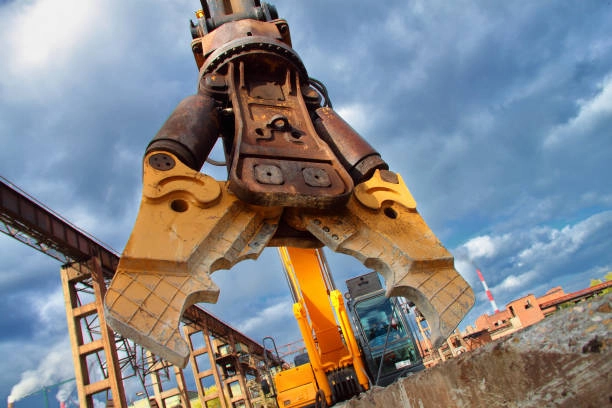
A demolition attachment can look productive from the cab and still be the wrong tool. That usually becomes obvious when a crew spends half a shift trying to cut rebar with a pulverizer, or crush a steel beam with a tool built for concrete.
The cost is not limited to slower cycle times. Poor attachment selection increases fuel use, wear on the excavator, operator frustration, and sorting work at the yard. In mixed demolition, it can also reduce the value of recovered material.
Hydraulic shears and pulverizers both belong on serious demolition and recycling jobs. They do very different work. The right choice depends on what is in front of the machine, what must happen to that material, and how the excavator is configured.
Quick Answer: Hydraulic Shear vs Pulverizer at a Glance
Choose a hydraulic shear when the main task is cutting steel. It is the practical option for structural steel, rebar bundles, scrap pipe, tank sections, and heavy metal components.
Choose a pulverizer when concrete is the dominant material. A pulverizer breaks reinforced concrete, exposes embedded steel, and reduces demolition debris for recycling or transport.
Many contractors use both. The shear handles the metal. The pulverizer processes the concrete around it.
What Is a Hydraulic Shear and When Does It Work Best?
A hydraulic shear is an excavator attachment that uses hydraulic force to cut metal between hardened jaws. It is not a universal demolition tool. It is a dedicated cutting machine, and that focus is its advantage.
On a steel frame warehouse demolition, a shear can cut cross bracing and beams into manageable lengths before loading. In a scrap yard, it can reduce oversize steel that would otherwise be difficult to transport or feed into downstream processing equipment.
An excavator hydraulic shear is also useful where open flame cutting is slow or restricted. Cutting an old boiler house is a good example. There may be pipe racks, steel supports, and damaged plate that need controlled handling. A shear gives the operator reach and keeps people farther from the cutting zone.
The key benefit is control. It cuts instead of tearing. That matters when metal recovery is part of the job economics.
What Is a Pulverizer and When Does It Work Best?
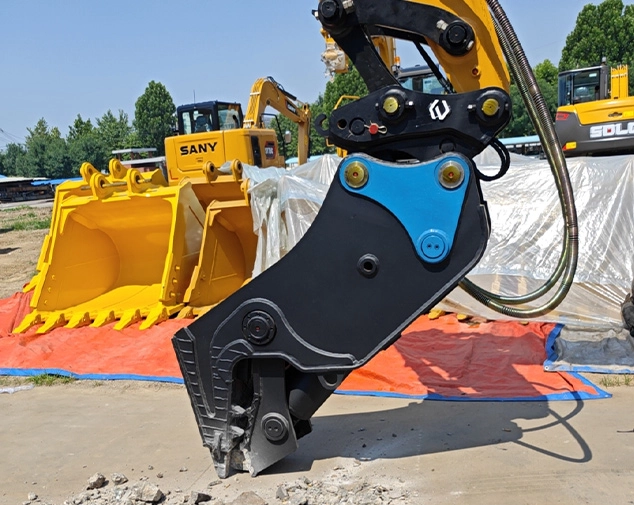
A hydraulic pulverizer is designed to crush concrete. Its jaws apply high closing force to break slabs, walls, beams, and columns. The action exposes the reinforcing steel so the material can be sorted more effectively.
It earns its place on concrete heavy demolition work. A contractor removing an aging parking structure may use a pulverizer to reduce deck sections on site. The concrete becomes easier to load and process. Rebar can then be separated for recycling.
Some pulverizers are used in primary demolition, where the attachment works directly on structural elements. Others are better suited to secondary reduction after material is already on the ground. The right arrangement depends on the structure and the excavator size.
A concrete pulverizer is not meant to replace a heavy scrap metal shear. It may bend or free rebar, but cleanly cutting thick steel is another job.
Hydraulic Shear vs Pulverizer: 5 Factors That Should Drive Your Choice
The distinction becomes clearer when the attachment is judged against the actual job instead of a product brochure.
1. Material You Need to Process
Steel calls for a hydraulic shear. This includes beams, plate, pipe, and dense scrap sections. The shear concentrates force along a cutting edge.
Concrete calls for a pulverizer. It cracks material through compression and jaw geometry. Reinforced concrete is common in demolition, but the concrete and steel still need different treatment.
2. Your Primary Job Objective
A shear is built to separate material into cut pieces. This is useful when steel must be downsized, removed in stages, or prepared for transport.
A pulverizer is built to break material down. It reduces bulky concrete and helps release steel from the matrix. That makes it valuable for recycling focused demolition.
3. Demolition Stage
During structural dismantling, the attachment choice depends on what is carrying the load. Steel structures often demand cutting. Concrete frames usually demand crushing.
Once debris reaches the ground, the process changes. Pulverizers can reduce concrete further. Hydraulic shears can prepare metal for scrap handling. A project may switch attachments several times in one day.
4. Required Precision and Productivity
Hydraulic shears offer cleaner cuts and more predictable separation. That can make a difference near retained structures or when long steel sections must be controlled before removal.
Pulverizers are less about clean edges. Their strength is fast material reduction. On a concrete slab pile, the goal is not a neat cut. The goal is smaller, sortable material.
5. Excavator and Hydraulic Compatibility
Attachment performance depends heavily on the carrier machine. Excavator weight, hydraulic flow, working pressure, boom reach, and mounting arrangement all matter.
An oversized attachment can make the machine unstable. An underpowered hydraulic circuit can leave a tool feeling slow and ineffective. Matching the attachment to the excavator is not a minor detail. It is part of the purchase decision.
Which Attachment Fits Your Jobsite?
-
Scrap yard or metal recycling: hydraulic shear.
-
Steel frame building or bridge dismantling: hydraulic shear.
-
Concrete building demolition: pulverizer.
-
Concrete recycling and rebar separation: pulverizer.
Mixed jobs need a more practical view. An old factory may contain reinforced concrete floors, steel stairs, pipework, and process equipment. One attachment will not handle every stage well. The most efficient setup is often a shear for metal work and a pulverizer for concrete processing.
How to Select the Right Attachment for Your Excavator
Before choosing a demolition attachment, confirm the excavator model and operating weight. Check hydraulic flow and pressure against the attachment requirements. Then examine the material honestly. Thick steel is different from light scrap. A concrete column is different from a thin slab.
Working height matters too. A tool that performs well on ground level sorting may not suit high reach demolition. Rotation requirements can also affect how efficiently the operator positions the jaws.
A supplier should ask about the application before recommending a configuration. If the discussion stays limited to attachment price, important operating details are probably being missed.
FAQ: Hydraulic Shear vs Pulverizer
Q: Can a hydraulic shear crush concrete?
It can damage or break small concrete sections in some situations, but it is not an efficient concrete processing attachment. The cutting geometry is designed for metal. Repeated concrete work can also create unnecessary wear.
Q: Can a pulverizer cut heavy steel?
A pulverizer can expose and pull rebar from crushed concrete. It is not the right choice for cutting heavy steel members. A hydraulic shear delivers the focused cutting action that steel work requires.
Q: Do demolition contractors need both attachments?
Not every contractor needs both at once. Projects involving reinforced concrete and structural steel often benefit from having access to both. The attachments support different stages of the same material flow.
Find the Right Demolition Attachment with Kingho Technology
Kingho Technology supplies excavator front attachments for demanding demolition, recycling, cutting, grabbing, breaking, compaction, and piling applications. That broader application experience matters when a job does not fit neatly into one category.
A suitable hydraulic shear or pulverizer should be selected around the carrier machine and the material stream. Site conditions matter. So does the intended output: cut scrap, separated rebar, reduced concrete, or cleaner recycling feed.
Share the excavator model, target material, and working conditions with Kingho Technology. That creates a more useful starting point than choosing an attachment based on appearance alone.
Conclusion: Choose Based on Material, Task, and Machine Fit
Use a hydraulic shear for steel cutting. Use a pulverizer for concrete crushing and rebar separation.
The better attachment is the one that matches the material and the work sequence. For demolition and recycling projects with mixed debris, the strongest answer may be a properly matched combination rather than a compromise.
Contact Kingho Technology to discuss your excavator model, material type, and demolition or recycling requirements.