
Excavator Clamp Arm for Car Dismantling: Applications, Workflow, and Selection Guide
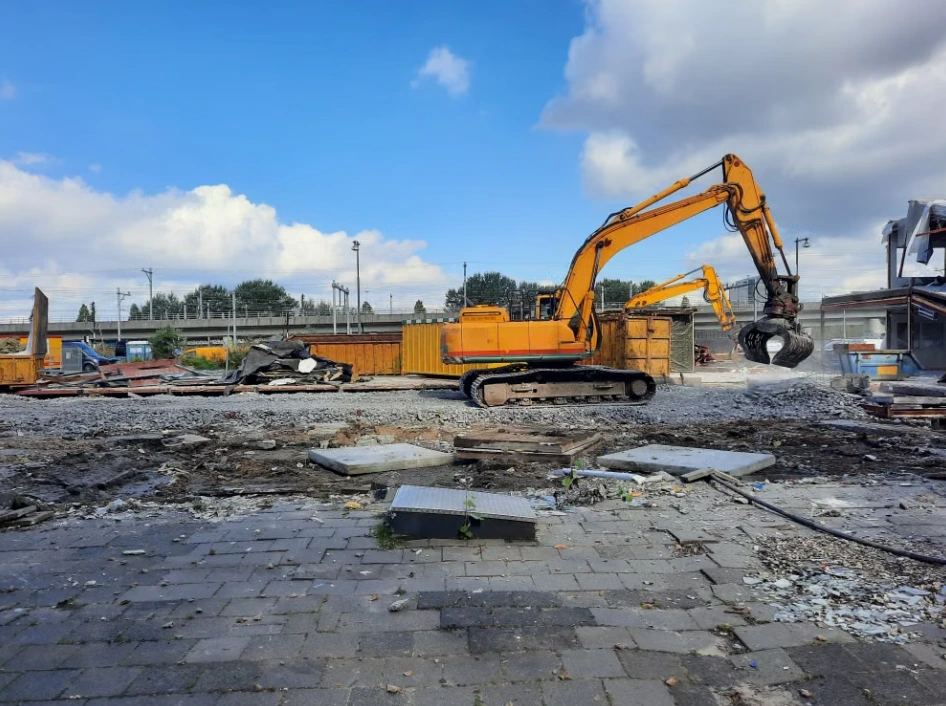
A hydraulic shear can cut through a vehicle pillar in seconds. If the body rolls, lifts, or twists during cutting, the shear loses its angle and valuable components become harder to reach.
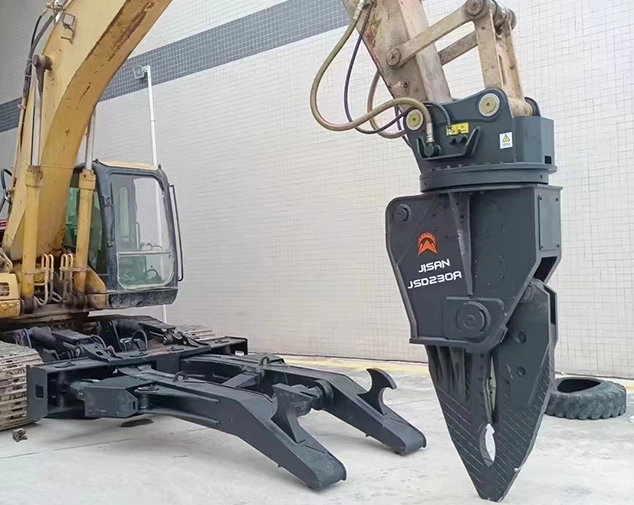
An excavator clamp arm solves this less visible part of the process. It holds the vehicle steady while the excavator removes structural parts, powertrain components, wiring, and recyclable metals.
What Is an Excavator Clamp Arm and What Does It Do?
An excavator clamp arm is used to press, hold, or stabilize a vehicle during dismantling. It may be installed as part of a dedicated dismantling machine or added to a suitable excavator configuration.
Its job is different from that of a grapple. A grapple picks up, rotates, and sorts material. A clamp arm usually keeps the vehicle body against the ground while another attachment performs the cutting or pulling.
How Is an Excavator Clamp Arm Used in the Car Dismantling Workflow?
The clamp arm is most effective when it is treated as part of the dismantling process, not as an isolated attachment. Positioning, pressure, and access all affect the result.
Positioning and Securing the Vehicle
The depolluted vehicle is placed in the designated dismantling zone. The excavator approaches with enough room to work through the expected cutting angles.
The clamp arm is lowered onto a strong part of the chassis or body. Pressure should be firm, but not careless. Crushing the roof may be acceptable when processing an empty shell. Crushing an area that still contains a wiring loom, radiator, or recoverable component is usually poor practice.
Cutting and Removing Major Components
With the vehicle held down, the shear can remove doors, roof sections, pillars, axles, suspension parts, and engine connections. The clamp arm takes the reaction force that would otherwise move the body.
A common example is engine removal. The arm holds the front structure while the shear cuts mounts and attached metal. The engine can then be lifted or pulled free with less movement from the shell.
Sorting and Processing Recovered Materials
Removed parts are placed in separate processing areas. Ferrous steel, aluminum components, copper rich wiring, radiators, engines, and transmissions may follow different recycling routes.
Once the higher value components are removed, the remaining shell can be folded, baled, crushed, or transferred for further shredding. At this stage, the clamp arm may still be used to control the shell while it is reduced in size.
Which Car Dismantling Applications Benefit Most from a Clamp Arm?
Clamp arms are useful in end of life passenger vehicle dismantling, scrap body processing, engine removal, axle separation, roof cutting, and wiring recovery. They can also support the dismantling of SUVs, vans, and light commercial vehicles.
Yards handling mixed vehicle sizes should pay close attention to opening width and clamping height. A clamp that works comfortably on a small passenger car may have limited reach on a van or light truck.
The attachment is particularly useful where a hydraulic shear performs most of the cutting and the vehicle must remain accessible from several angles.
What Is the Difference Between Single Acting and Double Acting Clamp Arms?
Both configurations can stabilize a vehicle, but they behave differently. The choice affects installation complexity, control, and working speed.
| Feature | Single Acting Clamp Arm | Double Acting Clamp Arm |
| Hydraulic movement | Hydraulic power in one direction | Hydraulic power in both directions |
| Position control | Simpler | More precise |
| Hydraulic circuit | Usually less complex | Requires suitable two way control |
| Adjustment frequency | Better for basic holding work | Better for frequent repositioning |
| Typical use | Intermittent dismantling | High volume dismantling |
A single acting design may be enough when the arm mainly lowers, holds, and returns through its mechanical arrangement. A double acting clamp arm gives the operator active control in both directions.
How Do You Choose the Right Excavator Clamp Arm?
Selection starts with the carrier, then moves to the hydraulic system and the actual material being processed.
Match the Clamp Arm to the Excavator
Check the excavator operating weight, lifting capacity, front attachment limit, boom configuration, and machine stability. The clamp arm adds weight and changes the machine’s balance.
Carrier weight ranges are useful, but they are not a substitute for checking the complete working configuration.
Check Hydraulic Requirements
Rated pressure and required oil flow must match the excavator’s auxiliary circuit. The number of hydraulic lines also matters, especially with a double acting system.
Insufficient flow makes the arm slow. Excessive pressure can damage cylinders, seals, hoses, or structural parts. Poor hydraulic matching may also create heat during repeated cycles.
Evaluate Working Dimensions and Construction
Maximum opening width, clamping height, attachment weight, arm profile, pin size, and cylinder protection deserve close inspection.
The structure should resist repeated contact with sharp, uneven vehicle bodies. Wear resistant steel is valuable in high contact areas, although material grade alone does not guarantee a durable attachment. Load paths, weld quality, reinforcement, and pin support matter just as much.
Hydraulic hoses should be routed away from scrap edges. Exposed hoses do not remain undamaged for long in a dismantling yard.
Consider the Actual Recycling Operation
Vehicle type, daily processing volume, operator habits, and the other attachments on site should influence the decision.
A low volume yard processing small cars has different needs from a facility handling vans and commercial vehicles all day. Spare part availability matters too. Pins, bushings, seals, and hoses are wear items, not theoretical future concerns.
Before ordering, compare the carrier data with the available excavator clamp arm specifications and confirm the installation arrangement with the attachment supplier.
What Common Mistakes Should Buyers Avoid?
Selecting by machine tonnage alone is the most familiar mistake. Ignoring hydraulic flow is close behind it.
Other problems include choosing too little opening width, overlooking attachment weight, assuming a clamp arm can replace a grapple, and failing to check how it will work alongside the hydraulic shear.
Side pulling should also be avoided unless the attachment is specifically designed for it. A clamp arm is built to hold and press. Using it as a hook or lifting device introduces loads that may not appear in normal operation.
Maintenance access deserves attention before purchase. A protected grease point is useful. An inaccessible one tends not to get greased.
What Should Operators Check Before Using a Clamp Arm?
The daily inspection should cover hoses, fittings, cylinder rods, seals, pins, bushings, welds, fasteners, and vehicle contact areas.
Look for fresh oil around the cylinder or hose joints. Check for abnormal pin movement. A small amount of looseness becomes much more obvious when the arm presses against a vehicle body.
Frequently Asked Questions About Excavator Clamp Arms
Q: Is a Clamp Arm the Same as an Excavator Grapple?
No. A clamp arm mainly presses and stabilizes the vehicle. A grapple is designed to grab, lift, rotate, or sort material. They may work in the same yard, but they perform different jobs.
Q: Can a Clamp Arm Work with a Hydraulic Shear?
Yes. This is one of its main applications. The clamp arm holds the vehicle body while the hydraulic shear cuts structural sections or removes components.
Q: What Information Should Be Provided Before Ordering?
Provide the excavator model, operating weight, hydraulic pressure, auxiliary flow, available hydraulic lines, required opening width, common vehicle sizes, daily workload, and details of the shear or other attachments used on the machine.
Conclusion: Select the Clamp Arm Around the Complete Dismantling Process
A clamp arm should not be selected as a stand alone piece of steel and hydraulics. It has to fit the excavator, the shear, the vehicles, and the pace of the yard.
The right unit holds the body without constant correction. It gives the shear a cleaner angle and keeps recoverable parts easier to reach. That is where the productivity gain appears—not in one dramatic movement, but in dozens of small adjustments that no longer have to be made.