
Red Flags to Avoid When Sourcing Bale Grapple Equipment for Your Operation
Picking suitable attachments for your excavator can seem like a risky bet. If you have worked in the construction or recycling field for some time, you realize that a fresh layer of paint often conceals numerous mechanical issues. This is why the background of the maker counts so much. Kingho Technology has dedicated years to refining this skill. Located in the High-tech Zone of Zhaoqing, Kingho has developed from a focused breaker workshop in 2009 into a vast 57,330 square meter production facility. They do not simply put together components; instead, they design premium excavator attachments, ranging from hydraulic grapples to dedicated demolition devices, by employing modern CNC equipment and a staff that truly grasps the demands of the work site.
When dealing with large bales, scrap metal, or timber, the bale grapple you select decides if your project wraps up early or stalls because of a failed seal or a twisted arm. The aim is not merely to get a tool that matches; rather, it is to secure a reliable companion for your machine that holds steady during tough conditions. Let us examine the cautionary signals you need to spot before finalizing that order.
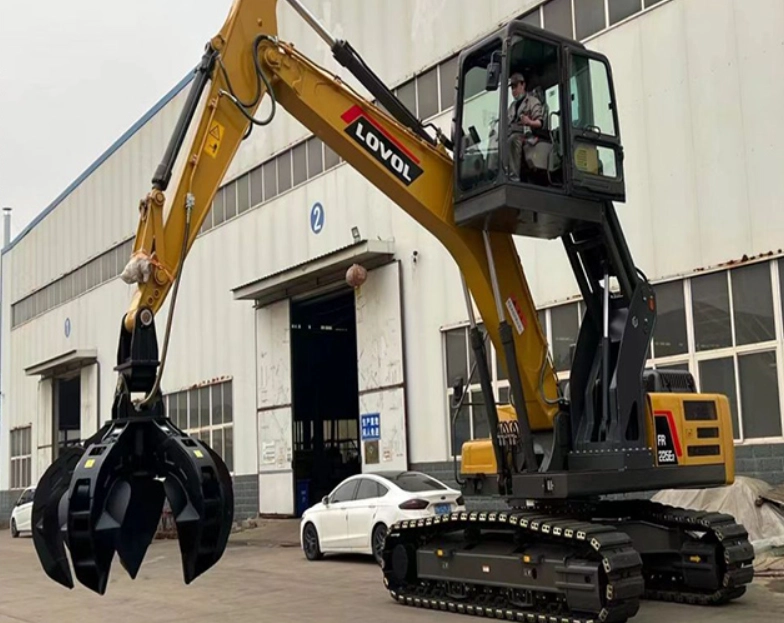
Why Is Material Durability the First Red Flag to Check?
You learn plenty about a producer from the type of steel they choose. Certain workshops cut costs by opting for basic mild steel, assuming you will not detect problems until after the warranty expires. However, in heavy-duty operations, low price often leads to fragility. If a provider dodges details on the steel grade they apply, that signals a serious concern.
Selection of Low-Grade Steel Over High-Strength Alloys
If a grapple appears sturdy yet misses a clear steel rating such as NM500, it will likely degrade quickly. At Kingho Technology, we have discovered that mass does not always indicate robustness. For example, our Orange Peel Grapple relies on NM500 wear-resistant steel, which withstands sharp rocks and scrap metal without piling on extra weight to your excavator. By choosing durable materials, you avoid carrying useless bulk; consequently, you transport greater amounts of the real payload.
Absence of Reliable Sealing and Protection Systems
Hydraulic leaks can spoil an entire shift and harm your standing on the job. If you spot a grapple fitted with plain, unnamed oil seals, steer clear immediately. We ensure to incorporate imported HALLITE oil seals and honing tubes in our Excavator Clamp Arm and grabber lineup. These parts endure intense pressure cycles, so they manage extended 12-hour sessions without developing leaks or weakening hold.
Vulnerable Pin and Joint Engineering
Pins serve as the joints in your gear, and if they consist of weak metal, they will break or deform beneath a hefty bale. A clear warning comes from pins that skip heat treatment or internal lubrication routes. To address this, Kingho employs 42CrMo alloy steel for pins. These are not mere rods; moreover, they include built-in oil passages that direct grease precisely where required, thus maintaining fluid motion and preventing metal from rubbing together.
How Can You Identify Poor Hydraulic Performance Early?
Even the toughest steel proves pointless if the core system, the hydraulics, responds slowly. When positioning a bale or sifting debris, you require exact control. If the attachment resists the excavator’s commands, you face a hydraulic incompatibility, and that hampers efficiency right away.
Lack of Precision in Rotation and Control
A grapple unable to rotate a full 360 degrees creates a major obstacle for your operator. You should not need to maneuver the entire 30-ton unit just to adjust because the grabber sticks awkwardly. Our Orange Peel Grapple tackles this issue through a Swiss imported rotary motor. As a result, it provides complete rotational flexibility, so the machine operates more like an extension of the hand than an awkward gripper.
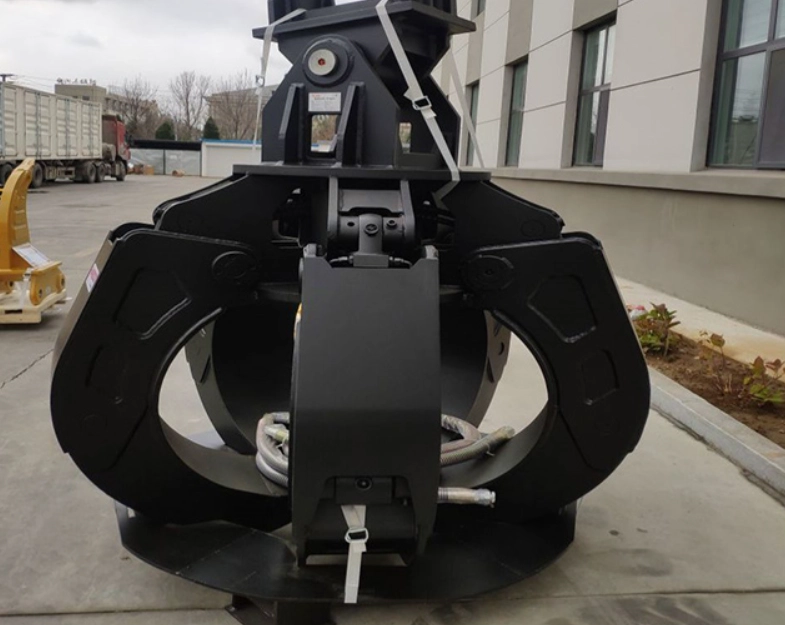
Inefficient Power-to-Weight Ratios
Certain attachments weigh so much that they consume half your excavator’s capacity before lifting anything. This indicates flawed design. Consider our Excavator Clamp Arm as a case in point. It functions as a dismantling aid. Since we utilize NM500 steel, it remains light and responsive. Therefore, the excavator preserves its pace and fuel savings rather than straining under an oversized, poorly balanced tool.
Dependence on External Power Sources for Magnets
In scrap operations, a magnet often helps with cleanup. A notable issue arises when the setup demands an additional generator on your excavator to power the magnet. This brings extra wiring, higher fuel use, and increased breakdown risks. Kingho’s Excavator Magnet Lift avoids such problems by integrating internal hydraulic generators. It draws from the machine’s oil flow to generate power, which eliminates added setups and cuts down on upkeep needs.
Are Your Attachments Lacking Necessary Certification and Testing?
Records may seem dull, yet they protect you from huge risks if failures occur. A maker who claims excellence without proof lacks credibility, and you should not rely on them for your team’s well-being.
Missing International Quality Standards
Without CE certification or ISO standards, you cannot verify if the gear underwent proper checks or hasty assembly. Kingho has earned this reliability since 2009, securing EU CE certification by 2013. We also hold high-tech enterprise certification and ISO9001 because we insist that your tools align with worldwide safety levels, not merely basic regional ones.
Limited Versatility in Complex Terrains
Many tools perform well on even surfaces like concrete, but they falter in sloppy ditches or steep inclines. A warning sign is equipment restricted to single tasks in ideal settings. Our Hydraulic Plate Compactor suits rugged tasks, such as compacting and piling in ditches or slopes. We select American hydraulic vibration motors and German FAG bearings precisely because they resist jamming during strong vibrations or irregular ground.
Absence of Proven Industry Longevity
Short-lived firms emerge annually, offload bargain attachments, and vanish soon after. You seek evidence of steady growth. Kingho has progressed over more than ten years, from distributing 600 breakers in 2010 to establishing a 57,330 square meter factory. We have committed to multiple CNC machine tools to ensure consistent precision in every component. Such a track record guarantees availability of replacement parts even after five years.
Recommended Kingho Solutions for Your Operation
If you are weary of spotting these warnings and seek gear that performs reliably, consider these three dependable options to begin with:
1. For Bulk Handling & Scrap: Orange Peel Grapple – Robust NM500 steel pairs with accurate Swiss motors to manage the most demanding sorting tasks effectively.
2. For Groundwork & Foundations: Hydraulic Plate Compactor – Quiet operation, secure handling, and dependable results stem from high-quality German FAG bearings.
3. For Efficient Dismantling: Excavator Clamp Arm – An ideal light support tool tailored for breaking down scrap vehicles and organizing materials.
FAQ
Q1: How do I know if the grapple will fit my specific excavator model?
A: Key factors include your machine’s weight class and hydraulic output. For instance, our bigger grapples typically suit 20-36 ton machines. Additionally, we offer customize the mounting seat or brackets to ensure a smooth, firm link to your excavator arm.
Q2: Why do you use Swiss and German parts instead of local ones?
A: Although we produce the primary frames in our facility, we incorporate Swiss motors, German bearings, and American vibration motors for critical moving elements. Our experience shows these parts last longer and cope with rapid cycles in demanding construction without excessive heat buildup.
Q3: Can I use the Orange Peel Grapple for materials other than scrap?
A: Yes, it works well beyond steel. In fact, it handles bulk stone, wood, and general waste effectively. The blend of NM500 wear-resistant steel and 360-degree rotation renders it adaptable for ports, timber yards, or recycling sites.