
OSHA’s 5-4-3-2-1 Trench Rule: Best Practices for Pallet Fork Digging in Construction
Trenching ranks among the most hazardous tasks found on construction sites. In an instant, a simple cut into the soil can become fatal, since tons of dirt collapse inward without any sound or alert. This risk is precisely why OSHA applies the “5-4-3-2-1” rule with such strictness. If you handle pallet forks or ordinary buckets for earth moving, then memorizing these figures is vital to guard your crew against collapse dangers.
True safety goes well past simple rules; it requires fitting your excavator with dependable gear to tackle the demands of major digging jobs. At Guangdong Kingho Technology, we have dedicated over a decade to creating tough attachments that make these dangerous operations much easier to handle.
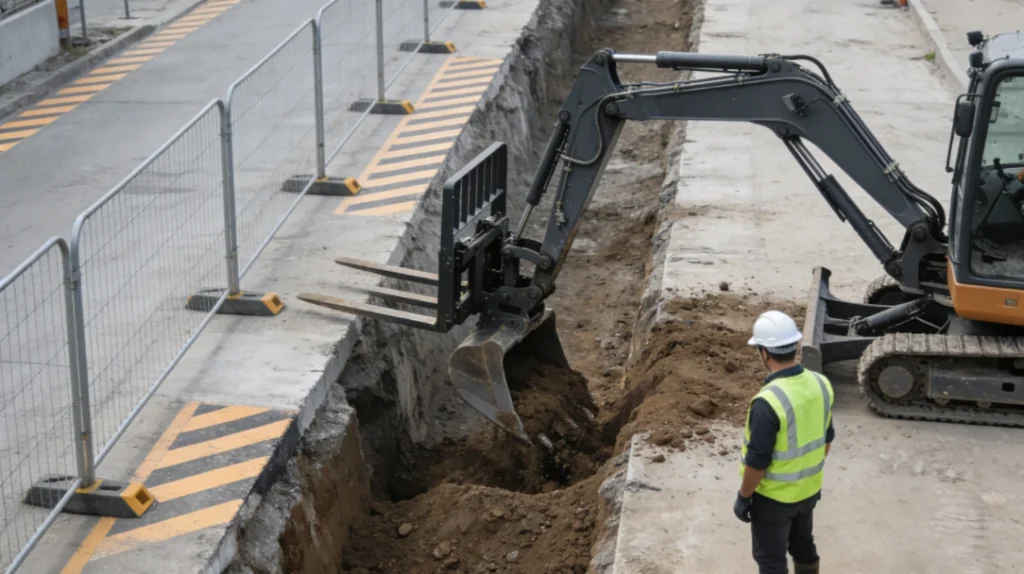
II. Breaking Down the 5-4-3-2-1 OSHA Trench Rule
Essentially, the 5-4-3-2-1 rule acts as a sequential safety protocol. It addresses critical elements, such as the depth at which protective barriers become necessary and the proper positioning of access points like ladders.
1. 5 Feet (The Protection Zone): When the trench reaches 5 feet in depth, exposing the sides without support is unacceptable. Therefore, you must implement shoring, shielding, or sloping techniques to prevent soil from caving in on personnel.
2. 4 Feet (The Exit Plan): For any trench measuring 4 feet or more, providing a rapid escape route is crucial. Consequently, a ladder, ramp, or set of stairs should be available within 25 feet of every worker throughout the operation.
3. 3 Feet (The Ladder Extension): The ladder must extend beyond the trench’s edge. Specifically, it should protrude at least 3 feet above the surface, allowing individuals to grasp it securely during their ascent.
4. 2 Feet (The Spoil Pile Gap): Many overlook this important measure. You are required to position removed soil, stones, and machinery no closer than 2 feet to the excavation’s perimeter.
5. 1 Inspection (The Daily Check): A designated competent individual must assess the trench prior to each work shift. For example, overnight precipitation or nearby heavy vehicle traffic could alter the ground stability, transforming the site into a lethal risk.
Complying with these procedures helps evade regulatory penalties, but even more vital, it protects your team. That said, maintaining the required 2-foot separation and ensuring a tidy workspace proves difficult without appropriate equipment.
III. Best Practices for Safe and Efficient Digging
Prior to breaking ground, establishing a clear strategy is fundamental. Excavation involves not only relocating material but also controlling the forces acting on the adjacent earth. Piling spoils—the excavated soil—directly at the brink adds undue stress, practically inviting a structural failure due to the concentrated load.
Exactness remains central to the process. The goal is to displace only the essential volume of earth. Opting for sturdy steel buckets, including Kingho’s rock or skeleton buckets featuring cast guard plates, enables neater incisions and lessens the jolts that could destabilize the sides. Furthermore, routine daily examinations of pins and seals are imperative. A ruptured seal or fractured pin amid profound work generates far more than inconvenience; it constitutes a grave threat to safety.
IV. Integrating Kingho Technology Solutions for Enhanced Site Safety
Beginning in 2009, Kingho has established itself as the primary producer of such tailored attachments. Rather than producing mere components, we craft instruments that facilitate adherence to OSHA directives while preserving project momentum.
1. Managing Metal Debris with the Hydraulic Magnet Lift
Concealed refuse presents one of the primary threats within trenches. During site preparation involving aged rebar or metal fragments, such materials can entangle shields or cause stumbles for laborers. Our Hydraulic Magnet Lift utilizes Q345 manganese steel construction, rendering it resilient for the harshest work environments.
(1. Why it works: Powered by a hydraulic generator, it eliminates the need for supplementary wiring or electrical enclosures.
(2. The Safety Edge: This device retrieves metallic remnants overlooked by conventional buckets, thereby maintaining a hazard-free trench base and spoil heap devoid of pointed dangers.
2. Securing Loads with the Hydraulic Power Thumb
Attempting to transport an irregular boulder or fractured concrete slab solely with a bucket often feels precarious. Should the cargo shift, it plummets immediately to the trench floor. Our Hydraulic Power Thumb serves as an enlarged clamp for the excavator, supplying the necessary hold to relocate substantial refuse securely outside the 2-foot exclusion area. It becomes indispensable for meticulous operations in constrained civic or quarrying endeavors.
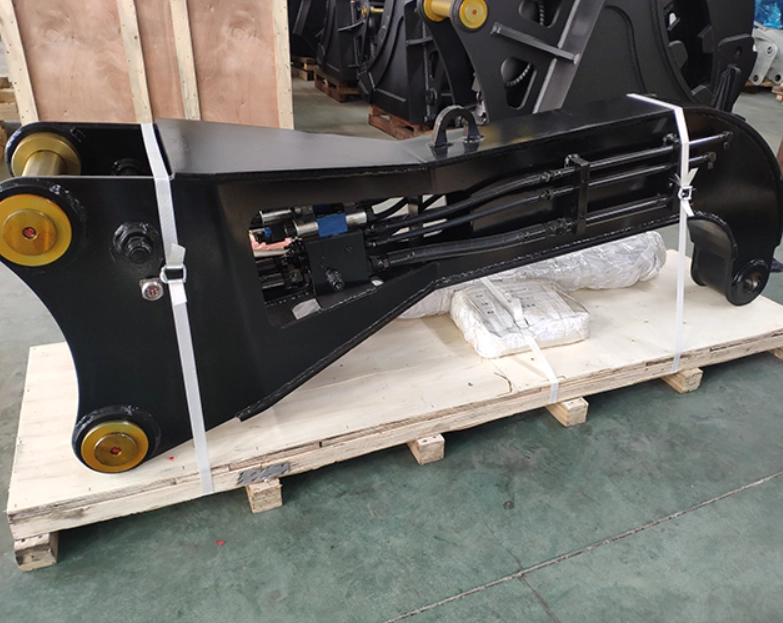
3. Foundation Stability with the Pile Hammer
Occasionally, redirecting soil at an angle proves unfeasible owing to spatial constraints. In those instances, inserting sheet piling for reinforcement becomes essential. Our Pile Hammer performs exceptionally in such scenarios.
(1. Built to Last: Incorporating 42CrMo alloy steel pins equipped with integrated lubrication channels and German FAG bearings ensures uninterrupted performance during assignments.
(2. The Kingho Advantage: The design integrates seamlessly with Korean Autox dampeners, which reduces transmitted vibrations to the excavator—and critically, minimizes disturbances to the trench perimeters.
V. Why Equipment Quality Matters for OSHA Compliance
Adhering strictly to all protocols proves futile if the equipment malfunctions. Hence, we employ Swedish Hardox steel alongside robust Swiss motors in our lineup. Our dedication has secured ISO9001 and CE approvals, recognizing that stakeholders in renewable resources and logistics sectors require trustworthy apparatus.
Acquiring a Kingho attachment delivers the fruits of over 15 years of research and development. Moreover, our vast 57,330-square-meter facility, outfitted with precision CNC machinery, verifies that each pin and seam occupies its precise location.
VI. Conclusion: Safety Is a Result of Strategy and Tools
In essence, the 5-4-3-2-1 rule aims to guarantee that all return safely at shift’s end. Nevertheless, executing it amid dynamic site conditions demands more than a simple inventory. It calls for a collection of machines prepared to contend with the burdens, impediments, and strains inherent in thorough digging.
Allocating funds to premium implements—be it a magnet lift for base clearance or a pile hammer for boundary fortification—constitutes the most prudent action for your workforce.
FAQ
Q1: Does my excavator need a special setup for a Hydraulic Magnet Lift?
A: Hardly. The Kingho variant operates via a hydraulic generator, obviating the installation of distinct electrical infrastructure on the unit. Provided the hydraulics perform adequately, operations can commence promptly.
Q2: What material is best for high-wear parts in trenching tools?
A: We advocate 42CrMo alloy steel for pins, complemented by Swedish Hardox or NM500 for edges and extensions. Such substances endure the thermal and abrasive demands of penetrating firm terrain and aggregates without distortion.
Q3: How often should I check my excavator attachments during a trench project?
A: Conduct a brief perimeter review each morning, akin to the OSHA-mandated trench evaluation. Inspect for hydraulic fluid seepage from seals—for which we select reputable imports like HALLITE and NOK to avert issues—and confirm that pins receive lubrication and stay fastened.