
Bulldozer vs Excavator: Functional Comparison for Earthmoving Tasks
Earthmoving assignments depend on robust devices that shift earth, stone, and building substances swiftly. Two of the usual devices at building locations are bulldozers and excavators. On initial view, they both manage soil and substantial loads, but the manner in which they operate—and the duties they manage most effectively—are fairly distinct.
Grasping the variations between these devices assists builders organize machinery collections more proficiently. It also clarifies why current excavators have grown more adaptable, particularly when combined with dedicated add-ons made by producers such as Guangdong Kingho Technology Co., Ltd., a firm dedicated to creating smart excavator add-ons for sectors that include building, extraction, transport, and reuse.
The parts that follow examine bulldozers and excavators from various useful perspectives, which encompass framework, work duties, and the rising value of excavator add-ons.
What Are The Core Functions Of Bulldozers And Excavators In Earthmoving Projects?
Prior to selecting devices for a work area, it proves helpful to comprehend the main part each device fulfills. Bulldozers and excavators often function jointly, but their essential roles differ greatly.
Bulldozer Power For Large-Scale Pushing And Land Leveling
Bulldozers stand constructed for shoving substantial substances over the surface. Their broad forward blade permits them to relocate vast amounts of earth, stones, or waste in a direct path, and this renders them suitable for removing vegetation or readying a building area.
In major facility assignments, bulldozers generally manage coarse smoothing and face evening. They can shove earth into mounds, distribute infill substance, and form landscape rapidly. Furthermore, the weighty track arrangement also grants bulldozers solid grip, which aids them in functioning adequately on irregular or wet terrain.
Excavator Precision For Digging, Trenching, And Material Handling
Excavators tackle earthmoving from another viewpoint. Rather than shoving substance, they excavate and elevate it by means of a fluid-powered boom, limb, and scoop. This renders excavators the favored device for ditching, base excavating, and substance stacking.
The capacity to turn the upper framework a full 360 degrees likewise enables excavators to labor in narrow zones where shoving devices would face difficulty. On numerous locations, excavators carry out duties that demand exactness instead of pure shoving strength.
Combined Workflow Of Bulldozers And Excavators On Construction Sites
In actual building assignments, bulldozers and excavators generally work in tandem. Excavators create ditches, extract earth, or stack vehicles, whereas bulldozers reform the surface and relocate unbound substance throughout the area.
This separation of duties maintains assignments progressing steadily. Excavators deal with the intricate excavating labor, while bulldozers concentrate on broad-scale surface readiness.
How Do Structural Designs Influence The Working Capabilities Of Each Machine?
The output variations between bulldozers and excavators stem mostly from their framework arrangement. Each device gets designed around a separate kind of duty.
Bulldozer Blade Design For Continuous Material Movement
The bulldozer blade marks its most notable aspect. Positioned at the forward part of the device, the blade shoves earth and waste ahead as the device advances.
Certain blades get designed for direct shoving, whereas others permit tilt modifications for relocating substance laterally. The arrangement stays straightforward yet remarkably sturdy, and this explains why bulldozers frequently serve in severe settings such as extraction activities or highway building initiatives.
Excavator Boom And Bucket System For Controlled Excavation
Excavators employ a fluid arm arrangement that consists of a boom, rod, and scoop. This setup permits the device to excavate profound ditches, elevate weighty substances, and position them accurately where required.
The fluid-powered arrangement supplies even motion and potent excavating force. Since the arm can stretch and withdraw, excavators can access regions that alternative devices cannot readily attain.
Attachment Compatibility Expanding Excavator Functions
An additional key benefit of excavators lies in the option to alter add-ons. Instead of executing solely one duty, a lone excavator can change between varied implements based on the assignment.
Producers like Guangdong Kingho Technology Co., Ltd. craft add-ons expressly for this aim. Their item selection encompasses hammers, clamps, packers, and other forward-end implements that convert excavators into versatile devices employed in building, extraction, harbor transport, and dismantling sectors.
Why Are Excavator Attachments Critical For Expanding Earthmoving Efficiency?
As building locations grow more intricate, device adaptability gains greater significance. Add-ons enable excavators to manage numerous duties without introducing extra devices to the work area.
Fast Attachment Changes With Hydraulic Quick Hitch
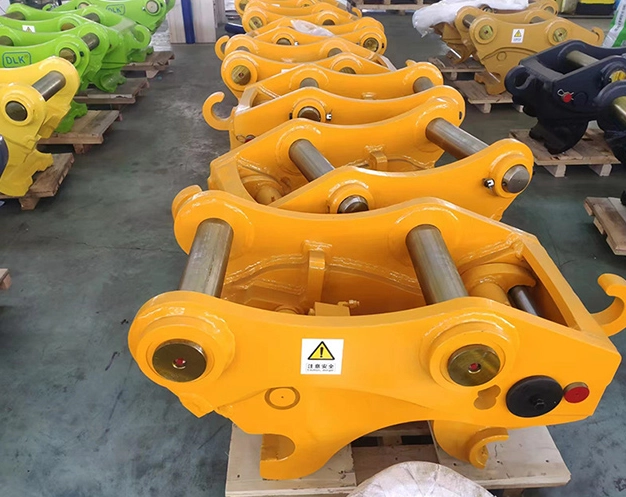
One beneficial accessory is the Hydraulic Quick Hitch. This add-on lets drivers exchange between implements in just moments.
Rather than manually detaching pins and supports, the quick hitch arrangement secures and frees add-ons via a fluid-powered process. Per item details, the framework utilizes robust manganese steel and lasting metal pins, rendering it fitting for intensive building labor.
For builders, the primary gain consists of period conservation. A solitary excavator can shift from excavating to packing or substance managing without extended device pauses.
Enhanced Gripping Capability With Hydraulic Power Thumb
Managing uneven substances like stones, timber, or dismantling refuse frequently demands a seizing implement. The Hydraulic Power Thumb furnishes that ability.
Fitted beside the excavator scoop, the fluid-powered thumb forms a vise-like operation that secures items firmly while elevating or arranging. This aspect proves especially handy in reuse facilities, dismantling assignments, and woodland tasks.
With this add-on, drivers can seize sizable substances that a routine scoop would find hard to manage. It transforms an excavator into a more proficient substance-managing device.

Efficient Soil Compaction Using Hydraulic Plate Compactor
Packing stands as another vital phase in many earthmoving roles. The Hydraulic Plate Compactor assists excavators in executing this duty straightaway.
This implement employs a fluid vibration engine to squeeze earth in ditches, inclines, or base regions. The packer framework generally utilizes manganese steel and lasting supports crafted for ongoing vibration labor.
Instead of transporting distinct packing devices to a slim work area, drivers can execute packing employing the excavator already present on location. It conserves period and lessens device movement.
Which Machine Performs Better In Different Earthmoving Scenarios?
Selecting between bulldozers and excavators often relies on the particular laboring situations. Each device possesses circumstances where it functions superior to the other.
Bulldozer Efficiency In Site Preparation And Road Construction
Bulldozers surpass in vast open zones where earth must get shoved and evened over extended spans. Highway building assignments, extraction locations, and land removal operations often depend substantially on bulldozers.
Their capacity to shove weighty substance persistently renders them suitable for forming landscape and readying structure bases.
Excavator Flexibility In Urban And Confined Job Sites
Excavators function superior in restricted spaces like urban building zones. Their turning upper framework permits them to excavate and stack substances without requiring ample space to shift.
This adaptability gains even greater worth when add-ons get incorporated. A lone excavator outfitted with multiple implements can finalize excavating, elevating, and packing duties without altering devices.
Excavator Attachment Solutions For Multi-Stage Projects
Present-day building assignments frequently involve several phases: excavation, substance arranging, packing, and location cleansing. Excavators fitted with varied add-ons can manage many of these phases.
Add-on producers like Guangdong Kingho Technology Co., Ltd. persist in crafting fresh implements that broaden excavator abilities, permitting builders to finalize more labor with reduced devices on location.
How Can The Right Equipment Combination Improve Project Productivity?
Substantial earthmoving assignments seldom rely on one type of device. Output generally arises from merging devices that support one another.
Excavator-Led Excavation And Loading Workflow
Excavators typically initiate the procedure by creating ditches, extracting earth, or stacking substances into vehicles. Their fluid arm arrangement permits exact regulation when laboring near bases, conduits, or frameworks.
Add-ons can further broaden their function to encompass substance managing or packing duties.
Bulldozer-Focused Land Grading And Material Spreading
Once excavation labor concludes, bulldozers advance to even the surface and allocate earth throughout the location. Their broad blade can form landscape swiftly and generate even laboring surfaces.
This phase readies the surface for highways, structures, or other building frameworks.
Integrated Attachment Systems For Modern Earthmoving Operations
Excavator add-ons introduce extra adaptability to the procedure. Implements like quick hitches, fluid-powered thumbs, and plate packers permit one device to change between varied duties all through the day.
Producers possessing solid design expertise, such as Guangdong Kingho Technology Co., Ltd., concentrate on lasting substances, accurate crafting, and fluid-powered arrangement compatibility so that add-ons can endure rigorous work area situations.
In application, merging bulldozers for broad-scale shoving and excavators with adaptable add-ons forms a balanced device configuration that maintains assignments advancing smoothly.
FAQ
Q1: Which machine is better for digging, a bulldozer or an excavator?
A: Excavators generally prove superior for excavating since their fluid arm permits profound and regulated excavation. Bulldozers suit more for shoving earth and evening ground rather than excavating exact ditches.
Q2: Why are excavator attachments becoming more popular on construction sites?
A: Add-ons permit a solitary excavator to execute multiple duties such as excavating, seizing, and packing. This diminishes the necessity for extra devices and aids builders in handling device expenses and work area space more proficiently.
Q3: What is the benefit of using a hydraulic quick hitch on an excavator?
A: A fluid quick hitch permits drivers to exchange add-ons swiftly without manual pin detachment. This conserves period during device alterations and enables excavators to shift between varied duties with slight disruption.