
Backhoe Loader Fuel Consumption Per Hour: What You Should Know for Cost Efficiency
Most owner-operators I talk to have the same headache: fuel prices keep climbing while project margins get thinner. When you are running a backhoe or an excavator, that hourly fuel burn isn’t just a number—it’s the difference between a profitable day and just breaking even. While engine tech has come a long way, people often forget that what you hang on the end of your boom matters just as much as what’s under the hood. At Guangdong Kingho Technology, we’ve spent since 2009 figuring out how to make attachments that don’t just work hard, but also play nice with your machine’s fuel tank.
How Does Attachment Choice Influence Hourly Fuel Costs?
It is pretty simple math: the heavier and more “stubborn” an attachment is, the harder your engine has to chug to move it. If your hydraulic system is fighting internal friction or lugging around dead weight, you’re basically burning money through the exhaust pipe.
Impact of Attachment Weight and Material Selection
If you’re using old-school, heavy steel attachments, your machine is working before it even touches the dirt. We build a lot of our gear using Swedish Hardox 500 or NM500 wear-resistant steel because it’s a lot lighter than standard plate but way tougher. By trimming the fat off the attachment, your backhoe doesn’t have to work as hard to lift the arm, which keeps your RPMs lower and your fuel gauge from dropping so fast.
Efficiency Gains from Precision Hydraulic Systems
Speed is everything on a job site. Our gear, like the powerful shears and crushers, uses imported Swiss motors and honing tube cylinders to make sure every movement is crisp. When your cycle times are shorter, you get more reps done in an hour. If you can finish a trenching or demolition job 15% faster because the tool isn’t lagging, that is 15% less fuel you’ve burned just keeping the engine running.
Maintenance of System Pressure and Seal Integrity
Cheap seals are a silent fuel killer. If your attachment has tiny internal leaks, your pump has to work overtime to keep the pressure up. We use high-end NOK and HALLITE oil seals because they actually hold the pressure where it belongs. It keeps the hydraulic flow steady, so your engine doesn’t have to surge to compensate for “lazy” hydraulics.
Getting your machine’s “diet” and “circulation” right is the first step, but how you manage your workflow on-site is where you really start seeing the savings. That is where a good hitch comes into play.
Why Is the Hydraulic Quick Hitch Essential for Fuel Savings?
We’ve all seen it—a guy needs to switch from a bucket to a breaker, but because it’s a pain to do manually, he just lets the machine idle for twenty minutes while he hammers out pins. That idle time is pure waste.
Reduction of Unproductive Idle Time
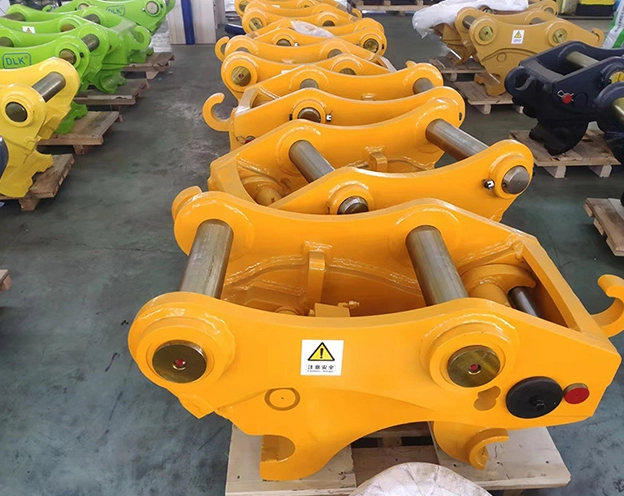
With a Hydraulic Quick Hitch, you can swap tools in seconds without even jumping out of the cab. Instead of the engine sitting there burning fuel while you struggle with a sledgehammer, you’re back to work immediately. Our hitches use Q345 manganese steel, so they are tough enough to handle constant swaps without wearing out your pins.
Optimized Tool Selection for Every Task
When it’s hard to change attachments, operators tend to use the “wrong” tool just to save time—like using a heavy rock bucket for light soil. That’s a waste of energy. A quick hitch, especially our Double Lock Type, makes it so easy to change that you’ll actually use the right tool for the job, keeping the load on your engine exactly where it should be.
Durable Design with Low Resistance
A loose or poorly made hitch causes vibration, and vibration is just energy being wasted. We design our hitches with a removable tiger mouth spring disc and a bold safety pin design to keep things tight. A stable connection means all that hydraulic power goes into the ground, not into shaking the machine, which helps keep your fuel consumption steady.
Once you’ve got the ability to switch tools fast, you start looking for ways to make the tools you have do more. If you’re doing a lot of clearing or utility work, a thumb is a total game-changer for your daily costs.
Can a Hydraulic Power Thumb Improve Your Operational Economy?
A backhoe without a thumb is like a hand without a… well, a thumb. You can scoop, but you can’t really “grab.” Adding a thumb doesn’t just make you more versatile; it makes the machine much more efficient with its movements.
Enhanced Multi-Tasking Capability per Liter of Fuel
Our Hydraulic Power Thumb lets your backhoe pick up logs, rocks, or scrap without needing a second machine or a ground crew to help. Every time you can finish a task with one machine instead of two, you’re cutting your project’s fuel bill in half right then and there.
Precision Handling to Reduce Engine Strain
If you’re trying to pin a piece of debris against the bucket using just the arm’s geometry, you end up “hunting” for the grip, which means a lot of high-RPM maneuvering. The power thumb gives you a firm, hydraulic grip immediately. Less “fishing” around means less throttle, and less throttle means more fuel stays in the tank.
Long-Term Reliability and Lower Energy Waste
We build these using 42CrMo alloy steel for the pins because we know how much abuse they take. When the joints stay smooth and don’t bind up, the hydraulic system doesn’t have to “fight” the attachment to get it to move. It sounds like a small thing, but over a thousand-hour work year, that reduced friction adds up to real savings.
But what if your job isn’t just moving dirt? If you’re into foundation work, the equipment you choose can either be a fuel hog or a precision instrument.
What Makes the Kingho Pile Hammer a Cost-Efficient Choice?
Driving piles is usually a high-intensity job where the engine is pinned at high revs for hours. If your hammer isn’t hitting right, you’re just turning diesel into noise.
High-Frequency Performance for Faster Job Completion
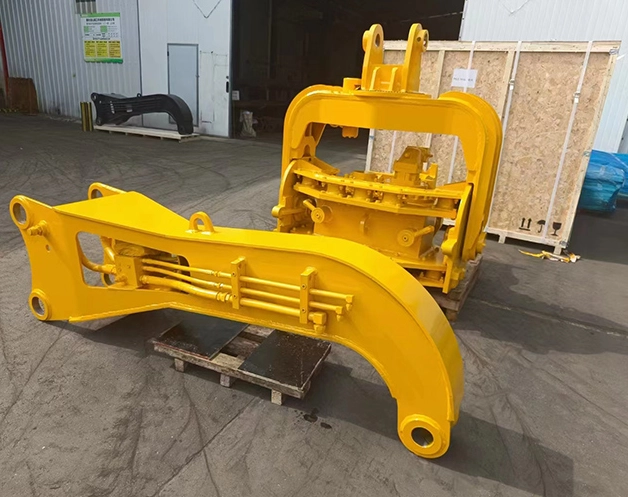
The Kingho Pile Hammer is built for speed. We use Swiss imported motors to get that vibration frequency exactly where it needs to be to sink the pile fast. The faster that pile goes in, the sooner you can throttle back. It’s about getting the maximum “work” out of every stroke of the piston.
Energy Efficiency Through Advanced Shock Absorption
One of the biggest energy wasters in piling is “kickback” vibration that travels back into the excavator. We use Korean Autox shock absorbers to soak that up. By keeping the energy focused on the pile and not letting it dissipate back through the boom, you get a much more efficient transfer of power, which is easier on your pump and your fuel consumption.
Superior Component Life and Reduced Downtime
Nothing burns fuel more uselessly than a machine that’s running but not working because of a breakdown. Our integrated design using Q345 manganese steel and Eaton oil seals from the US means our hammers stay on the job longer. Low failure rates mean you aren’t idling the machine while waiting for a tech or running the engine just to test a leaky valve.
FAQ
Q1: Does using a quick hitch actually save enough fuel to pay for itself?
A: Absolutely. If you factor in that the average machine idles for about 20-30% of its life, and a good chunk of that is during manual attachment changes, a quick hitch can cut that “dead time” significantly. Over a year, the fuel savings plus the extra billable work time usually covers the cost of the hitch pretty quickly.
Q2: Is the weight difference in NM500 steel really that noticeable?
A: It is. NM500 or Hardox 500 allows us to use thinner plates while maintaining more strength than standard carbon steel. This can shave hundreds of pounds off a large attachment. Your excavator’s hydraulic system “feels” that difference every time it lifts the arm, leading to lower operating pressure and better fuel economy.
Q3: Why do you use Swiss motors and American seals instead of cheaper parts?
A: Because “cheap” parts are expensive in the long run. A motor that loses efficiency or a seal that leaks internally causes the engine to work harder to maintain performance. By using top-tier components like Swiss motors and Eaton seals, we ensure the attachment operates at peak efficiency, which keeps your hourly fuel burn as low as possible.