
Average Lifespan of Common Construction Equipment: Hours, Years, and What Really Determines It
In the construction field, one query always lingers: how long will this piece of gear last before issues arise?
It seems straightforward at first glance, yet folks who have worked on sites know the response is seldom straightforward.
For builders, fleet overseers, and rental outfits, the durability of machines impacts nearly every key choice. It shapes fix-up costs, idle time scheduling, sale timing, and even if a job remains in the black. However, construction gear does not wear down in tidy, foreseeable stages. Two units made in the same plant during the same year can lead quite distinct existences.
Most times, the variance boils down to three factors: the way the machine is operated, the surroundings it operates in, and the add-ons fastened to it each day. That final element is frequently overlooked. In truth, add-ons subtly guide how strain flows through a unit, cycle by cycle.
This piece examines the typical durability of everyday construction gear, clarifies how hours and years fit together, and demonstrates why add-on selections—particularly custom-made ones from Kingho Technology—can create a tangible, noticeable impact across time.
How Equipment Lifespan Is Measured: Years vs. Operating Hours
Folks often mention machine age in terms of calendar years first. It is simple to grasp and simple to match up. But in construction, running hours usually provide a truer picture.
Take an excavator that is ten years old but employed only in off-seasons; it might display merely a handful of thousand hours. Meanwhile, another unit, just half as old, could already surpass 12,000 hours following years of intense, everyday tasks. On records, the newer one appears superior. Yet in practice, it might be much more fatigued.
Still, age counts too. Rubber parts harden, seals rigidify, wiring breaks down, and rust does not pause for the motor to turn over. Thus, savvy purchasers and handlers never rely on a single figure. Instead, they weigh hours, age, upkeep logs, and apparent state as a whole.
Add-ons affect all these aspects more than many handlers notice. A unit paired with an add-on that is overly weighty, off-kilter, or unsuited for the task builds up “tough hours.” Thus, even if the gauge seems fair, inner damage might exceed what one expects.
Average Lifespan of Common Construction Equipment
Though each unit tells its own tale, field knowledge offers practical benchmarks. These numbers presume steady upkeep and standard job settings.
Excavators
Excavators rank as some of the most adaptable tools on any site. They excavate, hoist, organize, load, and at times shatter stone. Due to this variety, their endurance differs greatly.
A medium-sized excavator typically achieves:
-
10,000 to 15,000 operating hours
-
About 10 to 15 years of use
Units mainly used for steady lifting or goods shifting often endure beyond those facing ongoing jolt tasks. Constant jolt loads, lateral tugging, and quick pivots all heighten pressure on the boom, stick, and hydraulic setup.
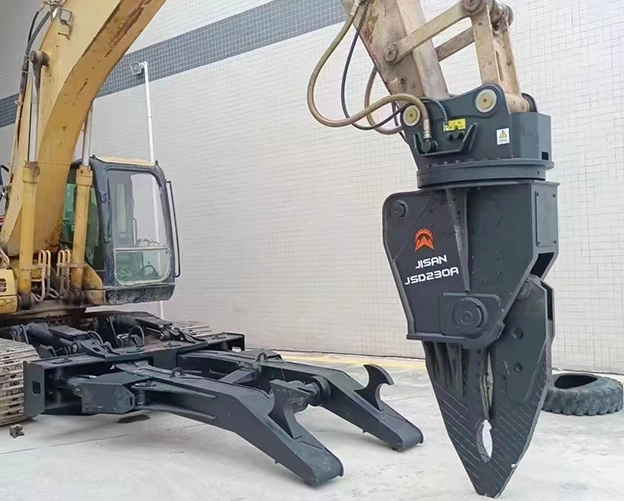
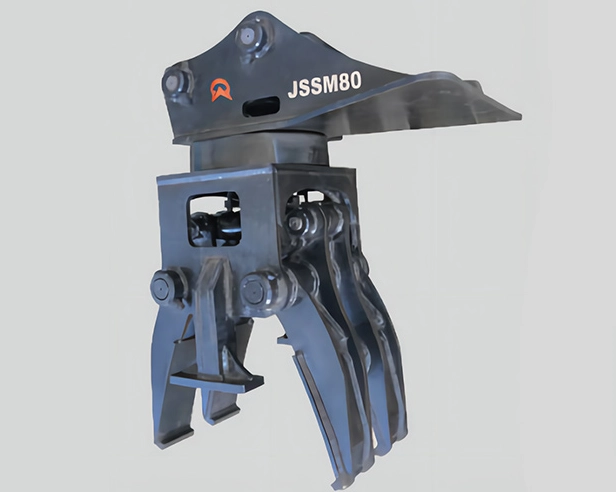
Here, selecting the right add-on proves vital. A soundly crafted excavator clamp arm enables materials to be held and shifted evenly, rather than hauled or steadied clumsily. Because of this smoother management, force distribution remains more uniform. As a result, that lessens damage to pins, bushings, and cylinders—components that prove pricey and lengthy to restore.
Loaders and Earthmoving Equipment
Wheel loaders and related earthmoving units frequently exhibit somewhat extended service periods:
-
12,000 to 20,000 operating hours
-
12 to 20 years, based on task intensity
In this case, the bucket holds a key position. Buckets absorb initial battering from scraping and strikes, and not every one handles it effectively. Slender metal, frail joints, or ill-formed cutting edges erode fast. Once a bucket begins to bend, that pressure does not vanish—it shifts to the loader arms and body.
Sturdy dirt and stone buckets are built to take that beating instead. Bolstered scrape zones and tougher cutting edges confine erosion to its place. Loaders equipped with robust buckets generally maintain firmer connections and neater frames in the long run, mainly because the unit is not battling its own add-on.
Specialized Railway and Infrastructure Equipment
Railway and infrastructure jobs impose a unique type of strain on gear. These units might not rack up massive daily hours, but accuracy and consistency count far more than pace.
Instead of modifying all-purpose units for each duty, numerous builders turn to custom gear like sleeper machines. Such units are tailored exactly for managing and positioning railway sleepers, which cuts down on clumsy actions and frequent tweaks.
By curbing excess movement, specialized units ease ongoing strain on both the main frame and the add-on. Across years of operation, this yields more consistent output and fewer surprise fixes.
What Really Determines Equipment Lifespan?
Benchmark numbers aid understanding, but actual endurance stems from everyday conditions.
Job environments rank highest. Grit, jagged stones, dampness, and harsh weather all speed up erosion. A unit in wrecking or mining spots ages quicker than one on a tidy build site, despite matching hours.
Handler practices carry equal weight. Gentle handling, proper loading, and routine care prolong life in manners that no upkeep plan can entirely match. Harsh handling often emerges later as split welds, wobbly links, and weary hydraulics.
Upkeep links it all. Routine checks, correct lubrication, and prompt component swaps curb erosion before it grows. Neglected upkeep seldom fails softly—it typically sparks larger, costlier troubles.
Lastly, add-on caliber sways everything noted. An add-on mismatched to the duty amps up pressure across the board. A solidly made, aptly paired add-on keeps forces steady and handleable.
How the Right Attachments Extend Machine Life
Add-ons directly shape how a unit acts in every pass. When equilibrium and durability align properly, motion remains steady rather than jerky.
Solid add-on crafting emphasizes suitable mass, fortified pressure spots, and direct force routes. Consequently, this shields the unit’s main build from jolts. Hydraulics function more evenly, frames bend less, and erosion stays in replaceable sections.
Kingho Technology tackles add-on crafting with this enduring perspective. Their excavator clamp arms prioritize firm holding over abrupt power. Their dirt and stone buckets employ fortified erosion areas where scraping happens naturally, rather than letting harm creep into the loader body.
Across thousands of work hours, these elements aid units in hitting upper endurance levels with slimmer structural fixes.
Maintenance Habits That Make a Real Difference
Even the toughest add-ons rely on sound routines. Everyday inspections help detect slack fasteners, irregular erosion, or initial splits. Midweek reviews of pins, bushings, and lube spots stop minor glitches from becoming major breakdowns.
Viewing add-ons as shielding gear rather than throwaway pieces also alters results. Swapping erode edges or bushings promptly costs far less than mending a boom or loader arm down the line.
Plenty of fleets discover that monitoring add-on state next to machine hours makes idle time simpler to foresee and manage.
Repair, Rebuild, or Replace?
Eventually, every unit hits a choice point. As core parts start to give out, owners must decide on fixing, overhauling, or swapping.
Frequently, upgrading add-ons serves as the initial and most sensible move. A unit might remain sturdy in build but ill-suited to its roles. Altering to a duty-specific add-on can revive capability and ease burden.
For countless builders, this method stretches practical life by a few years, postponing swap expenses while holding production firm.
Conclusion: Lifespan Is Managed, Not Fixed
The typical durability of construction gear lacks a firm limit. Rather, it forms a span molded by routine picks.
The manner in which a unit is employed, the care it receives, and the add-ons it uses all sway how long it remains dependable. Custom add-ons from proven makers like Kingho Technology safeguard the core unit while ensuring tasks flow evenly and steadily.
Ultimately, extended gear life arises not from luck. It stems from sensible calls applied steadily, hour by hour, amid actual job sites.
FAQs
Q1: How many hours are considered high for an excavator?
A: Numerous handlers begin seeing units beyond 10,000 hours as high-hour ones, yet total state often outweighs the figure alone.
Q2: Do attachments really affect machine lifespan that much?
A: Yes. Ill-suited add-ons heighten jolts and uneven pressure, whereas aptly crafted ones aid in confining and handling erosion.
Q3: Is it better to rebuild a machine or replace it?
A: If the primary build stays solid, overhauling and enhancing add-ons typically proves fiscally wise prior to full swap.